Margus Tsahkna: Is the UN Charter a rule or merely a recommendation?
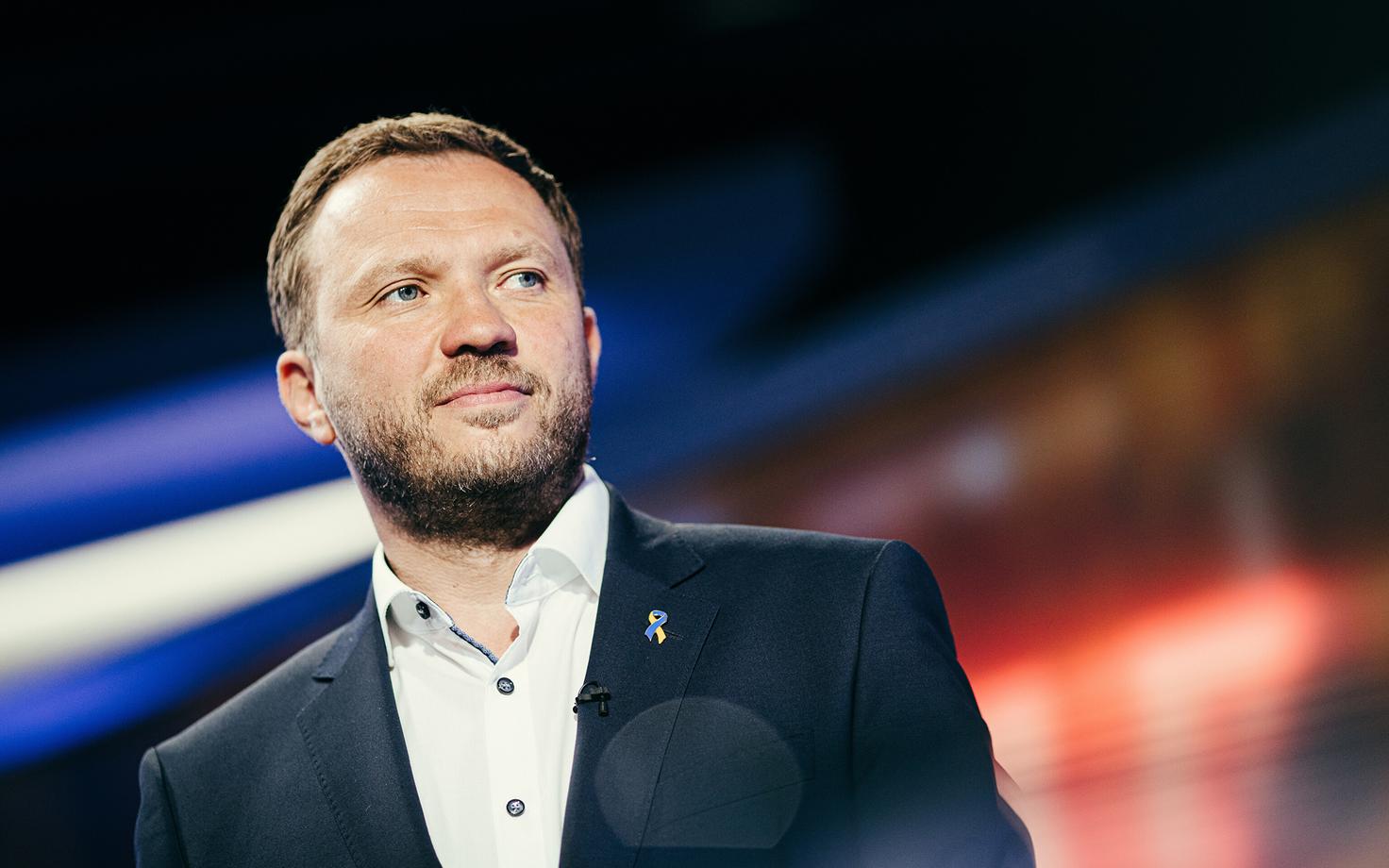
Estonia will push for changes that would strengthen the UN's ability to uphold international law and respond to aggression, particularly Russia's war in Ukraine, at the upcoming UN High-level Week, writes Foreign Minister Margus Tsahkna.
As the leaves begin to turn yellow in Estonia, the time is ripe for the world's annual fall gathering in New York. Estonia heads into the UN High-level Week with one clear question: If the UN Charter states that national borders cannot be changed by force, is that a rule or merely a recommendation?
I have just spent three days in Ukraine where Russia is flagrantly violating the principles of the UN Charter. Air raid alerts sounded day and night because of drone and missile attacks as Russia's aim is to use relentless aerial terror to sow fear, disrupt everyday life and break Ukrainian resistance.
If Russia succeeds and manages to change borders by force without facing consequences, the entire body of international rules on which Estonia's independence also rests will become fragile.
As a small country, we cannot afford a world in which international law applies only until a major power decides to trample over it. Estonia is therefore heading into the UN High-Level Week with two objectives: first, to make clear that supporting Ukraine is also in the interests of countries farther removed from the war and, second, to work with our partners to take concrete steps to more effectively uphold the rules enshrined in the UN Charter.
An aggressor must not be allowed to block decisions regarding it
First and foremost, we are looking to the UN Security Council where the UN's inability to defend its own Charter is most starkly apparent. Russia, a permanent member of the Security Council, is both the criminal and the cop: On the one hand, its war of conquest violates the UN's most fundamental principles, while on the other, its veto power allows it to prevent the UN from responding effectively to its own aggression.
Article 27, paragraph 3 of the UN Charter stipulates that a party to a dispute should abstain from voting on certain decisions. Yet, over more than four years of war, there has still not been sufficiently serious international debate about applying this principle.
Estonia wants to change how Article 27 is understood. Together with our partners, we want to establish an international practice under which a country that has launched an act of aggression could not use its veto power to block decisions concerning its own aggression under the framework of Chapter VI. This would be a concrete step toward making the Security Council more effective and restoring its credibility.
At the same time, we want the UN General Assembly, where all member states have equal representation, to assume greater responsibility for maintaining peace and security and to act in situations where the Security Council has been paralyzed by a veto.
Estonia and our partners want General Assembly resolutions to be more than mere political statements. They should help coordinate the actions of member states, increase pressure on the aggressor and keep violations of international law in the spotlight. The use or threat of a veto in the Security Council must not lead to a situation in which UN efforts to achieve a just and lasting peace in Ukraine are completely paralyzed.
In addition, we expect discussions surrounding the selection of the next UN secretary-general this fall to focus not only on who gets the job, but first and foremost on what kind of secretary-general today's world needs.
We need a secretary-general whose moral and political compass is the UN Charter and who is prepared to defend it even when doing so is inconvenient for a major power. The secretary-general cannot replace member states or the Security Council. But the secretary-general can use the office's political weight, shine a light on violations of the rules and consistently stand up for the principles the UN was created to defend in 1945.
Estonia, together with other like-minded countries, has worked for years to make the process of selecting the secretary-general more open and transparent and this year we are seeing tangible results from that work. Although there is still a long way to go, we have taken a step closer to ensuring that the choice is not made behind closed doors, but that candidates are nominated publicly and have the opportunity to present their vision for the role of secretary-general to all UN member states.
More countries must be mobilized in support of Ukraine
In addition to reforming the UN as an organization, High-level Week gives Estonia an opportunity to actively engage with countries with which we lack regular contact because we do not have embassies there. One of the most important goals of this engagement is to mobilize support for Ukraine.
There are still countries that view Russia's aggression as something distant. In reality, the effects of Russia's aggression extend to food and energy security and there is no doubt that if Russia succeeds in changing national borders in Ukraine, the stability of borders elsewhere will also be at risk and the security situation will become more dangerous worldwide.
But we must also remember everything that tends to become mere statistics amid the constant stream of news: that civilians, including children, are killed in Russian attacks every day, that many Ukrainians face a winter without heat, electricity or water and that Russia has separated approximately 20,000 children from their families and homeland and deported them to Russia.
Bringing the deported children home is one of Estonia's most important priorities and we are actively working with international partners to ensure that every child can return to their roots. Ukraine's reconstruction is also an area in which countries that, for various reasons, cannot provide military assistance, for example, can contribute to supporting Ukraine. UN High-level Week provides an opportunity to deepen international cooperation both on bringing deported children home and on preparations for the Ukraine reconstruction conference to be held in Estonia in January.
At the same time, UN High-level Week gives us an opportunity to listen more closely and engage with the challenges facing other countries. Countries in Africa, Latin America, Central Asia and other regions have their own security concerns, economic problems and expectations of the international system. We must identify shared interests and opportunities for cooperation with all of them. Only then can we ensure that others listen when we speak about the issues that matter most to us.
One issue that unites countries from the Baltic Sea to the Mediterranean and the Indian and Pacific oceans is maritime security, the threats posed by the shadow fleet and the protection of critical undersea infrastructure. Estonia will host a discussion on maritime security in New York, giving us an opportunity to deepen cooperation in this field with countries from different regions of the world.
This year, Estonia's chairmanship of the Nordic-Baltic Eight (NB8) cooperation format provides an additional opportunity to mobilize support for Ukraine and to discuss our own security. This is a group of countries that speaks with one voice on most major foreign and security policy issues. While that common voice already resonates strongly in Europe, as chair we are working to ensure that it is also heard farther afield, including during UN High-level Week in New York.
Rules need protecting
The UN stands at a crossroads today and every UN member state bears responsibility for choosing the organization's future direction.
Estonia wants a world in which the right of both large and small countries to exist independently is equally protected and a UN capable of defending internationally agreed rules. I believe that most UN member states ultimately want the same and that, together with our partners, we can bring about concrete change.
First, we must limit an aggressor's ability to use its veto power to shield its own actions. Second, we must strengthen the role of the UN General Assembly. Third, we must support international accountability and broaden the coalition of countries supporting Ukraine beyond Europe.
Because for Estonia, international law — and the UN, which was created to uphold it — is part of our security.
--
Editor: Marcus Turovski