NATO has 4,000-page plans for escalation on eastern flank
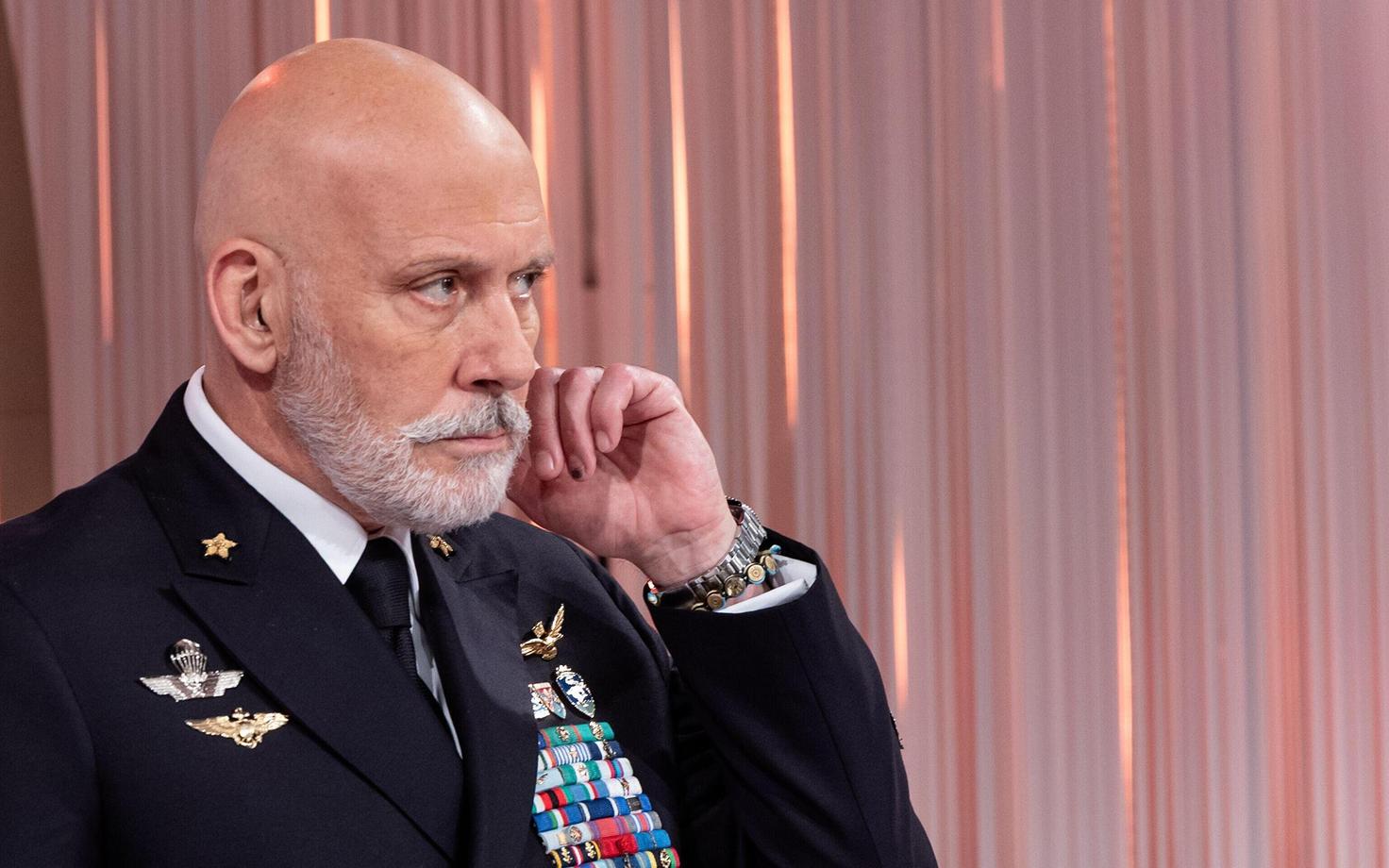
NATO has 4,000-page plans in place in case the situation on its eastern flank escalates, NATO Military Committee chair Adm. Giuseppe Cavo Dragone said Saturday.
Responding to a journalist's question about a possible low-intensity provocation and the deployment of additional personnel and capabilities to NATO's eastern flank, Dragone said this was one of NATO's many plans.
"We have plans for the eastern flank — three plans, to be precise — to be ready for any kind of escalation," he said, noting that the plans cover actions, movements and countermeasures.
He said the decision-making process has been standardized to ensure it works as quickly as possible, and that this work has already begun. NATO has plans covering everything from a minor crisis or intervention on alliance territory to the invocation of Article 5 and beyond.
"The plans are ready, the structure is ready, and the troops, systems and weapons are on standby," Dragone said. "In the event of an attack, we know what to do," he added, saying that in the event of an attack, the risks of losses would far outweigh any potential gains.
Responding to a journalist's question about a possible Russian attack on border crossings between Poland and Ukraine, Dragone said NATO is already quite accustomed to hybrid attacks and, in his assessment, is dealing with them successfully. He noted that NATO is a defensive alliance and that the possibility of escalation is part of its thinking and approach. At the same time, Dragone said a direct attack on the Polish-Ukrainian border area has not been discussed as a realistic scenario.
"We have to demonstrate strength and send the message that no part of our territory, not a single centimeter of it, can come under attack," he said. Dragone explained that hybrid operations do not automatically trigger Article 5 of the NATO treaty because they generally remain below that threshold. "A direct attack is not on our agenda in the sense that we are planning for it, but in the event of a direct attack, the immediate invocation of Article 5 would be requested," he said.
Speaking about ammunition stocks in the event of a possible prolonged conflict with Russia, Dragone acknowledged that NATO is fully aware of the issue, particularly given the war in Ukraine and the enormous amount of ammunition both sides use every day. He said this is precisely why NATO is investing in and encouraging the defense industry to change — moving away from the peacetime mentality that prevailed just four years ago and increasing production capacity so that the industry is prepared for a prolonged war and can meet the necessary demand.
According to Dragone, the financial resources are available, as allies have decided to invest significantly more in defense. "The funding will be provided, and we need to accelerate their delivery capacity," he said. He said the defense industry is working on this and moving in the right direction, but efforts must be intensified further because the daily expenditure of weapons and ammunition is very high.
At the same time, other activities are taking place on the eastern flank involving both the use of drones and defenses against them. These activities are part of measures aimed at strengthening security on the eastern flank in all respects, from air defense and drone use to counter-drone capabilities.
Responding to a question about physical attacks on European defense industry factories and warehouses, Dragone said such incidents could be regarded as criminal offenses, but they could also be elements of hybrid warfare. He said intelligence services are dealing with the issue, but NATO does not know how many incidents have been prevented or thwarted before they occurred, partly because they are not reported. According to him, there have been many cases in which threats have been prevented or stopped in time, but the exact number of such cases is unknown.
"In defense, the results are not immediately visible or tangible. That is what security is," Dragone said, urging people to trust the work of the security services.
Dragone's remarks came at a meeting of NATO chiefs of defense in Copenhagen, Delfi reported, and followed warnings from several European leaders that Russia could stage a drone or missile attack against a NATO country supporting Ukraine. Polish Prime Minister Donald Tusk said Thursday that Moscow could send drones or missiles into the territory of an eastern flank country as part of a staged provocation, an assessment echoed by French President Emmanuel Macron and Dutch Prime Minister Rob Jetten. NATO's official threat assessment has not changed, and a NATO representative told Politico there is currently no imminent threat of attack.
--
Follow ERR News on Facebook and Twitter and never miss an update!
Editor: Marko Tooming, Andrew Whyte
Source: BNS, Delfi