Estonian experts say social media should be improved for children instead of banned

The European Union is discussing a safe‑internet regulation that includes several restrictions planned for minors' use of social media. While EU plans propose setting a minimum age of 13, Estonian social scientists argue that blunt bans will not solve all problems and may even create new ones.
Tallinn University media professor Indrek Ibrus is critical of the EU initiative, saying the planned restrictions conflict with children's fundamental rights.
"In my opinion, it's generally a pretty bad idea," Ibrus said, explaining that it ignores the UN Convention on the Rights of the Child. "Children must have opportunities for self‑expression and free access to information to support their development and identity. Any age‑based restriction on access to information essentially disregards children's rights," Ibrus said.
According to Ibrus, the European Commission is effectively giving up by proposing restrictions.

"Instead of working on these environments, these platforms, these spaces in a way that would make them safe and suitable for children, the European Commission throws up its hands and gives up. They don't have the strength to deal with regulation, even though the regulatory framework — the Digital Services Act — already exists and simply needs to be enforced. In a sense, children are being sacrificed because of the Commission's own inability," he said.
University of Tartu media studies professor Andra Siibak agreed that relying solely on bans and restrictions is not the best solution, highlighting the need to change platform business models. Siibak said it is positive that the EU demands concrete measures from service providers to make platforms more protective of children's rights, well‑being and privacy.
Like Ibrus, Siibak pointed out that all these recommended changes are already written into earlier EU regulations — whether the Digital Services Act or the AI Act. "The European Union itself must start thinking carefully about how to demand these changes from platforms and monitor that they actually implement them," Siibak said.
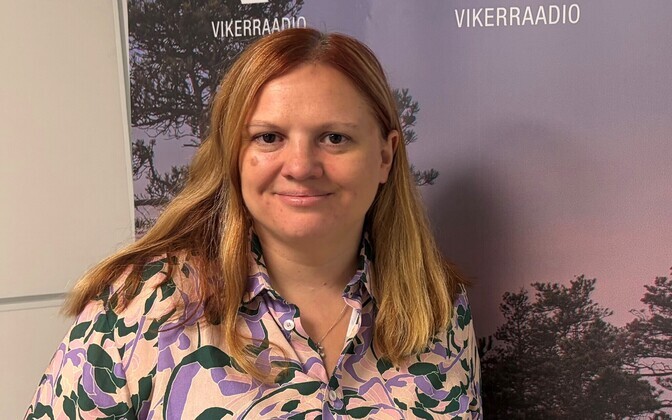
Tallinn University participation‑culture professor Katrin Tiidenberg warned against overly rigid bans, citing Australia's experience.
"Based on what we know from Australia and how their ban doesn't actually work, children under 16 are still online, which mainly means we don't know what they're doing on social media or where they're logged in," Tiidenberg said.
One of the biggest questions surrounding the EU Kids Act is how to verify users' ages without massively violating people's privacy.
Ibrus sees major risks in age verification. "It may be a direct privacy intrusion, and it may also be harmful in the sense that platforms could use identification for more precise profiling of users, which can be dangerous in several ways," he explained.
Ibrus added that although the EU is developing a digital wallet solution that could provide secure infrastructure in the future, any restrictions must be approached with extreme caution.
Siibak also noted that finding a reliable and transparent age‑verification method is currently difficult. Attempts with facial‑recognition software have not worked, and young people easily bypass restrictions using, for example, their parents' documents.
"We know from Australia's experience how skillfully young people bypass such age‑assessment apps and solutions. To access a platform, they show their parents' documents or take a photo with a famous footballer's poster in the background instead of showing their own face. Young people certainly have many ways to get around such systems. Finding a method acceptable to all member states will be a very difficult discussion," Siibak said.

Tiidenberg also stressed that mechanical age‑verification methods bring risks. "It's a very important issue, because if it means a child must log in with an ID card, then it means everyone must log in with an ID card. We want to avoid mass surveillance and monitoring of which sites we visit and who does what. In my view, maintaining freedom is important," Tiidenberg said.
"That doesn't mean age verification cannot be done in a reasonably safe way, but the method must be developed very carefully and not by quickly trusting the first private company that says: 'Look, I built you a solution,'" Tiidenberg said.
Experts say protecting children and young people on social media should focus on improving the platforms themselves.
Tiidenberg highlighted the need to pressure platforms to create well‑being‑oriented and responsible design. This means placing strong emphasis on curbing addictive algorithms — for example, giving users the option to choose between a chronological feed and recommendation algorithms. She also supports separate child‑ and youth‑friendly accounts (for example, ages 13–15) where harmful content is automatically limited.
Ibrus reminded that in addition to tightening rules, it is important to support young people's digital skills and critical thinking instead of creating artificial barriers that do not actually protect them online.
"Instead of bluntly banning communication environments because they may involve certain risks, those risks must be addressed. Platforms must be adapted, regulated, existing regulations enforced, and at the same time media literacy must be developed for different age and social groups," Ibrus said.
Tiidenberg added that digital skills are important, but a person can be both competent and helpless at the same time — including children.
"Critical awareness is very important, but obviously children have different self‑regulation abilities at different ages. Even many adults do not have very good self‑regulation. You may know something is harmful to you, but you still may not be able to avoid certain social media content," she said.
"Skills are important — they are part of the toolkit — but they are not enough if we allow user interfaces to be designed manipulatively, because they still measure the user's slowing finger while scrolling. If we do not regulate how quickly systems must respond when I say that I or my child does not want to see certain content, then digital skills alone are of little use," Tiidenberg added.
On Thursday, the European Commission adopted the safe‑internet regulation (EU Kids Act), which increases children's online safety in the EU. The package includes proposals to ban social media use for children under 13 and to require companies providing online services to create safe accounts for children.
Under the proposal — which EU member states and the European Parliament will negotiate — accounts for children aged 13–15 would be under parental control.
Social media and video services, online games and AI‑based companions and chatbots intended for users under 18 would be subject to a list of permitted and prohibited activities.
--
Editor: Mari Peegel, Argo Ideon