11 human smuggling suspects caught in Estonia in October
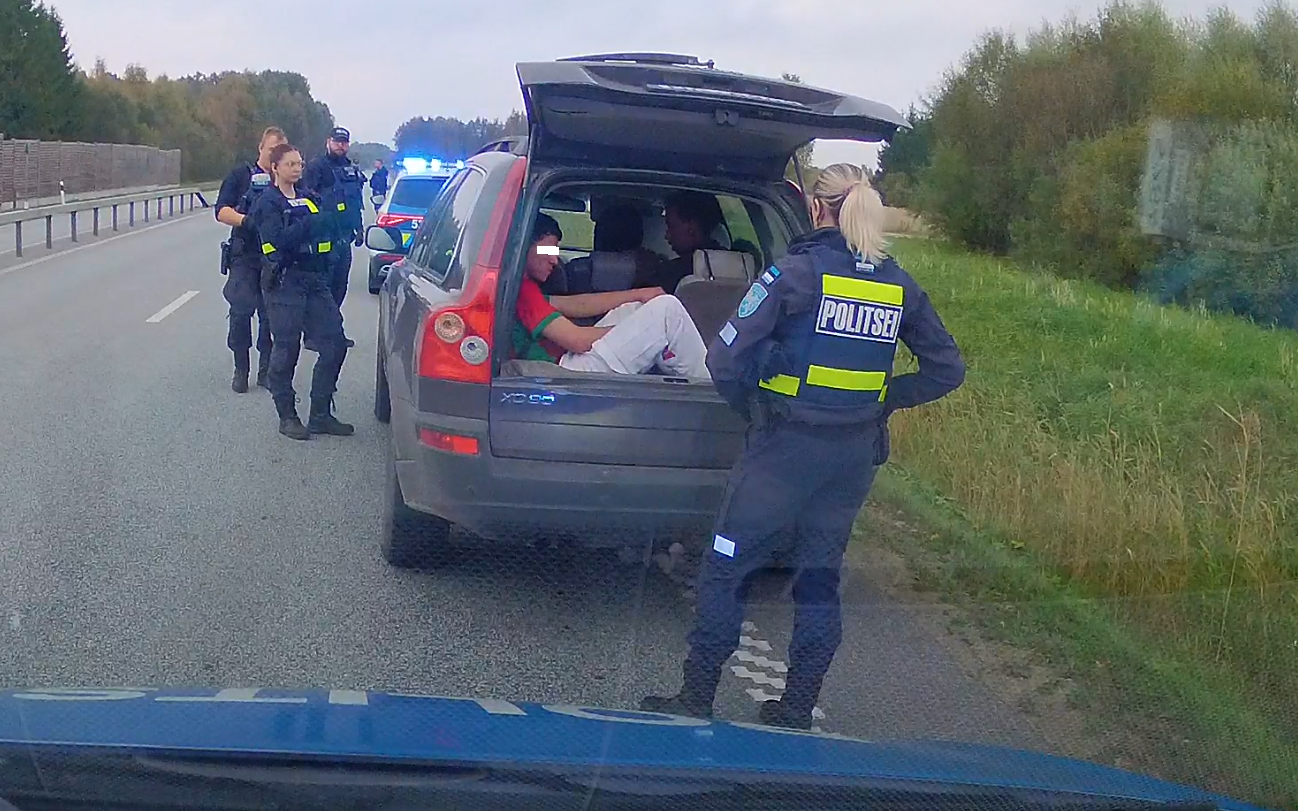
Police detained 11 people suspected of illegally transporting people across the Estonian border in October. One suspect has already been convicted and begun serving a sentence, while 10 remain in custody.
Thousands of migrants have crossed the Belarusian-Latvian border this year into the European Union in what officials say is a "hybrid attack" orchestrated by the regime in Minsk.
The migrants, mostly from Africa and the Middle East, then travel on to other countries in western or northern Europe, using Estonia as a transit country.
However, more than 400 people have been caught in Estonia this year after Poland and Germany boosted security checks on their borders, and smugglers changed their routes.
A statement from the Police and Border Guard Board (PPA) and Prosecutor's Office on Wednesday said 11 people have been detained this year for suspected people smuggling. This includes a Lithuanian, a Latvian, a Bulgarian, a German, Ukrainians and Pakistanis.
"Despite their different backgrounds, the same patterns recur in their stories: a desire to make money quickly and a willingness to take significant risks. In most cases, offers to transport migrants were received through social media. The PPA has had more than 100 social media accounts shut down for sharing information related to human smuggling and recruiting drivers," the joint statement added.
'Continuous flow' of migrants
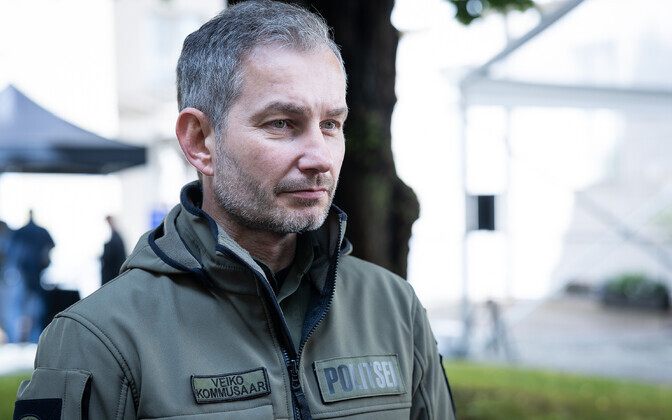
Veiko Kommusaar, deputy director general of the PPA for border management, said migration pressure originates at the Belarusian-Latvian border.
"We are not talking about dozens of migrants who have lost their way, but a continuous flow emerging at the Belarusian border, which the authorities there deliberately allow through. An entire shadow economy has rapidly grown around this, where the movement of people has become a commodity and an opportunity for smugglers to make money. The network connecting customers, drivers and routes extends across Europe," Kommusaar said.
He added that the situation has not ended and Estonia will continue to enhance internal border checks and help Latvia on the Belarusian border.
Senior prosecutor Toomas Koitmäe said those transporting migrants are taking on the risks associated with international organized crime.
"Human smuggling organizers give the impression that this is a simple transport job and a way to make quick money. In reality, the journey can end in prison. The courts have already sentenced several recent drivers to prison. Proceedings are continuing in the remaining cases, and the suspects are being held in custody," Koitmäe said.
11 suspects
The PPA and Prosecutor's Office provided details about the 11 cases, which ERR News is republishing below.
On October 1, at around noon, the PPA stopped a vehicle with Latvian license plates on Viljandi maantee in Harju County. Six foreigners were found in its cargo compartment. According to the men traveling in the cargo compartment, they were from Morocco and Somalia, and none had identity documents. The 54-year-old Latvian citizen driving the Fiat van was detained on suspicion of illegally transporting foreigners across the border.
On October 3, at around 5 p.m., police stopped a Volvo with Latvian license plates in Tori Municipality, Pärnu County, driven by a 62-year-old German citizen. Seven men were found in the passenger compartment and trunk of the vehicle. They said they were from Morocco and Somalia and had no legal basis for staying in Estonia.
On October 4, border guards discovered three foreigners staying in Estonia illegally hidden under a blanket in the trunk of an Audi bound for Sweden at Paldiski North Port. The men said they were from Eritrea and Ethiopia. The 20-year-old Ukrainian citizen driving the vehicle had a Swedish residence permit, but the driver's license he presented turned out to be forged. Another Ukrainian citizen was also in the car. The two Ukrainian citizens were detained as suspects, while the other foreigners were placed in a detention center.
In the early morning of October 5, at around 4 a.m., police stopped a Toyota with Lithuanian license plates in Häädemeeste Municipality, Pärnu County. The vehicle was driven by a 22-year-old Pakistani citizen with a Lithuanian residence permit. Also in the car were another Pakistani citizen with a Lithuanian residence permit and two Somali citizens who had no identity documents. The group was taken to Pärnu police station to check the circumstances of their arrival in Estonia and their right to stay in the country. The Pakistani citizens were detained as criminal suspects.

On October 6, at around 1 a.m., police stopped a Kia Sportage with Latvian license plates at kilometer 85 of the Tallinn-Tartu-Luhamaa Highway. The vehicle was driven by a 63-year-old Bulgarian citizen.
There were seven men from third countries in the car who had entered Estonia illegally. The migrants were taken to Tartu police station, while the Bulgarian was detained as a suspect.
The court sentenced the Bulgarian citizen to one year and ten months in prison, of which he must serve three months immediately. If he commits another crime, the court can order him to serve the entire sentence. After serving his sentence, the man will be expelled from Estonia and subject to a five-year entry ban.
On October 12, at 11:20 a.m., police detained a 31-year-old man at Tallinn Airport who had arrived from Düsseldorf and forgotten his shoulder bag on the plane. The bag contained Swedish identity cards belonging to other people. According to the suspicion, the man, who lives in Germany, had come to Estonia to provide foreigners staying in the country illegally with other people's documents to enable them to cross the Schengen border illegally.
On the same day, at around 5 p.m., a 51-year-old Ukrainian citizen was detained in central Tallinn. Two Iraqi and two Somali citizens were found in the cargo compartment of his Ford Transit, none of whom had a legal basis for staying in Estonia. According to the suspicion, the Ukrainian planned to transport the foreigners staying in Estonia illegally onward to Finland.
On October 23, at around 6:30 p.m., a 48-year-old Lithuanian citizen was detained in Pärnu on suspicion of repeatedly transporting illegal migrants across the state border. According to the suspicion, the man transported at least 25 foreigners from countries in North Africa and the Horn of Africa across the Estonian border during October. The migrants were discovered in Tallinn's Mustamäe and Nõmme districts and the port area.
On October 28, at 9:30 p.m., three Pakistani citizens heading for a flight to Barcelona were detained in the Schengen area of Tallinn Airport. They claimed to reside in Spain. Police checked with the Spanish authorities whether the men had the legal right to stay there. The response confirmed that the Pakistani citizens had no legal basis for staying in Spain. One 56-year-old man with dual Belgian and Pakistani citizenship is suspected of migrant smuggling.
--
Follow ERR News on Facebook and Twitter and never miss an update!
Editor: Helen Wright


