Political scientist: Vseviov's rise pushes Reinsalu into the background
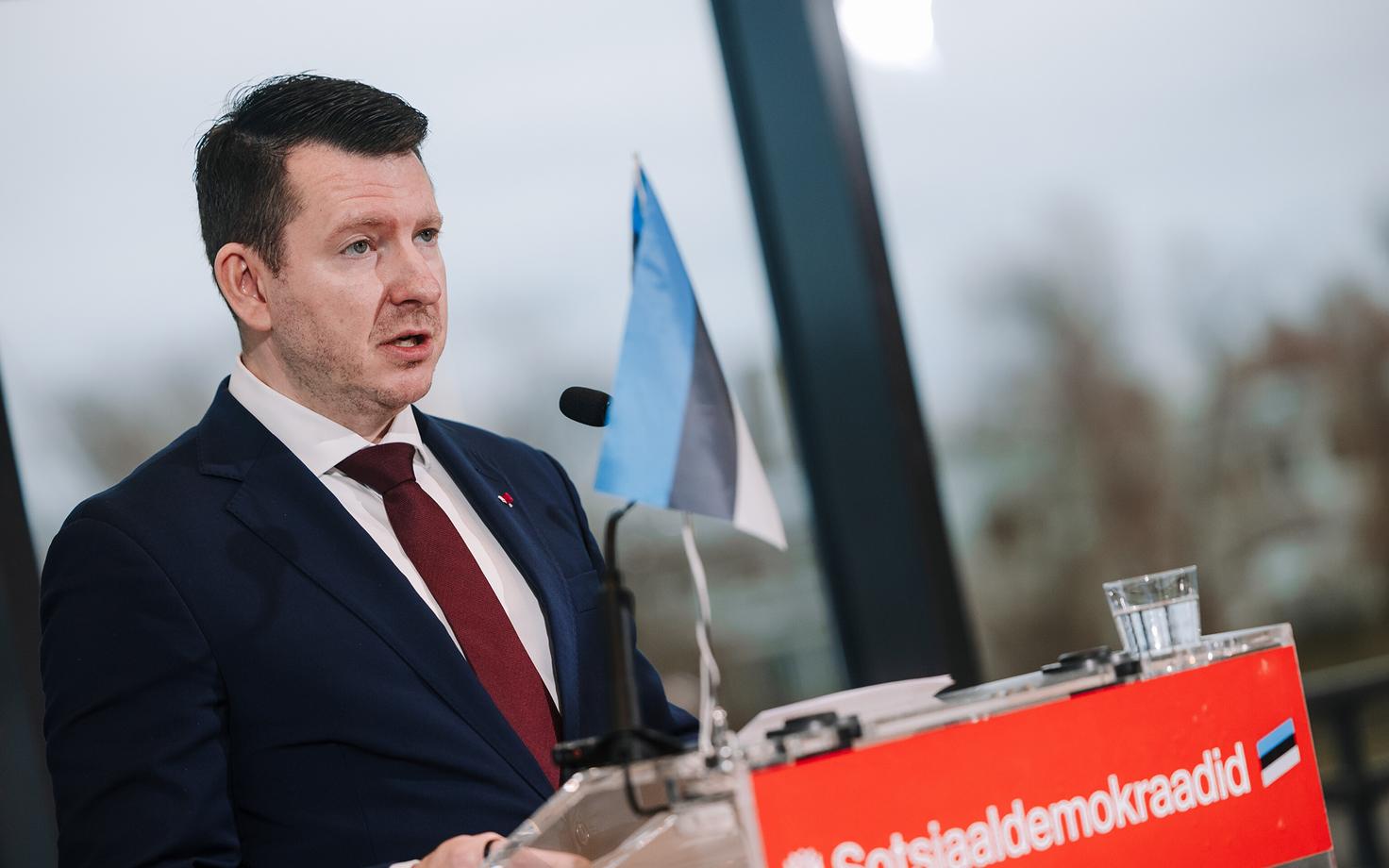
Political scientist Tõnis Leht said that the emergence of Social Democratic Party prime ministerial candidate Jonatan Vseviov has altered the dynamics among the parties' candidates for prime minister and pushed Isamaa leader Urmas Reinsalu into the background.
According to the latest prime minister preference poll conducted by Norstat and NGO Ühiskonnauuringute Instituut, 28 percent of respondents would like to see Center Party chairman Mihhail Kõlvart as prime minister, 21 percent support Social Democrat Jonatan Vseviov and 19 percent favor Isamaa chairman Urmas Reinsalu.
"Urmas Reinsalu's drop to third place in the prime minister poll is directly linked to Jonatan Vseviov entering the race as the Social Democrats' prime ministerial candidate," Leht said.
He pointed out that some Isamaa supporters appear to have shifted their support to Vseviov.

"When comparing the November and October surveys, we see that support for Urmas Reinsalu among Isamaa's own voters has fallen by 13 percentage points. In other words, some of Isamaa's own supporters no longer consider Reinsalu the best candidate for prime minister," Leht said.
Leht added that Vseviov's candidacy has also attracted potential supporters away from the Reform Party and Parempoolsed.
If the Social Democrats had nominated party chairman Lauri Läänemets instead, he would not have achieved such popularity in prime minister preference polls, Leht noted.
"Läänemets' support as a prime ministerial candidate has been around 10 to 11 percent. Neither Social Democratic voters nor the broader electorate have viewed him as a particularly strong or credible prime ministerial candidate," Leht said.
According to Leht, neither the Center Party nor Mihhail Kõlvart has been hurt by Vseviov's arrival.
"It appears that the rise in Mihhail Kõlvart's popularity as a prime ministerial candidate is moving in parallel with the growth of the Center Party's broader support. This may be linked to increased support for the Center Party among Estonian-speaking voters," Leht said.

"EKRE voters may also be willing to look at Center Party candidates if they feel their own candidates are not strong enough. EKRE voters see considerable common ground with Center Party candidates, particularly meaning that EKRE's Estonian-speaking voters may also look favorably on Estonian-speaking Center Party candidates," he said.
Only eight percent of respondents said they would prefer Prime Minister and Reform Party chairman Kristen Michal as prime minister.
"The Reform Party is clearly not in an easy position today. Prime Minister Michal's ratings in prime minister preference polls have remained relatively low for quite some time. That reflects the generally low level of trust in both the Reform Party and the government," Leht said.
--
Editor: Aleksander Krjukov, Argo Ideon


