Parties still compiling candidate lists ahead of March Riigikogu elections

Parties are still recruiting Riigikogu candidates with some list places unfilled. The coalition Reform Party will not announce its lead candidates until late on this month.
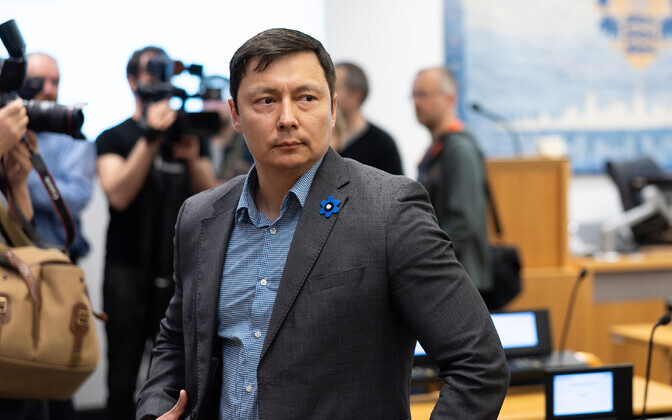
The opposition Center Party has yet to decide which electoral district party chairman and former Tallinn mayor Mihhail Kõlvart will head up.
The Riigikogu elections take place in March and final candidate lists are due by mid-January, meaning parties are deep into the process of deciding who to run where, to optimize results.
Due to the d'Hondt proportional representation system used in Estonia, parties usually place their vote magnet candidates, usually leading politicians, high up on their ordered lists – excess votes these candidates have after clinching a seat can be distributed to candidates lower down on the list, who may not win a seat in their own right.
Kõlvart is one such vote magnet, and Center's Secretary General Anneli Ott told "Aktuaalne kaamera": "The party chairman would be a major vote-winner in any constituency. But which constituency he will head the list in remains undecided."
The party's two MEPs Jana Toom and Jaak Madison, will head electoral lists, Center, whose traditional bedrock areas include Tallinn and Ida-Viru County, confirmed.
The Social Democrats (SDE) have made more apparent progress. The party leader, Lauri Läänemets, will run in Järva and Viljandi, while new member, former foreign ministry secregary general and prime ministerial candidate Jonatan Vseviov, is to run in Harju and Rapla. "The regional branches have not yet made their final decisions on the order of candidates or who will ultimately stand," said SDE Secretary General Piret Hartmann
The Conservative People's Party of Estonia (EKRE) has finalized leading candidates in half its constituencies, with chairman Martin Helme running in Tallinn's Mustamäe and Nõmme. Helme said the party faces difficulty winning votes in the bigger cities, meaning great efforts must be focused there. "A third of the Riigikogu is elected from Tallinn. So naturally, we are focusing on Tallinn," Helme said. EKRE's traditional stronghold has been southwestern Estonia.
Isamaa leader Urmas Reinsalu is to run in Harju and Rapla, just south of Tallinn and including the capital's commuter belt, with MEPs Jüri Ratas, a former prime minister, and Riho Terras also standing. Secretary General Andres Metsoja said regional branch proposals matter most when making decisions.
Looking for its first ever Riigikogu seats is Parempoolsed, whose chairwoman Lavly Perling is prepared to run in Harju and Rapla, though the party has not completed all its leads and has even turned some aspirants away. Deputy chairman Siim Kiisler said ideological conviction matters to the party more than profile.
Eesti 200, who in summer saw two MPs defect, is still compiling its full list.
Several of the parties have been hit by a wave of departures of high profile candidates who are not running this time around. SDE has lost Raimond Kaljulaid, a prominent MP who sits on the Riigikogu's national defense committee but is returning to the private sector, as well as MEP Marina Kaljurand. Former education minister Liina Kersna (Reform) is not seeking re-election and neither is Hanno Pevkur, defense minister until September and once a challenger for Reform's leadership. Parempoolsed has lost defense and security expert Rainer Saks, who cannot run due to taking up a post as presidential adviser.
High profile candidates may run for a party even if they cannot then take up the seat won, usually because they hold another post which bars that. MEPs and local government leaders fall into that category for instance. Their votes won will be transferred to candidates lower down the party's ordered list.
Polling day is March 7, 2027.
--
Follow ERR News on Facebook and Twitter and never miss an update!
Editor: Andrew Whyte, Marko Tooming
Source: 'Aktuaalne kaamera'


