Apartment conversions offer lifeline for vacant Tallinn offices

Tallinn's oversupplied office market is prompting developers to consider converting older office buildings into rental apartments as demand for traditional office space declines.
Vacant office space in Tallinn has grown from 50,000 square meters a decade ago to 130,000 square meters this year. The situation is becoming increasingly difficult for property owners, said Eduard Sorokin, a commercial real estate broker at Uus Maa.
The amount of available office space began increasing during the coronavirus pandemic in 2020. Since then, the market has also been affected by the full-scale war in Ukraine, rising energy prices and, more recently, the growing use of artificial intelligence.
"We are only now reaching the point where the effects of COVID are fully being felt, because office leases were typically signed for five years. In reality, many leases signed at the start of the pandemic or before it are only now expiring. The new leases these companies and tenants are signing usually cover significantly fewer square meters. Companies are taking smaller spaces, teams are smaller and remote work is common. Only now is the impact of COVID truly reaching the market," Sorokin said.
According to him, there is a distinction between official and unofficial statistics in commercial real estate. The difference lies mainly in how actual occupancy levels are reported.

"Commercial real estate assets are valued based on income. Property owners find it extremely difficult to honestly acknowledge and often even disclose their true occupancy levels because it directly affects the market value of their assets," Sorokin explained.
The market value of office properties also affects owners' credit lines and loans. Real estate is such a capital-intensive business that most assets have been purchased with borrowed money. According to Sorokin, current vacancy rates and the resulting lower rental income often mean that a property's real value is lower than its declared value.
"This trend is continuing," Sorokin said.
The total amount of office space has nevertheless increased significantly over the past decade. At the same time, tenants' preferences have changed. Integrated business districts have become more attractive than standalone office buildings, said Andrei Kokk, head of real estate at commercial property company Kapitel Tallinn.
"New buildings often emerge in locations where favorable conditions for similar businesses already exist. Examples include the Ülemiste and Rotermanni districts, among others. That is an additional reason why newer and more modern buildings remain more popular among tenants," Kokk said.
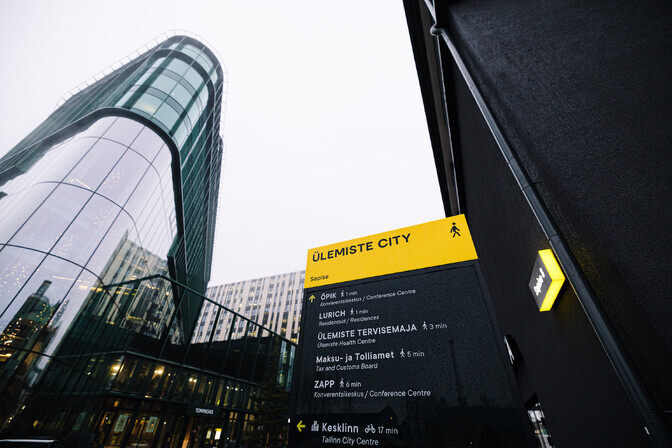
One option for attracting tenants to older office buildings is changing the building's purpose, said Roman Raivet, head of corporate banking credit analysis at Luminor.
"For example, ground-floor premises can be converted into retail space or accommodations. In Tallinn, tourism and hospitality are doing well. As a result, an office building can be converted into short-term accommodation if circumstances allow," Raivet said.
Finding a new purpose for office buildings can also mean a complete conversion into residential units.
"There are already examples in Tallinn where former office buildings are being converted into apartments. I expect this is a trend that may become even more pronounced over time," Kokk said.
Sorokin also predicts that a large share of currently planned office projects will ultimately be developed as residential real estate. He is referring to rental apartment buildings built on commercial land rather than traditional apartment blocks on residential land. As a prominent example, he cited Endover's recent purchase of City Plaza at Tartu maantee 2.
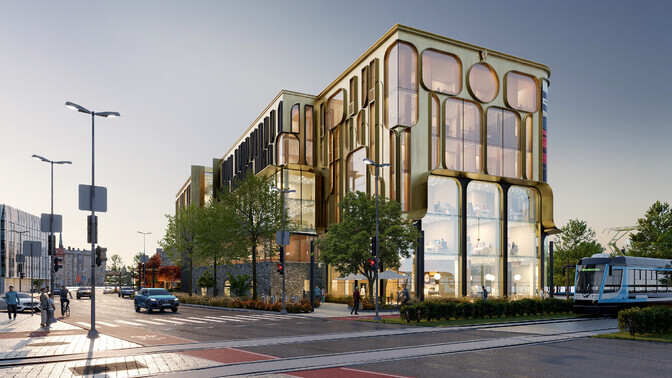
According to Sorokin, the developer is acquiring an entire tower in central Tallinn and plans to convert the relatively new office building, approximately 12 to 15 years old and currently home to LHV's headquarters, into apartments.
"It will remain on commercial land. The apartments will not be sold to private individuals but will remain a rental project. Rental buildings are the direction in which we are moving," Sorokin said.
In his view, many office and commercial projects currently planned for the coming years will eventually have their purpose changed and become apartment buildings rather than office developments.
At the same time, office construction continues. Roughly 127,000 square meters of office space was under construction in Tallinn during the third quarter of this year, with completion expected between 2026 and 2028.
"I do not believe these projects will ultimately be completed as office buildings in their current form because there simply is no market or demand for traditional office space. In A++ office buildings, you can charge €25 per square meter, even €30 per square meter per month. Those are premium prices. But if you look at everything below A+ level, namely B-class office buildings, which are abundant throughout Tallinn, including along Pärnu maantee and elsewhere in the city center, rents have fallen by at least half over the past five years. Offices that rented for €12 per square meter in 2019 are now being publicly advertised at €5 per square meter," Sorokin said.
--
Editor: Mirjam Mäekivi, Argo Ideon


