Study: No good solutions for insulating fieldstone walls from the inside
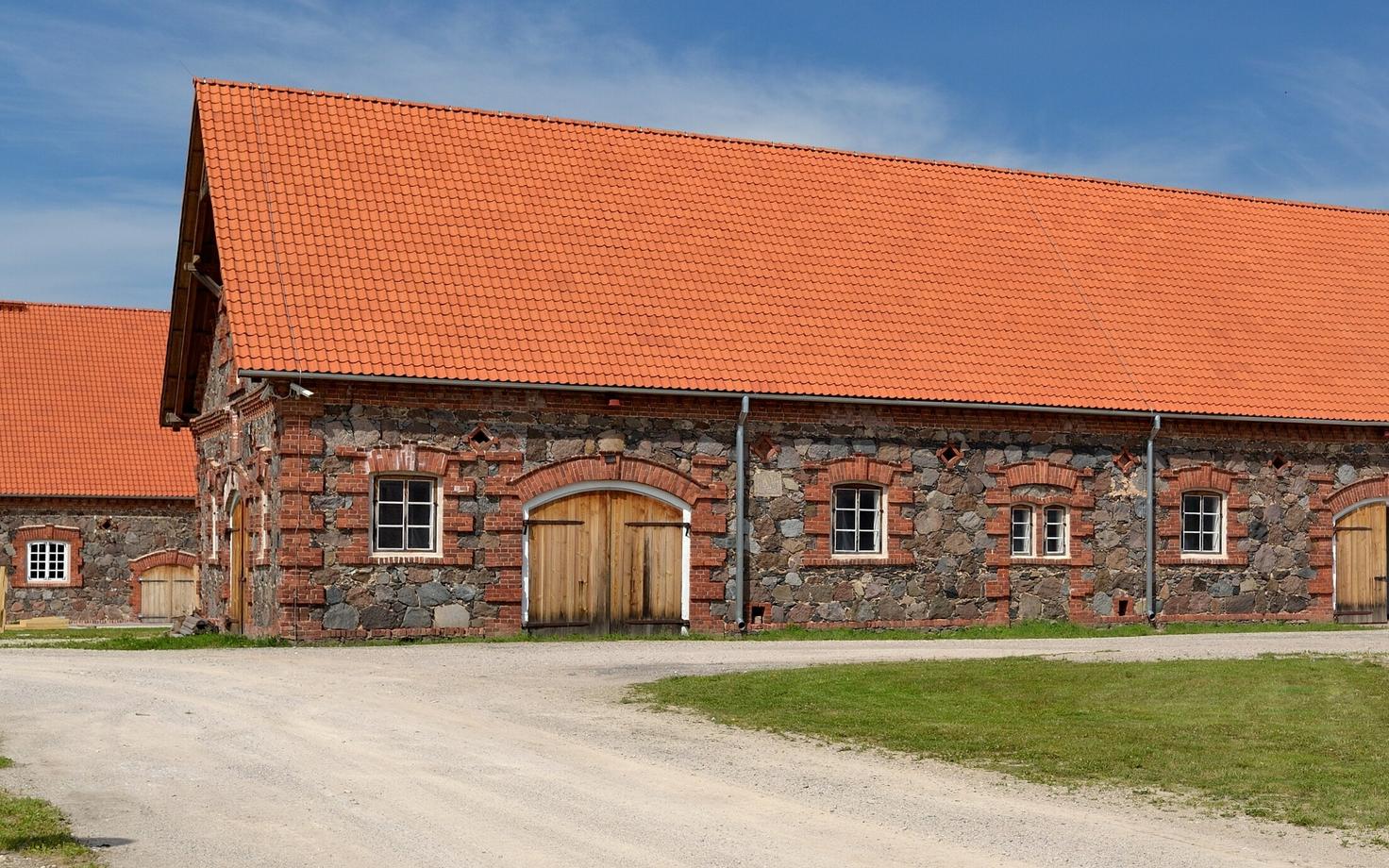
Insulating old fieldstone walls from the inside can preserve a building's historic facade but risks causing long-term moisture damage, according to new research from the Estonian University of Life Sciences.
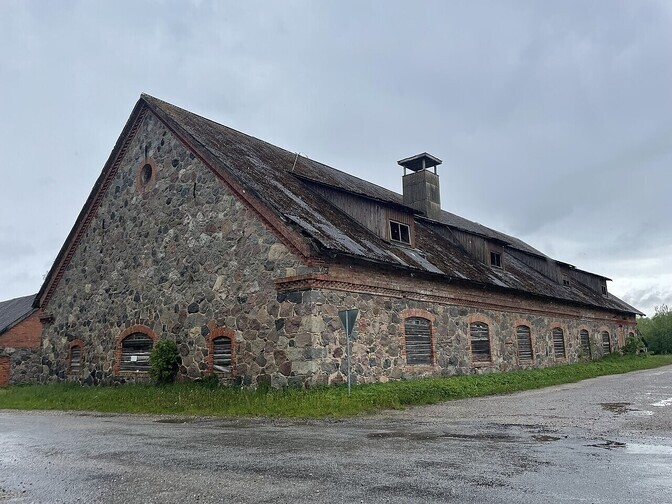
"Fieldstone walls are quite common in Estonia. Perhaps less so in northern Estonia, but on the island of Ruhnu, for example, a remarkably large number of fieldstone buildings have survived," said Kadri Leiten, a lecturer at the Estonian University of Life Sciences who recently earned her doctorate. On Ruhnu, for example, people primarily use fieldstone buildings as summer homes because the walls get too cold in winter.
Anyone wishing to use a fieldstone building year-round, however, might want to insulate it somehow. "If you don't want to hide a beautiful facade, you need to find an alternative way to keep the building comfortable inside during the winter months," Leiten explained. In some cases, this means installing insulation on the interior side of the walls.
In her recently defended doctoral dissertation, Leiten assessed how advisable this approach is. Using a wall of the stable at Mooste Manor as a case study, she investigated whether and how an old fieldstone wall could be insulated from the inside using reed or wood fiber boards combined with clay plaster. "Insulating from the inside makes it possible to preserve the exterior facade, but a safe insulation solution has yet to be found," the lecturer noted.
Moisture damage accumulates over time
The fieldstone masonry Leiten studied was at least half a meter thick. Insulating such a wall from the inside makes the masonry colder. "Adding an internal insulation system restricts the flow of heat from the room into the wall," the lecturer explained.
If heat cannot penetrate the insulation attached to the wall, the fieldstone masonry remains cooler. Moisture can gradually accumulate inside the cold wall because the material covering its interior surface prevents the masonry from drying inward. "This can lead to more freeze-thaw cycles, as materials that are already damp are more susceptible to cracking when they freeze," Leiten explained.
In her research, she tested two domestically produced materials for insulating the stable's fieldstone wall: reed boards and wood fiber boards. She used clay plaster as a leveling layer. Short-term experiments indicated that mold might not develop immediately between the masonry and the insulation boards.
Over a five- to seven-year period, however, the model indicated that moisture could still accumulate in the insulated wall. "Unfortunately, based on the results of my research, I cannot currently say that this is a particularly safe method of insulating walls from the inside," Leiten acknowledged.
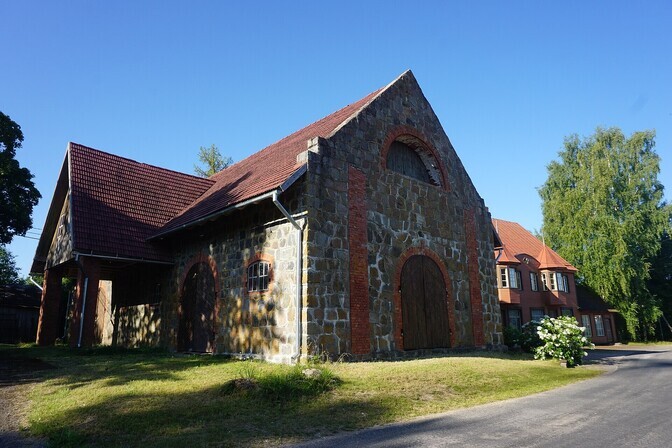
The wall she studied, however, has now been insulated for four or five years. According to Leiten, the coming years will reveal whether moisture actually begins to accumulate as predicted by the model.
"The next step is to investigate what methods could be used to reduce moisture accumulation in the wall. One approach used elsewhere in the world is water-repellent treatment," she said. In Belgium, for example, masonry walls are treated externally with water-repellent coatings, allowing buildings to be insulated from the inside. However, Leiten noted that the climates of Belgium and Estonia are not comparable.
Wetter climate on the way
To assess the climate resilience of wood fiber and reed boards, Kadri Leiten used models developed for the climate of the Vantaa region in Finland. These are also suitable for northern Estonia, as Vantaa's climate is expected to resemble northern Estonia's future climate. "Under an extreme scenario, we would rarely see subzero temperatures in winter anymore. Estonia's long-term climate projections also indicate that temperatures will fall below freezing much less frequently by 2100," the lecturer said. In other words, it makes sense to start designing both stone walls and all other types of walls in Estonia with the expectation of more moisture and rainfall.
Salts can also accumulate in old stone walls, particularly in buildings that have previously served some agricultural purpose. As part of her research, Leiten therefore also investigated how these salts could be removed using clay- and lime-based sacrificial plasters. "The wall is plastered and the plaster is essentially sacrificed. Liquid water containing dissolved salts moves from the masonry into the plaster, which is then removed from the wall," Leiten explained.
Nearly all the sacrificial plasters tested in her study removed salts from the stone masonry. However, another important consideration, according to Leiten, is how easily each type of sacrificial plaster can be removed after use. "Compared with lime-based plaster, clay plaster was generally easier to remove from the wall," she noted.
Leiten advises readers who want to use their fieldstone buildings year-round to exercise caution when insulating them. According to the lecturer, natural materials are not particularly well suited to the task. "Nothing may happen in the first five years after you insulate with clay or reeds. You may simply not be able to see what's happening between the layers inside your wall over the course of 20 years," she warned.
Another option is simply to leave an aesthetically pleasing old stone wall uninsulated. "You might put on some wool socks and a sweater and you'll be fine. For now, leaving the wall uninsulated is a safe option, provided it can dry both inward and outward and the room has ventilation," Leiten said.
Kadri Leiten, a doctoral student at the Estonian University of Life Sciences' Institute of Forestry and Engineering, defended her doctoral dissertation, "Long-Term Evolution of Moisture Regime and Damage Risks in Internally Insulated Massive Masonry Walls under Changing Climate Conditions," on November 12. Her dissertation was supervised by Marko Teder, Ph.D. The opponents were Associate Professor Evy Vereecken (KU Leuven, Belgium) and Simo Ilomets, Ph.D. (Tallinn University of Technology, Estonia).
--
Editor: Aleksander Krjukov, Marcus Turovski


