Estonia's new apartment buildings' renovation plan meeting resistance
Technical consultants and apartment associations oppose the government's plan to allocate €160 million in renovation subsidies over the next two years exclusively to prefabricated apartment building renovations.
The government has finalized a plan to allocate €160 million in funding under the latest support program exclusively to the prefabricated renovation of apartment buildings, leaving conventional renovation projects ineligible for state support. The program will cover 2027 and 2028.
According to the Association of Technical Consultants (TKL), the government's plan could leave many apartment associations without the financial support they need, cause a slowdown in the conventional construction sector and result in a significant portion of the funding going unused.
TKL added that concentrating support on a single construction method could reduce orders for conventional construction companies and weaken competition.
"The aim of apartment building renovation subsidies must remain to modernize the housing stock, not to prioritize the development of one particular industry," TKL said.
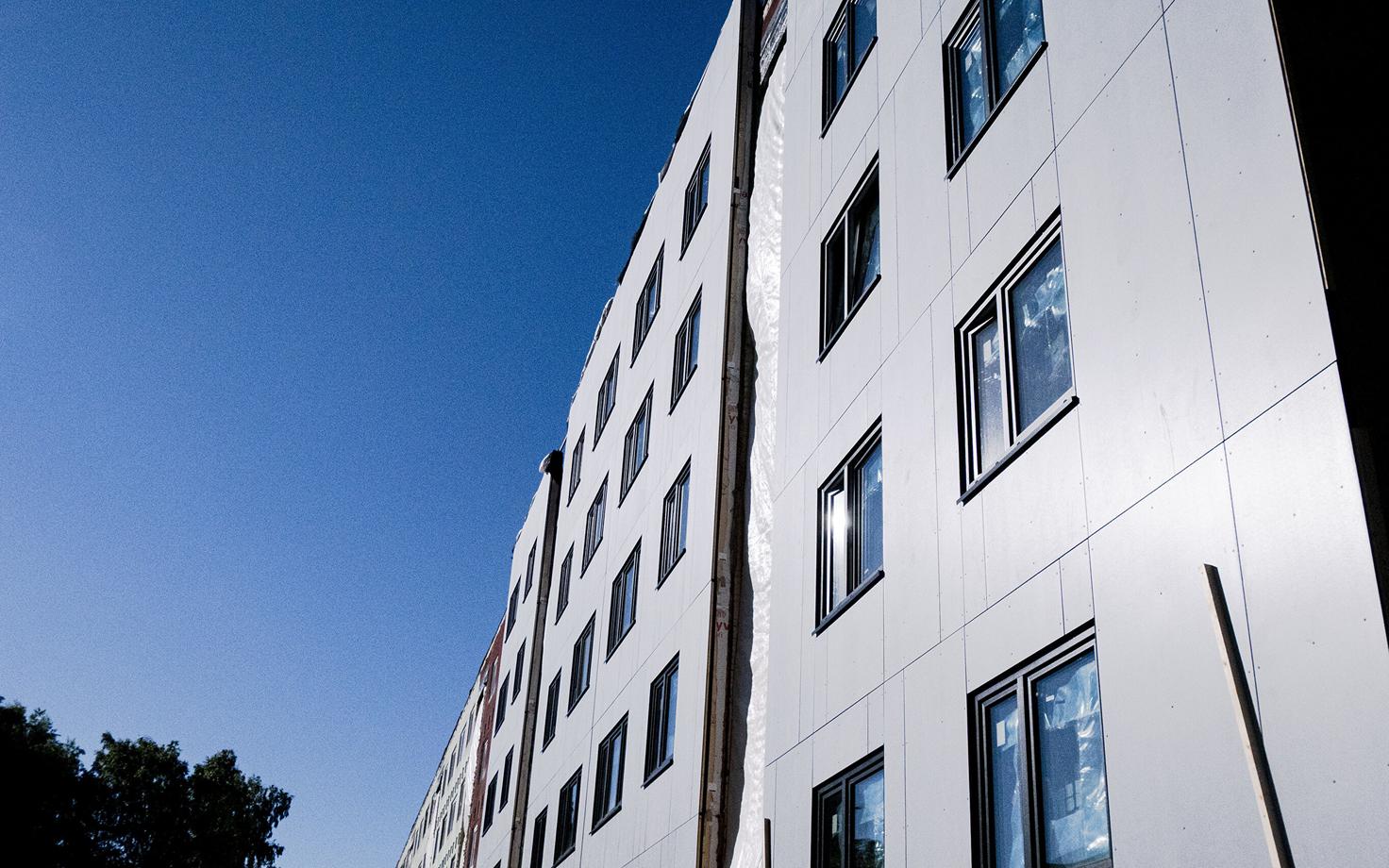
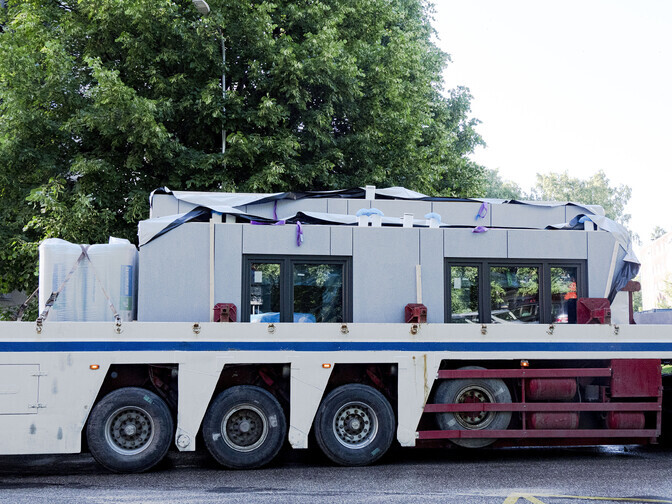
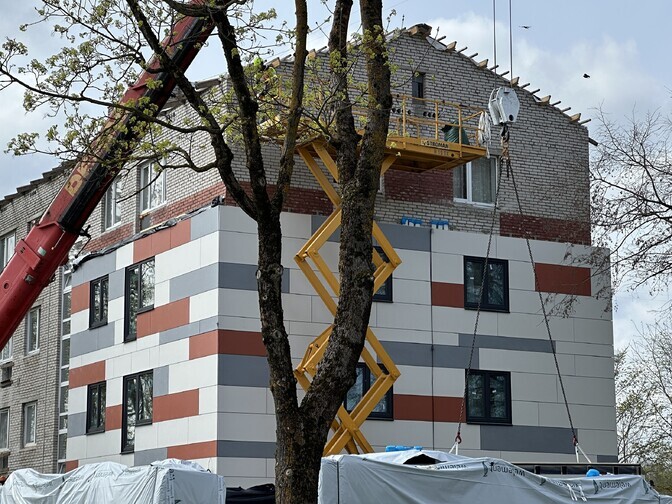
In practice, prefabricated renovation involves manufacturing exterior wall panels and sometimes roof elements in a factory, complete with insulation, windows, ventilation ducts and finished facades. The panels are then transported to the site and attached to the building. The main difference from conventional, on-site renovation is that the facade work is carried out in a factory, leaving only installation to be completed on-site.
One reason the government has begun favoring prefabricated renovation, which is considered faster, is that Estonia needs to renovate 14,000 apartment buildings over the next 20 years.
Minister of Infrastructure Kuldar Leis also told ERR that speed was partly behind the decision. "Prefabricated renovation allows apartment buildings to be renovated faster and to a higher standard. Much of the work is carried out in controlled factory conditions and the construction period on-site is shorter, meaning less disruption for residents," he said.
"Estonia has many apartment buildings constructed to the same design, making this an excellent solution for renovating them. Estonian companies also export prefabricated renovation solutions and their export potential is growing," he added.
Minister: All state subsidies must return to the state budget through tax revenue
However, according to TKL, only a handful of manufacturers of prefabricated facade elements in Estonia have experience with this type of renovation. A survey conducted by the association also indicates that interest in a subsidy covering just 20 percent of prefabricated renovation costs could be extremely low.
TKL therefore recommends that the government cover 30 percent of the cost of prefabricated renovation and provide subsidies of at least 20 percent for conventional and phased renovation projects.
The Estonian Union of Co-operative Housing Associations also emphasized, in an appeal to the government and the Ministry of Climate, that apartment associations must retain the freedom to choose a renovation method suited to their building, location and financial circumstances. The union recommends increasing the subsidy for prefabricated renovation to 35 percent and extending the 20 percent renovation subsidy to apartment buildings undergoing conventional renovation.
However, the Ministry of Climate has no plans to change the current support program. Leis said the reason the government does not want to increase its contribution beyond 20 percent is that all the funding comes from the state budget and is expected to return to it in full through tax revenue.
"The renovation subsidies for the current EU funding period, which is coming to an end, have already been allocated, but we will have to wait several more years for the next funding period. To avoid a multiyear gap in renovation support, we requested funding from the state budget this time. The allocation came with two important conditions. First, the measure must be budget-neutral, meaning a 20 percent subsidy that provides meaningful support for renovation while ensuring that taxpayers' money returns to the state budget through tax revenue," he said.
"The second condition was that the measure must contribute to increasing Estonia's export capacity. Prefabricated renovation provides work for Estonian prefabricated building manufacturers and engineers and helps develop an industry with higher added value and export potential," he added.
According to Leis, there is no reason to fear a shortage of contractors. He said Estonia has a strong prefabricated building industry and that experience with prefabricated renovation is growing. In addition, the €160 million is to be distributed in two rounds, giving companies time to expand their production capacity.
TKL, however, noted that prefabricated renovation is not necessarily faster or better in quality.
"Installing factory-made facade elements that also incorporate ventilation ducts is only one part of a building's comprehensive renovation. The remaining construction work does not differ significantly from the work carried out during conventional renovation," TKL said, adding that potentially faster facade installation does not automatically translate into a faster or higher-quality renovation project overall.
Regular renovations to be supported using EU funds
Leis, however, is confident that directing all the funding toward prefabricated renovation is the right decision and that the entire €160 million will eventually be allocated.
"Consultations with market participants give us confidence that there are apartment associations willing to undertake renovation projects under these conditions. The plan is to direct the entire €160 million allocated from the state budget toward prefabricated renovation," he said.
Leis added that support for conventional renovation will continue under the EU's next funding period.
"At the same time, it is quite likely that subsidy rates will remain lower than in previous years, as demand for support is several times greater than the available budget. This will allow the state to help more apartment associations," he said.
The government also plans to expand the range of apartment buildings eligible for support. Previously, subsidies were available only for apartment buildings that had been put into use before 2000, but the new round will have no such restriction.
Leis acknowledged that prefabricated renovation is not suitable for all apartment buildings. However, he said that since the previous funding round had primarily supported smaller-than-average buildings, it is now only fair to balance this out by directing support toward medium-sized and large apartment buildings constructed to standardized designs, which are well suited to prefabricated renovation.
--
Editor: Marcus Turovski


