Ida-Viru County seeks local training for mental health nurses to ease psychiatrist shortage
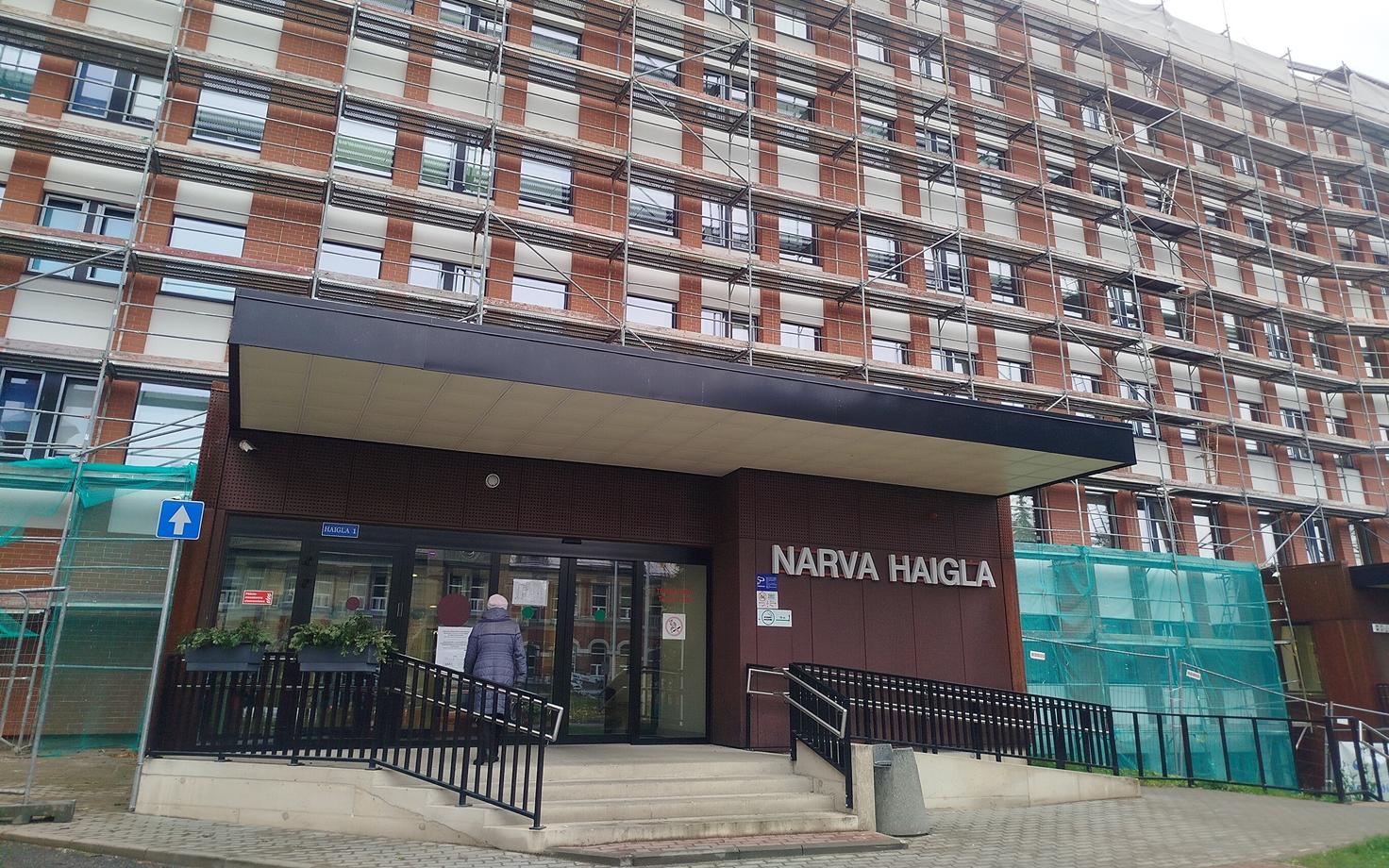
Ida-Viru County is now facing a critical shortage of psychiatrists, and local governments and health care providers are jointly calling for mental health nurses to be trained locally.
Representatives of local governments and health care providers told the education minister in a letter that Ida-Viru County has long had a shortage of mental health specialists.
They said the situation has now become critical because of changes to psychiatric services, including the end of inpatient psychiatric care at Ahtme Hospital at the end of March next year.
Narva Hospital recorded more than 6,000 outpatient psychiatric appointments in 2022, but fewer than 4,800 a year later. The decline was due to a shortage of specialists, while patients' need for care remained undiminished and the wait to see a psychiatrist exceeded six months.
Health care providers in Ida-Viru County raised the need for local training in mental health nursing two years ago, and the signatories stressed that concrete solutions are now needed.
"With no realistic prospect of rapidly increasing the number of psychiatrists, the region cannot simply wait for more specialist doctors to qualify. At the same time, we need solutions we can put into practice by developing the professional skills of our existing nursing staff," the signatories explained.
They added that when people do not get help in time, their condition can deteriorate further. Alongside their mental health problems, they may struggle to manage daily life, work, study, maintain family relationships and participate in society.
According to the letter, Ida-Viru County has nurses who are willing to pursue further training, but studying in Tartu or Tallinn alongside full-time work and family commitments is difficult and costly, and health care providers cannot spare large numbers of nurses at once for an extended period in another region.
"It is important to bear in mind that healthcare providers in Ida-Viru County cannot spare large numbers of nurses at once to allow them to study in another region for an extended period," the letter says.
Training most mental health nurses locally in Ida-Viru County would allow them to combine study with work, complete clinical placements at local health care facilities and fill needs across psychiatric departments, family medicine centers, specialist care and elsewhere.
"Mental health nurses cannot replace psychiatrists or solve the shortage of specialist doctors on their own. But making targeted use of their skills can strengthen team-based care and help patients see the right specialist in time," the Ida-Viru County representatives said.
The local governments and health care providers want the Ministry of Education and Research to work with the Ministry of Social Affairs, Tallinn and Tartu health care colleges and partners in Ida-Viru County to explore training mental health nurses locally through a suitable master's program or another form of study, with a substantial share of in-person teaching in Ida-Viru County and the rest organized flexibly.
The Ida-Viru County Association of Local Authorities and regional health care providers says it also wants to help estimate how many students might enroll, assess employers' needs, identify clinical placement opportunities and evaluate funding options together, including whether funding from the Just Transition Fund could be used alongside other sources.
The letter was signed by the mayors of Alutaguse, Jõhvi and Lüganuse rural municipalities and of Kohtla-Järve, Narva-Jõesuu and Sillamäe, the chair of Narva City Council, and representatives of Ida-Viru Central Hospital, Narva Hospital, Järve Health Center, Corrigo, the Neeme Family Medicine Center, Karell Ambulance Service and the Iidla Family Medicine Center.
Tallinn Health Care College, which was also among the recipients of the letter, said it already plans to launch a mental health nursing specialization in its health sciences master's program in Kohtla-Järve next year and intends to apply for funding from PRÕM+, a program for developing vocational and higher education.
"We do not yet know whether we will receive funding, and that will determine whether the planned training goes ahead," said Tallinn Health Care College rector Ulvi Kõrgemaa.
She added the master's program aims to train specialist nurses with advanced expertise, while general nurses can also provide mental health nursing care within their scope of practice where a specialist nursing qualification is unnecessary.
"That is why we see an important role for continuing education and microcredential courses alongside the master's program in developing mental health nursing care in the region. These can help nurses already in practice develop their skills and improve access to mental health nursing care," Kõrgemaa said.
The Ministry of Education and Research plans to decide its position on the issue by next week.
--
Follow ERR News on Facebook and Twitter and never miss an update!
Editor: Karin Koppel, Andrew Whyte


