Estonia opens €110M hybrid solar-battery park to stabilize Baltic power grid
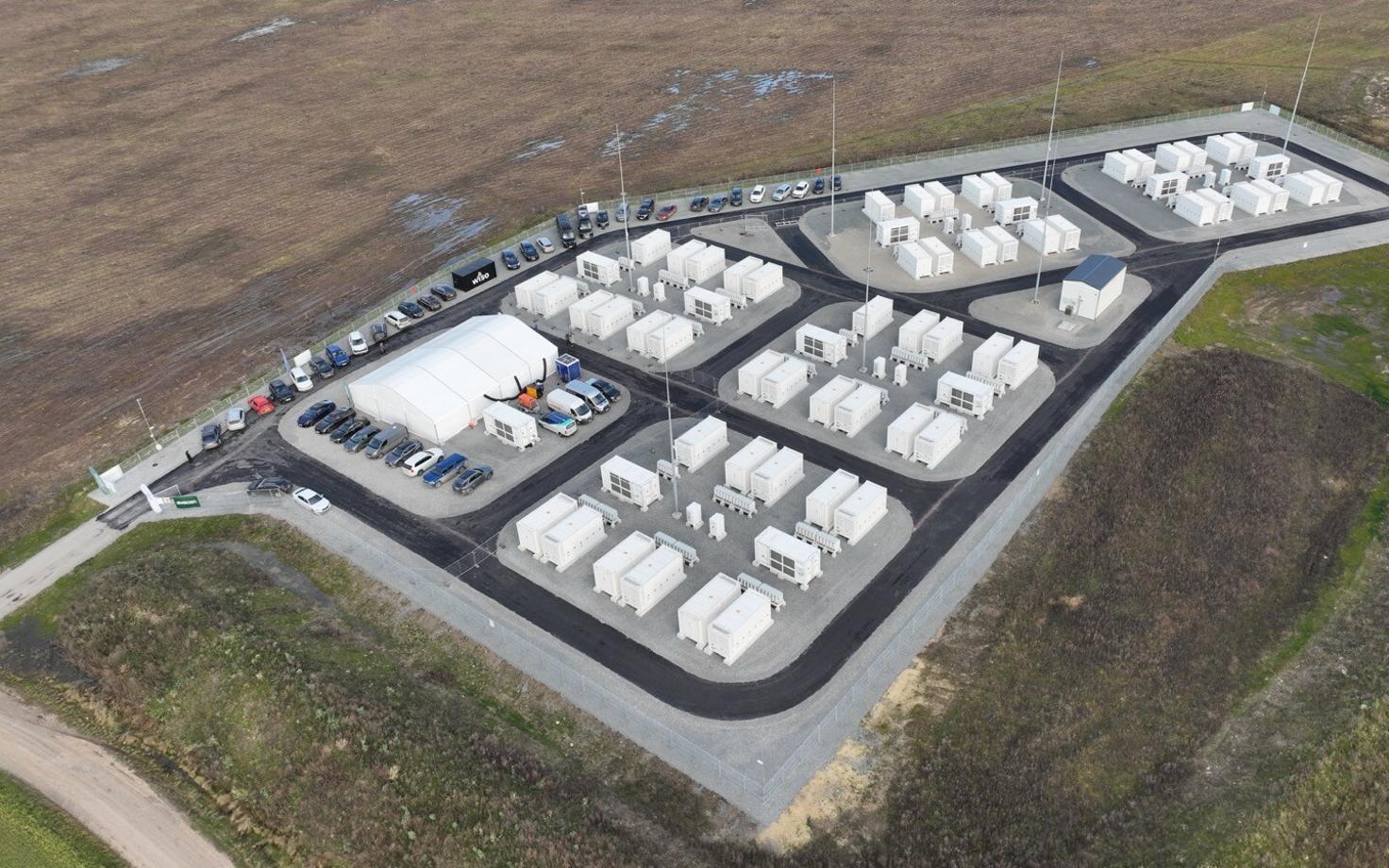
Estonian developer Evecon and French investor Mirova opened a €110 million hybrid energy park near Lihula, pairing a 77.5-megawatt solar farm with a 250-megawatt-hour battery.
The Kirikmäe facility stores cheap midday solar electricity and feeds it back during peak demand, providing critical frequency reserves to stabilize Estonia's electricity grid.
Estonia has needed to maintain its own frequency reserves since disconnecting from Russia's power grid in February 2025 to synchronize with the Continental European network.
The hybrid park combines the existing Kirikmäe solar farm — which was Estonia's largest when completed in October 2024 — with a newly built 55-megawatt battery storage system, forming a single integrated power asset.
"The more solar and wind power we have in the electricity system, the more flexibility we need to keep generation and consumption in balance. A solar farm generates electricity when the sun shines, which isn't necessarily when demand and market prices are highest," said Evecon CEO Karl-Joonatan Kvell.
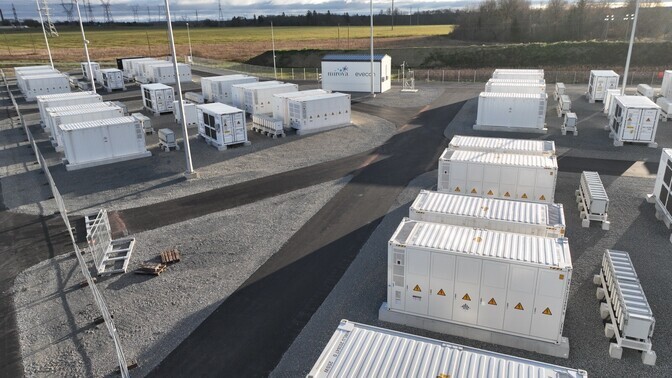
"Battery storage is essential to making solar power more controllable. The battery stores energy during hours when prices are lower and feeds it back into the grid when demand is higher. Because it can respond quickly, the battery also provides frequency reserves that help keep the power grid stable," Kvell explained.
Mirova and Evecon developed the site through their joint venture, Baltic Renewable Energy Platform (BREP), backed by a nearly €85 million financing package from Swedbank. BREP also signed a 10-year flexibility and power purchase agreement with German firm Pure Energy — the first of its kind in the Baltic states — covering the battery alongside the Kirikmäe, Imavere and Lohu Metsa solar farms.
Main contractor WiSo Engineering built the battery facility after starting construction in January 2026.
"The battery storage system is technically ready, and the final grid and market tests are nearing completion. In a couple of years, we have helped complete nearly 700 MWh of battery storage capacity, including the Sipa battery park. Almost half of that capacity came from adding battery storage to existing solar farms," said WiSo Engineering CEO Risto Virveste.
Estonia has rapidly expanded grid-scale battery storage since disconnecting from Russia's BRELL grid and synchronizing with Continental Europe in February 2025. Earlier in 2026, Evecon, Mirova, and Corsica Sole opened the 200-megawatt, 400-megawatt-hour Hertz 1 and Hertz 2 battery parks in Harju County, continental Europe's largest such complex. These facilities compete on the Baltic frequency reserve market, helping curb balancing price swings as renewable generation grows.
--
Follow ERR News on Facebook and Twitter and never miss an update!
Editor: Andrew Whyte, Marko Tooming


