Justice chancellor: A single test should not rule out a preferred school
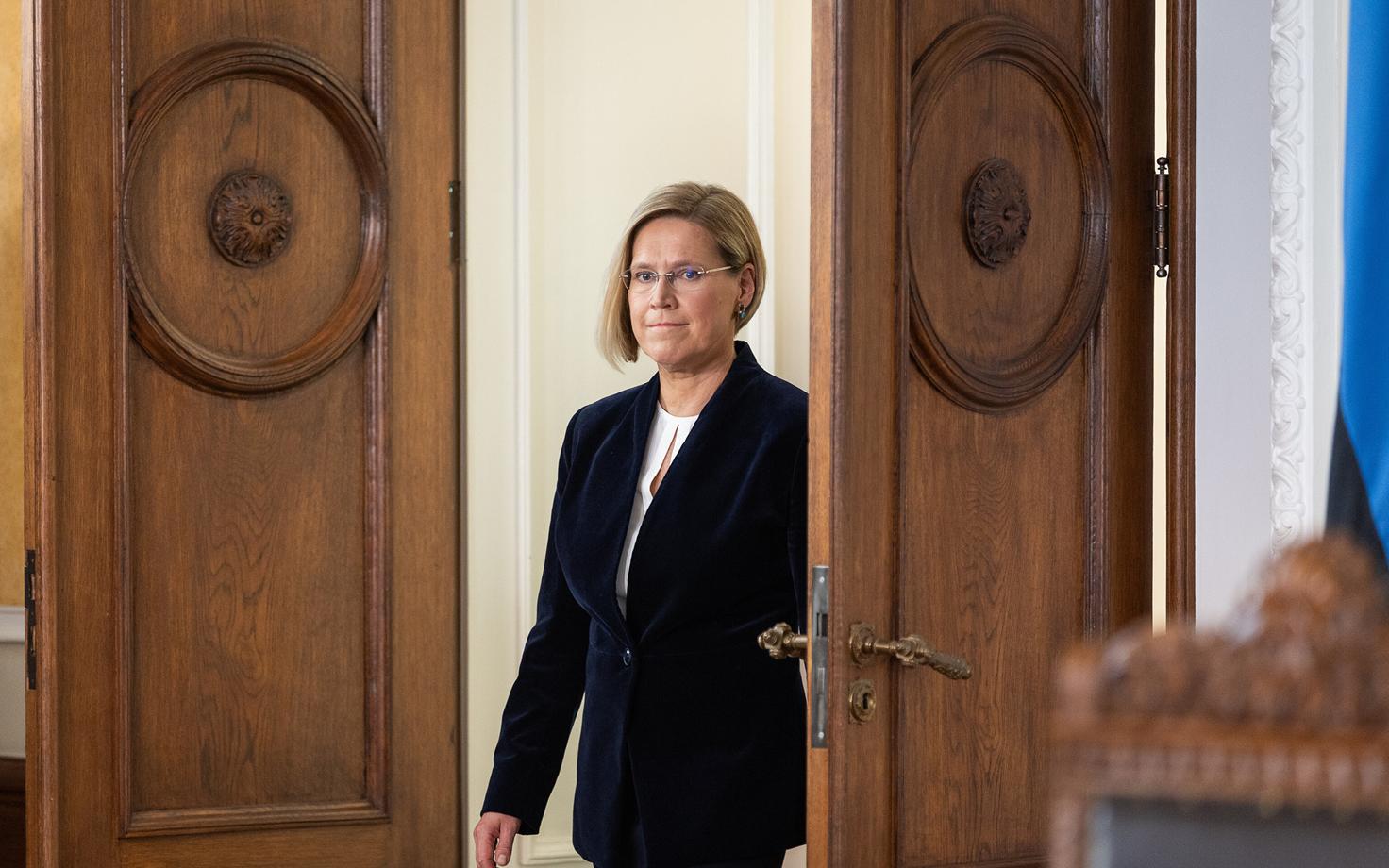
Chancellor of Justice and Children's Ombudsman Ülle Madise said that fierce competition for high school places has put basic school students under intense pressure, forcing them to give up extracurricular activities and undermining their sense of security.
Many young people who have completed basic school in Estonia still do not know, even at the beginning of September, which school they will be able to attend for upper secondary education. Those who found out over the summer where they had secured a place had to contend with new requirements that caused considerable headaches for both students and parents. Chancellor of Justice and Children's Ombudsman Ülle Madise said the situation is difficult.
"I wouldn't want to be a basic school graduate. Probably not a minister, teacher or parent either — it really is a very difficult situation," Madise said.
According to Madise, the Chancellor of Justice's Office has received many inquiries concerning the new admissions procedure. However, she highlighted the children's advisory council, which operates under the Chancellor of Justice's Office and, together with representatives of the Estonian Union for Child Welfare, surveyed more than 3,000 young people. The survey revealed another concern in addition to the upper secondary school application process.
"It emerged that very many students had to give up their favorite activities while in basic school. Music lessons, sports practice and spending time with friends all fell by the wayside and all of that naturally affects a young person's well-being. The intense competition and pressure leave young people feeling as though a single failure could ruin their entire lives," Madise said.
Madise said there are certainly young people who can cope with such pressure, but a large proportion of children cannot handle such a situation.
"I think the minister [Minister of Education Kristina Kallas — ed.] is absolutely right — there should be a broader public debate about whether we want to continue like this. From our office's perspective, the answer is that it is better for young people to have more freedom and a greater sense of security. That does not hinder learning and becoming well educated; on the contrary, it supports it," the chancellor of justice stressed.
Madise said she hopes the ministry will also listen to and consider proposals from the Federation of Estonian Student Unions.
"Another issue that is very important to our office and on which I gave my first presentation back in 2015 is educational stratification. That, too, is part of the problem: We have enormous competition for places at the best upper secondary schools. Even though upper secondary schools generally provide a very good education, there is no need to go through this entire ordeal to get one. Once again, I recommend that everyone read the Estonian Human Development Report carefully and think about Estonian society and its future as a whole," Madise said.
Madise advised young people and parents who still do not have a school place or who have to attend a school that is neither close to home nor one they wanted to try to reduce their stress and sense of disappointment.
"At the same time, I very much hope that the ministry, cities and rural municipalities will do their utmost to help every young person find a path that suits them. This is extremely important for the future. The Human Development Report also discusses the importance of ensuring that no young person who actually has the ability to become, for example, a neuroscientist misses out on that opportunity simply because they did poorly on one test, because their family does not have the same financial means and opportunities as someone else's or because they happen to live somewhere else. Every child and young person in Estonia is worth their weight in gold. It seems to me that we all need to work together to ensure these problems are resolved quickly," the chancellor of justice and Estonia's president-elect said.
--
Editor: Marcus Turovski



