Triple murder case closed just as new DNA clue ties former police officer to the scene
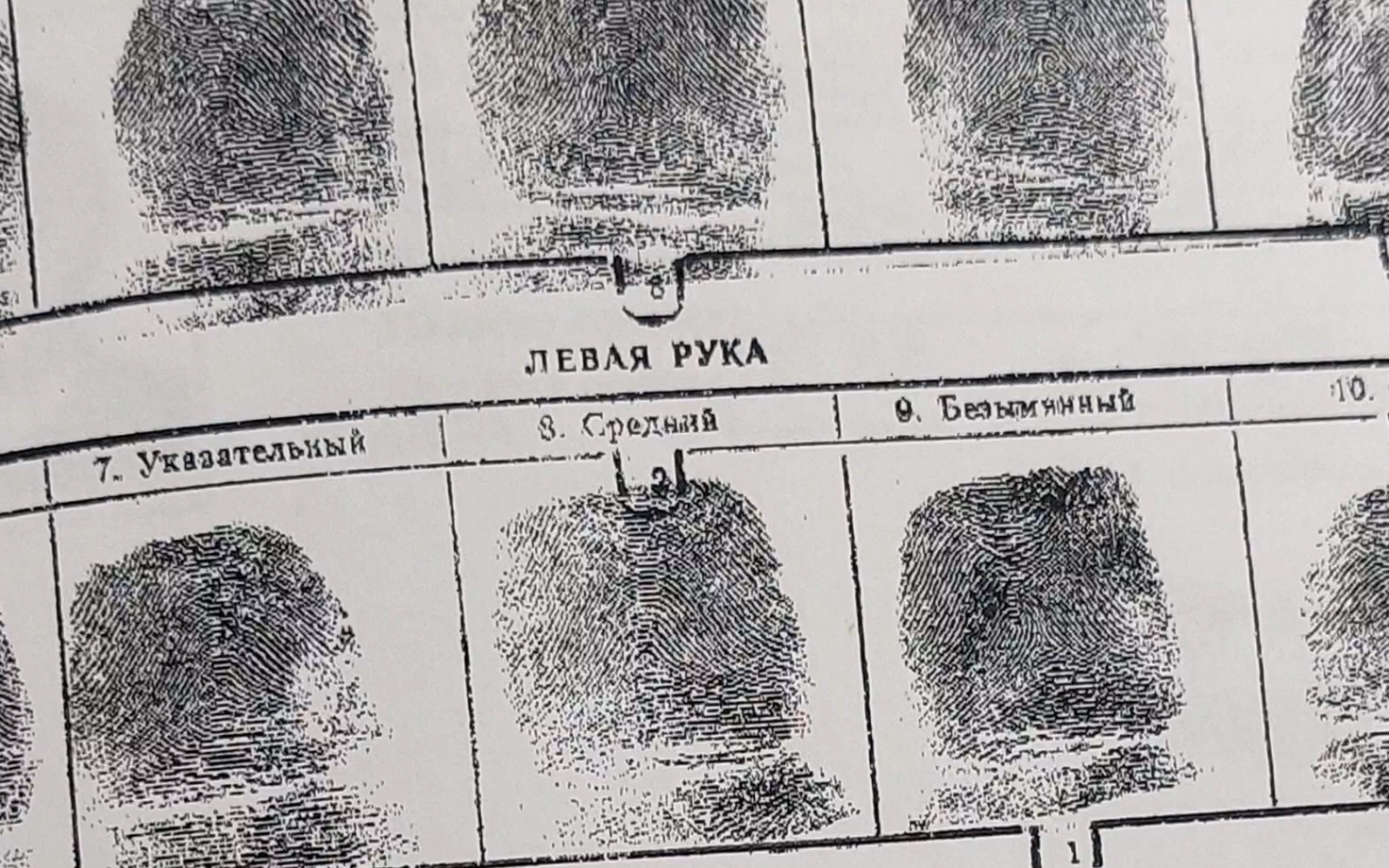
A promising lead emerged thanks to DNA evidence in a triple murder case that had remained unsolved for 25 years, but the investigation was subsequently closed under extraordinary and unusual circumstances.
In April 2001, three people — a father, his daughter and her former partner — were killed execution-style in a Tartu apartment. The case drew nationwide attention, not least because one of the victims was a senior Estonian Defense Forces officer.
For decades, the case remained cold. Then new DNA testing produced an unexpected suspect. But before investigators could establish how his DNA got to the crime scene, prosecutors concluded that the statute of limitations had expired.
The victims' families are left asking why the investigation ended just as a potential breakthrough appeared within reach.
"It was such a brutal murder that none of us went on living the lives we had before it happened," said Andra Lätt, the sister of victim Tiina Lätt.
"This is our small Estonia, and we have a crime like this that remains unsolved. Inevitably, you start wondering: Is it possible that someone simply doesn't want this case solved?" said Relika Alliksaar Williams, a friend of the victims and their representative.
The family link
Victims Tiina Lätt and Urmas Aal connected the two families.
Aal, the second-oldest of 10 children from Uhtna, had dreamed of a military career from childhood. After Estonia regained independence, he joined the Defense Forces, became an officer, wrote military textbooks and rose to acting head of the Estonian National Defense College.
"He was the pride of his hometown," his mother, Valeria Aal, recalled.
Tiina, the oldest of three children from Jõgeva, studied dentistry at the University of Tartu. Her longtime friend Alliksaar Williams described her as a "soulmate, sister, best friend and family."
Tiina met Urmas during her first year at university. He was 10 years older, legally married and the father of a young daughter. Their relationship eventually became strained, and in early 2001 Tiina moved into a two-room apartment on Põllu tänav that her family had bought for her studies. She and Urmas nevertheless remained on friendly terms.
Their families last saw them over Easter weekend in April 2001. On Good Friday, both visited Tiina's parents' farm in Laiuse. Tiina had planned to remain there until Sunday but unexpectedly returned to Tartu with Urmas.
"That was the last time we saw her," Andra Lätt said.
On Saturday evening, April 14, Tiina attended a party at a friend's apartment on Jaama tänav in Tartu. A photograph taken there is the last known image of her.
During the party, Tiina's handbag disappeared from near the apartment door. After several people searched for it, the bag mysteriously reappeared — but cash, Tiina's keys and her temporary driver's license, which listed her home address, were missing.
"In theory, someone could have taken the keys and known exactly which apartment they opened," Alliksaar Williams said.
Tiina called police and, the following morning, asked her father, Elmo, to come to Tartu with a spare key and change the lock.
At around 11:30 a.m. on Sunday, April 15, Elmo entered his daughter's apartment. Within the next hour, Tiina and Urmas arrived as well.
Then all three stopped answering their phones.
Their families searched Tartu through the evening. Eventually, they authorized friends to break into the apartment.
Alliksaar Williams called a mutual acquaintance who arranged for a locksmith to open the apartment.
"The locksmith drilled out the lock cylinder and said he didn't want to be the next person to see the bodies. I opened the door, turned on the hallway light and went into the living room, which was Tiina's room. That's where I saw Elmo's body," Alliksaar Williams recalled.
She said she was in shock, with everything seeming to happen in slow motion. Alliksaar's friend came out of the kitchen and pushed her back outside, telling her she should not see what was inside.
"No one dared tell us," Andra Lätt said. "My cousin's husband at the time was finally able to tell my mother over the phone that they were all dead."
Urmas' mother learned what had happened early the next morning.
"My other son called. He asked me to sit down and told me that three people had been found dead in the apartment in Tartu and that one of them was our Urmas," Valeria Aal recalled.
Early investigation
Even against Estonia's crime rate at the time, the killings were exceptional. A special Central Criminal Police task force was assigned to the case.
"It was the No. 1 story nationwide," former investigator Ain Balder said.
The apartment itself offered few obvious clues. There were no signs of a struggle and little disorder.
"At first glance, it gave me the impression that the bodies had been brought from somewhere else and placed in a clean apartment," Balder recalled in 2002.
The two men had been shot in the chest and then in the back of the head. Tiina had been shot in the temple. Five shots were fired, yet neighbors reported hearing nothing. The cartridge cases had been collected and the apartment door locked when the killer left. Investigators found virtually no unidentified fingerprints or DNA.
Theories ranged from personal motives and military connections to a burglary gone wrong. One possibility was that someone had stolen Tiina's keys intending to burglarize the apartment and killed the three when they unexpectedly arrived.
But several people involved in the case doubted that explanation.
"How many ordinary burglars did we have in Tartu who walked around with a suppressed gun tucked into their waistband, ready to kill the occupants at any moment?" former investigator Vallo Koppel said.
Balder said investigators thoroughly examined possible motives connected to Urmas, including military angles, without finding evidence that explained the murders.
Whatever the motive, police increasingly focused on one question: Who stole Tiina's keys?
A possible breakthrough
A few years later, they appeared to get an answer.
In 2005, a drug user named Aleksandr, imprisoned for other crimes, admitted stealing Tiina's handbag. He said he took the money and gave the remaining contents, including the keys, to an acquaintance named Aleksei.
"I don't remember exactly, but he said he wanted to go to the apartment and steal something. I think the apartment keys were in the bag," Aleksandr told police.
He also said Aleksei possessed an illegal gun.
Aleksei became a suspect in the triple murder but denied visiting the Põllu tänav apartment. He claimed he had instead passed the keys to another man, Radik, who had moved to Estonia from Russia.
Investigators could not question Radik: He had been stabbed to death in a dispute among drug users in late 2001 and buried in Russia.
Police used methods including hypnosis and a polygraph, but no one confessed and no physical evidence linked the men to the apartment.
"They pursued the stereo theft and those drug users relentlessly, but they could never prove that any of them had actually made it to the apartment," Alliksaar Williams said.
The investigation remained open but effectively dormant for nearly two decades.
New clue emerges 24 years later
That changed in 2022, when prosecutor Mari Kartau arrived in Tartu and discovered the case was still formally active.
"For a crime like this to remain unresolved for so long is very, very rare," Kartau said. "We thought there might still be something we could do, because it was extremely difficult to accept that this triple murder would simply remain unsolved."
Kartau was skeptical of the burglary theory. In a 2023 procedural document, she wrote that the evidence instead suggested "a planned serious crime."
Investigators retrieved evidence stored since 2001 and submitted it for modern forensic testing.
This time, they found something.
Male DNA recovered from a fork taken from the apartment kitchen matched a former police officer.
The discovery was particularly puzzling because the man had worked at the other end of Estonia at the time of the murders and had no known connection to the victims or the crime scene.
"To our knowledge, this person had not been at the crime scene and should not have had any connection to the people who were murdered," Kartau said.
The former officer was named a suspect and detained in early 2025. He denied involvement in the murders and could not explain the DNA.
"DNA doesn't lie," Urmas' sister Ursula Aal said. "So how did his DNA get into that apartment?"
The man's name is being withheld because he was never charged.
Investigators also discovered that in 2002, despite having no role in the murder investigation, he had accessed police database records concerning Urmas Aal and several other people connected with the case. He could no longer remember why.
There was, however, another possible explanation for the DNA: contamination.
Maarja Sadam, head of the DNA department at the Estonian Forensic Science Institute, said contamination in the DNA laboratory itself was not possible because the man's reference sample and the fork were analyzed almost two decades apart in different laboratories.
Earlier contamination elsewhere could not be ruled out. The fork had undergone fingerprint testing in 2001 under nonsterile conditions. But Sadam noted that the amount of DNA recovered from it was high enough to make accidental contact more than 20 years earlier "relatively unlikely."
Investigators therefore faced two possibilities: They had found a significant new lead, or an extraordinary forensic error.
Before they could establish which, the case took another unexpected turn.
Kartau discovered that the murders were subject to a statute of limitations.
Estonia abolished the death penalty in the late 1990s, while a new Penal Code took effect in 2002. Because of the interaction between the laws, murders committed during a brief period around that time were subject to a 10-year statute of limitations.
For decades, investigators and prosecutors had operated on the assumption that murders of this kind did not expire. As recently as November 2024, a chief prosecutor publicly said the Põllu tänav triple murder was not subject to a statute of limitations.
But in spring 2026, around the 25th anniversary of the killings, the families were informed that the investigation was being closed. Police returned evidence that had been stored for a quarter-century.
"It was a complete shock," Ursula Aal said. "We found out that they had DNA and everything, and then it turns out the case had already expired long ago. How can something like this be time-barred?"
Kartau acknowledged how troubling the timing appeared.
"To ordinary people, and especially to the victims directly affected by this, it seems terribly suspicious: You have just found a new, very intriguing lead, and then you suddenly discover that the statute of limitations has actually expired?" she said.
She stressed that the suspect's status as a former police officer had no bearing on whether charges could be brought.
Kartau nevertheless remains troubled by the case.
"As prosecutors, we don't come across cases like this every day — cases that stay with you — and this is unquestionably one that I would have liked to continue investigating," she said.
For the families, the legal end of the investigation has not brought closure. They hope renewed public attention might still uncover information about what happened inside the Põllu tänav apartment 25 years ago.
"It has torn apart several families here in Estonia and affected an enormous number of our loved ones, and now even their loved ones," Andra Lätt said.
"Many years have passed, but you still wonder what he would be doing or where he would be," Ursula Aal said. "How would all of our lives as a family have turned out?"
Anyone with information about the case is asked to contact "Pealtnägija" or the police, even though the investigation has reached a legal dead end.
--
Editor: Marcus Turovski, Johanna Alvin, Aleksander Krjukov
Source: "Pealtnägija"