Crimes against the Estonian state plea deal: Defendant faces 7 years in prison
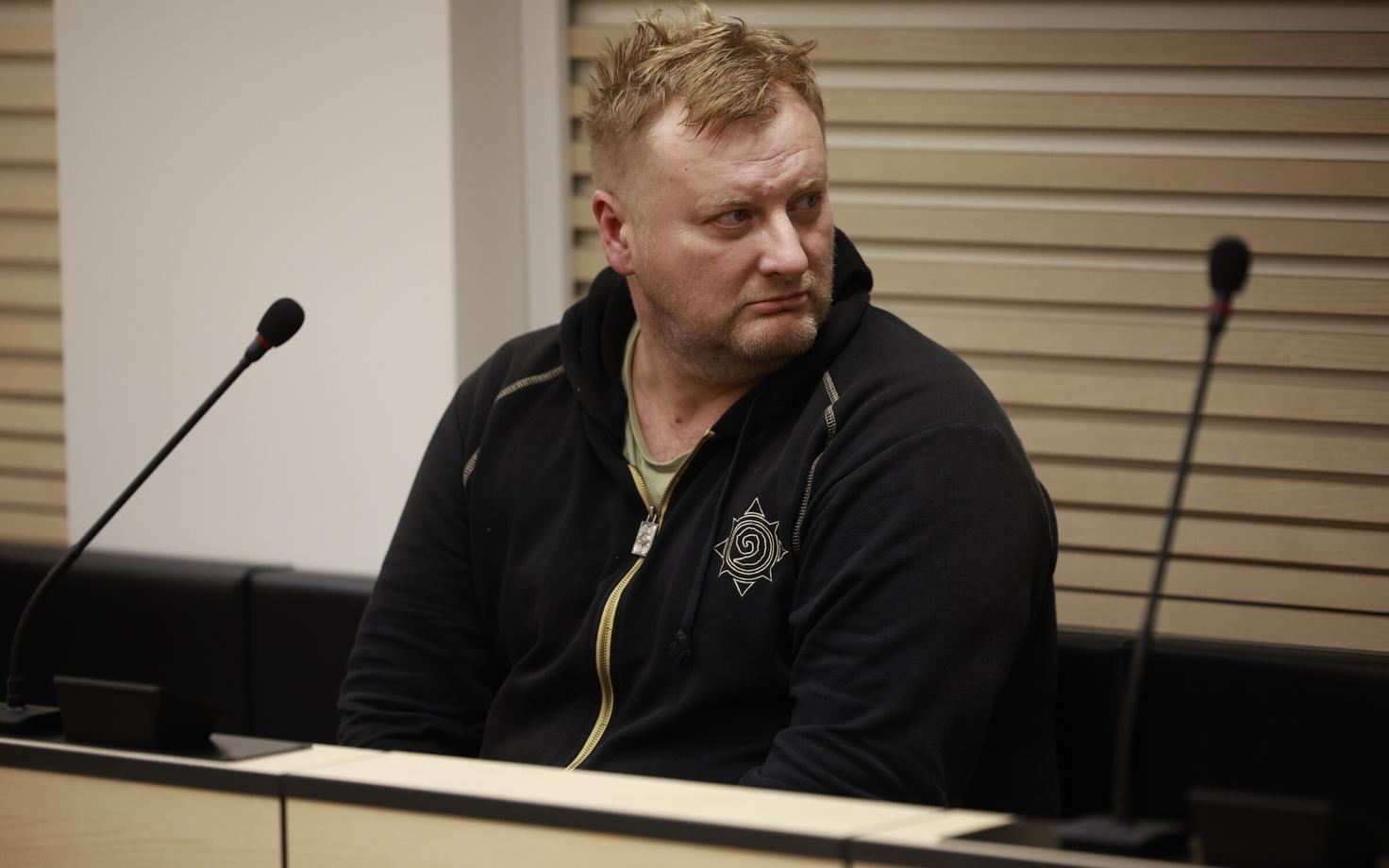
A plea agreement was struck on day one of the trial of a pro-Kremlin propagandist charged with activities harmful to Estonia's national security.
Oleg Bessedin's hearing began on Tuesday at the first-tier Harju County Court. He has been in custody since his arrest last November, and faces seven years in prison under the terms of the plea agreement.
Lead State Prosecutor Taavi Pern told ERR's Russian-language portal that, following negotiations with the defendant and his lawyer, the Prosecutor's Office agreed to resolve the criminal case via a plea agreement provided Bessedin serves seven years of actual prison time and the court confiscates more than €73,000 in assets obtained via the crimes.
Those crimes are primarily acting against Estonia's national security. "According to the evidence, Oleg Bessedin, in cooperation with Russian state institutions and their representatives, has consistently participated in influence activities directed against Estonia. The aim has been to spread propaganda and disinformation in order to divide Estonia's population and sway people into supporting Russia's political choices," Pern said.
According to the indictment, Bessedin also disseminated narratives which Russia has used to justify attacks on neighboring states, amplifying them in such a way as to give those involved in Russia's political decision-making the impression that these represented the overall views of Estonia's Russian-speaking population; he also benefited materially from these activities.
"According to the evidence, Oleg Bessedin has directly harmed Estonia's security, and earned criminal proceeds in doing so," Pern said. "Therefore, Oleg Bessedin's crimes against the state must be followed by a severe and effective punishment. The prosecutor's condition for resolving the criminal case through a plea agreement was a lengthy actual prison sentence and the confiscation of proceeds obtained through the crimes."
Bessedin's lawyer, Dmitri Školjar, said that after two preliminary hearings, Tuesday's hearing began via ordinary proceedings, and an agreement was reached during the day. "We met, discussed it all day and resolved the disputed issues. Ultimately we signed a plea agreement and submitted it to the court today, asking for the proceedings to continue under a plea agreement," Školjar said.
He added that the court only received the materials on Tuesday, and still needs to review them, meaning it will make a decision on the agreement on Monday, September 28.
Sentences to run concurrently to 7 years' real prison time
Under the agreement, Bessedin will be sentenced to seven years in prison, comprising two years and nine months for violating sanctions and six and a half years for activities against the state. The agreement provides for the sentences to run concurrently, with the more severe sentence partially absorbing the lesser one, resulting in a total sentence of seven years.
The sentence will also take into account the time Bessedin has spent in custody since last November. He will be eligible to apply for release on parole after two and a half years.
The court also granted the defense lawyer's request to lift additional restrictions on his client. Bessedin has been held in solitary confinement, and according to his lawyer, his isolation from other detainees should now end, which will also allow him to communicate with his family.
The charge sheet states that from May 2022 at the latest, Bessedin actively participated in influence activities conducted for the benefit and in the interests of Russia and, in the course of these activities, was in contact with various Russian institutions, officials and individuals involved in Russian influence operations.
According to these charges, by taking part in these influence activities, he committed non-violent acts directed against Estonia's independence, sovereignty and territorial integrity.
Additionally, prosecutors have charged him with distributing sanctioned Russian television shows and content in Estonia via television and social media channels under his control, as well as making sanctioned content available to other channels. The purpose of the international sanctions imposed on Russia is to prevent the spread of Russian propaganda and disinformation and to curb Russia's capacity for aggression.
--
Follow ERR News on Facebook and Twitter and never miss an update!
Editor: Karin Koppel, Andrew Whyte


