Risky maneuvers preceded deadly 2025 helicopter crash in Finland
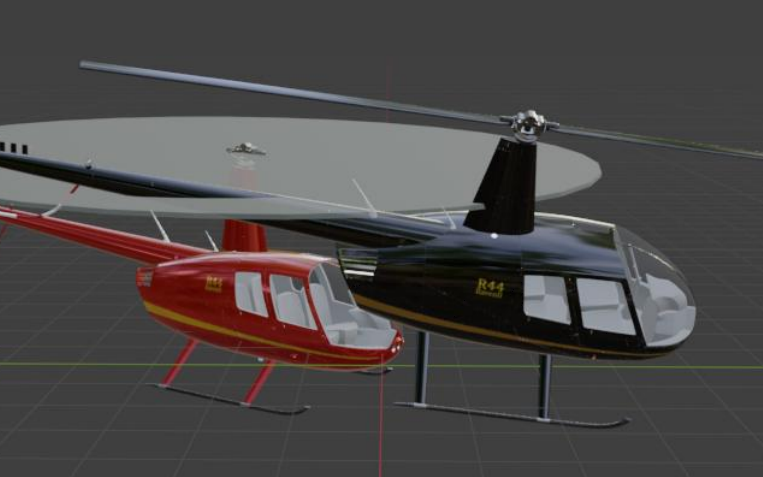
The investigation into the helicopter crash in Finland that killed five people found that the aircraft had been flying in a formation‑like manner while disregarding standard group‑flying practices, and had performed several dangerous maneuvers before the collision.
On 17 May 2025, two helicopters were en route from Tallinn to Piikajärvi airfield in Finland. Both took off from the Linnahall heliport in Tallinn at 11:17.
The two Robinson R44 helicopters carried five people: businessman Priit Jaagant, his wife, and Mihkel Kapp in one aircraft; Oleg Sõnajalg and Tiit Kuusk in the other.
The helicopters flew together and collided near Eura airfield at 12:34 at an altitude of about 200 meters. All five people on board were killed.
Finland's Safety Investigation Authority (OTKES) and Estonia's Safety Investigation Bureau (OJK) presented their findings on Tuesday.
Investigators determined that the helicopters flew in a manner resembling formation flight but did not follow the principles required for such operations. In group flying, pilots must agree in advance on key procedures, positioning, and designate a lead aircraft. In this case, the helicopters' positions changed repeatedly — one leading at times, then the other.
OTKES lead investigator Janne Kotiranta said the dangerous maneuvers were such that the accident could have occurred already over the Gulf of Finland.
Investigators noted that without agreed positioning and procedures, predicting the other aircraft's movements becomes extremely difficult, increasing the risk of collision.
After one hour and 16 minutes of flight, the helicopters approached Eura airfield.
Over the airfield, the Jaagant helicopter on the left suddenly turned sharply right toward the north. The second helicopter continued on its original course.
The aircraft collided at 12:34 over the northeastern corner of Eura airfield at roughly 200 meters above ground.
Emergency services received several calls, including an automatic emergency call from a mobile phone onboard one of the helicopters.
The first call came at 12:35 from an airfield employee, triggering rescue operations. The caller reported seeing two small helicopters collide about one kilometer north of the airfield. He said the helicopters broke apart in the air and had people onboard.
The crash sites were located in dense spruce forest, about 150 meters from the nearest forest road and roughly 100 meters apart.
Paramedics and a medical helicopter doctor confirmed all occupants dead at the scene.
Limited visibility and distraction
Trajectory analysis showed that neither pilot recognized the other's intentions or noticed the other aircraft before the collision.
A reconstruction by OTKES indicated that the pilot of the helicopter that veered dangerously right may have had his view obstructed by the passenger seated beside him.
Investigators also found that the pilots' attention may have been focused on aircraft controls, conversations with passengers, or external distractions such as events, people, or other traffic at Eura airfield — rather than on monitoring each other. Attention may also have been directed toward approach procedures for the destination.
Investigators could not determine from onboard systems whether autopilot was used. They said it is possible it was engaged at some point. Autopilot use can reduce situational awareness, including monitoring surroundings during turns, because the pilot is no longer actively executing the maneuver.
No technical faults were found that could have contributed to the collision.
A collision‑avoidance system would not have helped in this case, investigators said. Because the helicopters flew close together for most of the journey, such a system would have issued continuous alerts.
The ELT emergency locator transmitter did not activate during the crash. The device is designed to send a radio signal to help rescuers locate the aircraft. Failure to activate can slow rescue efforts and delay aid.
In this case, the ELT's non‑activation did not affect locating the wreckage, as eyewitnesses immediately began searching, investigators noted.
--
Editor: Valner Väino, Argo Ideon


