Bank of Estonia sees 2.4% growth ahead despite rising debt

Bank of Estonia's latest economic forecast shows that Estonia's economy will grow 2.4 percent over the next two years. The country's long‑term problem, however, is the rapid rise in government debt, and interest costs are becoming more burdensome.
Bank of Estonia (Eesti Pank) presented its updated forecast on Tuesday, saying Estonia is recovering from the downturn and the economy will grow 2.6 percent this year and 2.4 percent in each of the next two years. To maintain growth, productivity must increase in the coming years.
Several factors have supported growth. The uniform income‑tax exemption introduced this year has boosted incomes and private consumption, and growth is also driven by higher government spending financed through rising government debt.
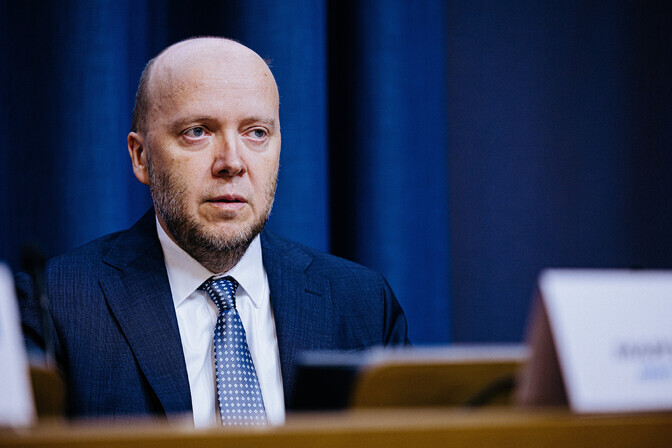
"Defense investments have also increased, but a large share of that money goes toward purchasing imported goods," said Bank of Estonia Vice President Martti Randveer.
At the same time, conditions in foreign markets have improved for Estonia, supporting the export‑oriented industrial sector. The diversification of export markets in recent years is paying off. Export is also supported by global investment growth related to artificial intelligence, which has stimulated foreign trade.
"Considering all the problems in the global economy, it has held up relatively well, and a special stimulus or push has come from the fact that investments related to artificial intelligence have been very large and have affected the economies of many countries. This has also revived foreign trade," Randveer said.
Further growth depends increasingly on productivity
Part of the current growth, however, comes from recovery. Much of the recent expansion has been enabled by reactivating production capacity freed up during the downturn. Industrial capacity utilization has reached levels similar to years of stable growth.
During the downturn, companies tried to avoid layoffs and work intensity may have declined. Now many sectors have recovered, and labor is being used with similar intensity as before the downturn.
Further growth therefore depends increasingly on productivity, because fewer unused resources remain in the economy. Increasing productivity requires new investments, broader adoption of technology, and workers with suitable skills. Bank of Estonia said economic policy should focus more on improving productivity and competitiveness.
The outlook is clouded by the risk of faster inflation. Inflation has slowed over the past year, but price pressures may strengthen again. Rising global natural‑gas and fuel prices are already accelerating inflation, directly affecting energy and transport costs and indirectly raising the prices of many other goods and services.
"Crude oil prices have risen by almost half, and natural gas prices have doubled. A new trend we are also seeing at Estonian gas stations is that gasoline and diesel prices have increased especially fast," Randveer said. "This is happening because crude oil is becoming more expensive, and the costs related to oil refining are also significantly higher."
Geopolitical situation affects the energy market
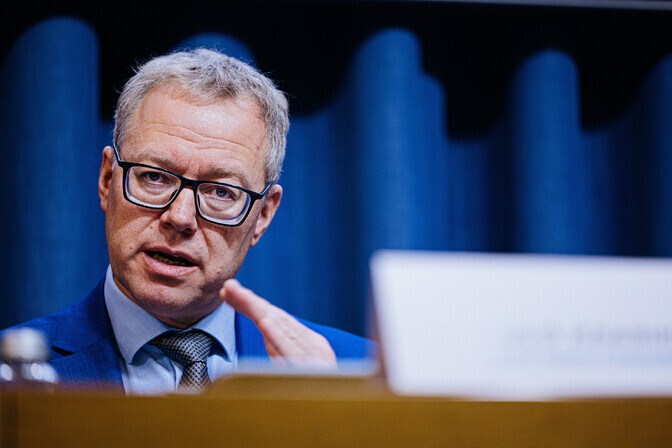
Bank of Estonia Governor Ülo Kaasik said the central bank's forecast is sensitive to external assumptions: if the energy crisis persists, inflation could rise significantly. The bank therefore prepared additional scenarios in case energy‑market conditions turn out better or worse.
"If oil prices stay high for longer or rise even further, it naturally means inflation could climb higher and remain elevated longer," Kaasik said.
Price growth may therefore slow only temporarily, and business and consumer confidence will continue to be affected by energy prices and the geopolitical situation. To curb faster inflation, central banks raise interest rates, which in turn dampens investment and spending by companies and households.
One of Estonia's key problems remains the large budget deficit. If the government takes no steps to reduce it, the deficit will exceed €2.2 billion in the coming years.
The deficit is somewhat larger than in earlier forecasts because wage and private‑consumption growth has been slower than expected, and tax revenue is rising more slowly as a result.
Government interest costs will rise to €472 million
The central bank stressed that a large long‑term deficit is a serious problem, because rising debt also increases annual interest costs. According to the forecast, the state will pay €472 million in interest in 2028, and the amount will continue to grow in the following years.
Rapidly rising debt and a large deficit make public finances more vulnerable and reduce the government's ability to respond to the next downturn.
The longer decisions to reduce the deficit are delayed, the harder they become, because deeper cuts and higher taxes will be needed later.
Bank of Estonia said the debt problem could be eased if political parties agreed on a reasonable level for Estonia's debt burden and how quickly the budget deficit should be reduced.
One recommendation is to follow Estonia's domestic fiscal rules. That would mean reducing the deficit by 0.5 percent of GDP per year and would help keep the government's debt burden at roughly 30 percent of GDP in the long term.
Key indicators
| 2024 | 2025 | 2026 | 2027 | 2028 | |
| GDP at current prices, billions of € | 39.87 | 41.86 | 44.40 | 46.72 | 49.19 |
| GDP change at constant prices, % | 0.2 | 1.3 | 2.6 | 2.4 | 2.4 |
| CPI, % | 3.5 | 4.8 | 3.1 | 2.3 | 2.1 |
| Unemployment rate, % | 7.6 | 7.5 | 6.4 | 5.8 | 5.7 |
| Average salary change, % | 8.1 | 5.6 | 5.5 | 4.6 | 4.8 |
| Average gross montly salary, € | 1981 | 2092 | 2207 | 2309 | 2419 |
| Budget deficit, % of GDP | -1.1 | -2.0 | -4.5 | -4.8 | -4.5 |
Eesti Pank economic forecast key indicators. Source: Eesti Pank
This article has been updated on 22 September with comments from Ülo Kaasik and Martti Randveer.
--
Editor: Karin Koppel, Argo Ideon


