Expert: Elections in Russia are pure submission play and power ritual
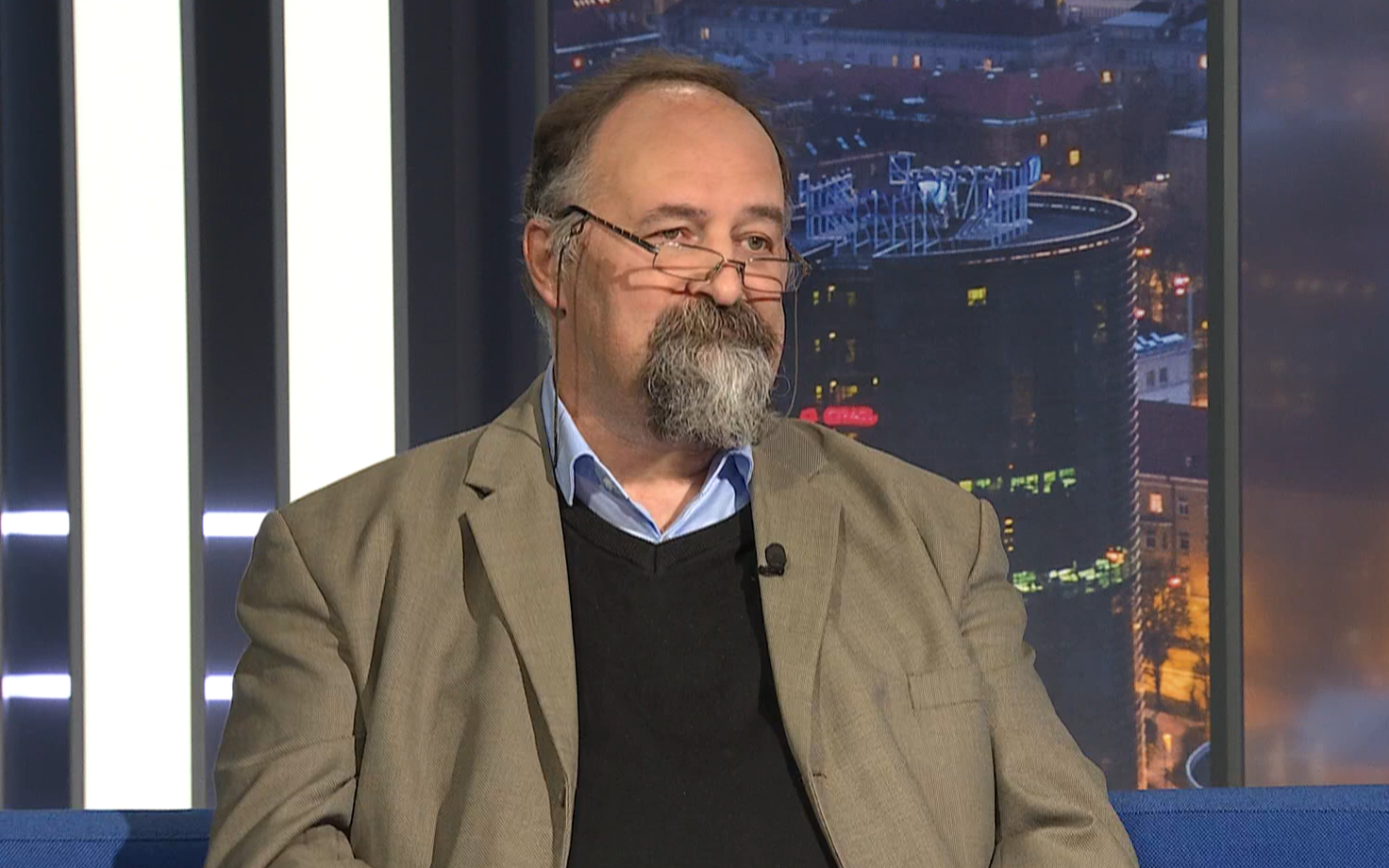
The recently concluded Russian State Duma elections will not bring any political change, because their only purpose was to demonstrate the regime's dominance, says Russian politics expert Karmo Tüür.
The Russian State Duma's so‑called elections ended on Sunday, and there was no need to wait for the official count, because you posted the results on your Facebook page before they began appearing through official channels. What did Putin need these "election" results to show?
Formally, approval for his course — meaning the war. Everyone is used to the idea that votes in Russia are counted as needed, but what was the need this time? It was very simple: the result had to be higher than in the previous parliamentary elections and lower than in the presidential election. It had to fit into a narrow corridor.
I predicted turnout would be between 55 and 60 percent — it was 59, so I did well. I thought the ruling party would be given about 70 to 75 percent of the vote, but they got 79, so I missed a bit there. It was a trust referendum or an approval referendum: look, the people are with us and we are doing everything right.
Yet some information suggested local officials were instructed to keep turnout as low as possible. What is behind that idea?
The signals were very contradictory. The claim that turnout should be low to keep the ruling party's support high never sounded convincing to me. They needed to show nationwide support, but if turnout is low, it is not nationwide. So both indicators — turnout and support for the "right" party — were drawn to record highs. Never before have so many people taken part in Duma elections, and never before has the ruling party received so many votes. The current 79 percent is the maximum; the previous high was 74 — unbelievable.
Everything went exactly according to plan. Were there any observers on the ground, and was it possible to monitor the process?
Sporadically and selectively. In some places the procedures were more or less in line with the rules, but there were also polling stations where observation was impossible. Naturally, many closed polling stations could not be observed at all. For example, one school building had three polling stations, but all budget‑funded employees were directed to one of them. The other stations stood empty, and that is where the observers were.
How was the "correct result" achieved?
Honestly, I do not know — we were not sitting there. Do these numbers truly reflect actual votes? I doubt it. There are mathematical models that show what probabilistic voting looks like and what the current result looked like. It has been said that about 33 percent of paper ballots were pure falsification. As for electronic voting, no one knows anything precisely. And there is a small twist with votes cast abroad. Russia opened polling stations overseas, and political emigrants began urging at the last moment that since voting for Yabloko was impossible, people should vote for the New People party.
So a kind of selective opposition theoretically existed?
Yes, even though it was a pure Kremlin pocket party, opposition‑minded voters assigned it some value and decided to vote for it. Exit polls could be done outside polling stations abroad, and it turned out that New People received up to 60 percent of the vote, while United Russia got only two to three percent — slightly different results.
We have seen social media videos showing armed men accompanying voters into the booth and watching over their shoulder to ensure the mark goes in the right box. Did it really work that way?
The footage with armed men comes from the so‑called new territories — the occupied areas of Ukraine. Elections there were held under very freely interpreted rules: on tree stumps, on car hoods, and in the presence of soldiers. Elections should not be held at all in occupied territories, and no election is legitimate when an armed man stands next to you, but they did it anyway.
How many protesters could even come out — people who want to say they do not want to live like this and do not like it? Or is the population so thoroughly intimidated that nothing of the sort happens?
What counts as protest? Some people turned voting into a circus by wearing Spider‑Man or bear costumes to show the whole thing as a farce — is that protest? There were also cases where ballots in the box were ruined by pouring substances on them. Is that protest, or is it just someone slightly unstable? You cannot talk about protest as such, because in such a tightly closed political system there is no place for it.
Would Yabloko have been a potential threat or at least able to gather some votes before it was banned?
That is exactly why it was banned. It is the first time the Russian Central Election Commission allowed a party to run and then revoked the permission through the courts shortly before the vote. Polling showed they could get up to 20 percent. The issue was not the number of votes, because that would not have changed the country's political course, but it would have allowed them to talk on television for at least two to three weeks about wanting peace. That opportunity to speak was shut down — the important thing was not the election result but the ability to speak.
Was the topic of Ukraine banned during the pre‑election period?
Yes and no. Since all mobilizing rhetoric revolved around Ukraine — that we are at war and under attack — the topic was present, but in a twisted way from our perspective.
As needed at any given moment. Ukraine was also attacking Russia very intensively with drones — more than a thousand reached the country. Many were shot down, but many reached their targets. Does this affect Russian public sentiment?
It certainly creates dissatisfaction — what is going on, what is this mess — but not protest in the literal sense. There is no logical connection that the mess exists because we did something wrong and now this is punishment. The explanation is very simple and short: the mess exists because Ukrainians are attacking and Ukrainians are to blame.
For whom or for what does Putin need such elections? Does he need to show something inside the country? It seems the outside world does not take this seriously.
I know it is not polite to answer a question with a question, but at the same time, Kadyrov held elections in his republic, where he received 98.5 percent of the vote. Why does Kadyrov need that? Does it give him more power? It is a ritual that simply shows strength, power, and superiority. We want it this way and you must submit. Pure submission play.
It seems almost silly to ask, but nothing changes — everything was and continues as it was? Nothing changes inside the country?
On one hand, there were electoral games, but on the other hand, there is foreign, domestic, and security policy — and there is no connection between the two. Yes, the elections are over. Yes, maybe some political changes will happen, but not because there were elections or because the result was what it was. Decisions were made earlier, and their implementation may have been postponed so they could first play this game and then proceed. Elections have no connection to policy.
--
Editor: Johanna Alvin, Argo Ideon