Estonian Orthodox Church takes Moscow ties law to European rights court
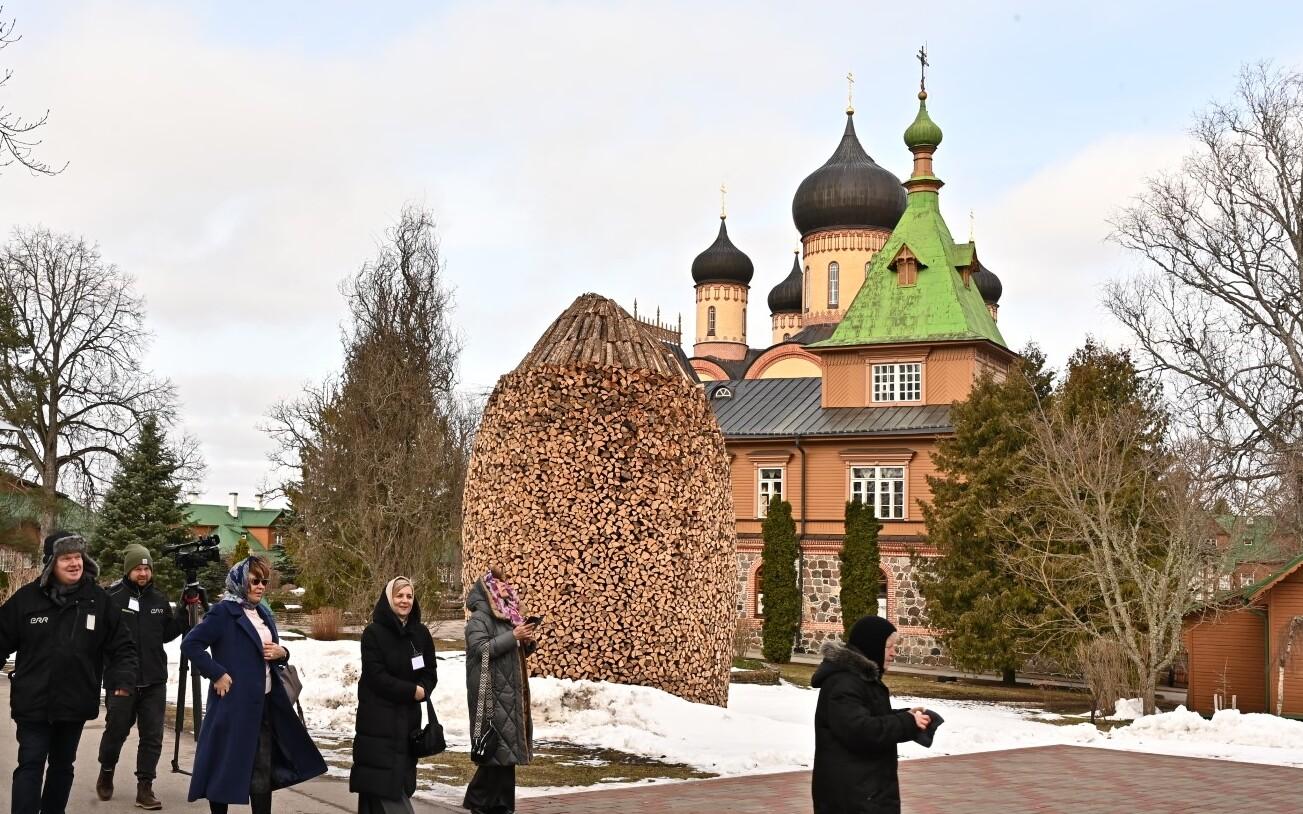
The Estonian Christian Orthodox Church and Pühtitsa Convent in Kuremäe, Ida-Viru County, have filed complaints with the European Court of Human Rights over a law requiring them to sever ties with Moscow.
A law, upheld by the Supreme Court on June 8, requires the church to sever administrative links with Moscow and appoint a new metropolitan by December 28. If ties are not severed, the interior minister intends to seek their compulsory dissolution, their lawyer says.
"If ties with the church have not been severed by then, the interior minister intends to go to court to seek their compulsory dissolution. The law refers to statutes and affiliations. However, what the Interior Ministry actually wants is for local Orthodox believers to renounce their religious ties with a church that has existed for more than a thousand years," said Artur Knjazev, sworn attorney representing the church and monastery.
"The church and convent are not simply being asked to amend a document," Knjazev said. "In Orthodox Christianity, you cannot rewrite the rules of the church yourself and remain Orthodox. Anyone who does so has renounced the faith they have chosen and have considered true until now. The Interior Ministry is offering a choice between two impossible options – choose another church or we will put an end to your current activities."
"The European Convention on Human Rights regards the aspect of religious freedom concerning a person's beliefs as an absolute right. The state may regulate how religion is practiced publicly. It may not force a person to change their faith. That is exactly what is happening now," Knjazev added.
On June 8, the Supreme Court sitting en banc upheld the law by interpreting it as prohibiting administrative ties rather than religious ties. However, six of the 17 judges, including the chief justice, dissented, finding that the law failed to meet the requirement of legal certainty.
"The concept under which this law was rescued does not appear anywhere in the law itself," noted sworn attorney Steven-Hristo Evestus, also acting for the church.
"Throughout this process, the Interior Ministry has maintained that both administrative and religious ties must be severed. The court's interpretation is one thing, but the ministry's actual demand is another. According to the ministry's own position, the church and monastery fall under the prohibition established by the law, and this is precisely the basis on which pressure is being exerted. Such pressure must not be applied," Evestus added.
"No Estonian authority has established that the church or convent has done anything unlawful," Evestus noted. "There has been no court ruling, no charge, no proceedings. There is a punishment, but no offense. Our church and convent have not endangered anyone, cannot endanger anyone and have no desire to do so. Yet their religious identity is being interfered with."
"The monastery is home to around 90 nuns whose average age is over 60. Nuns have been praying there for more than 135 years. They always pray for our country, Estonia, too. If the prayers of 90 elderly women can undermine national security, then the problem is not with the nuns. The problem lies somewhere else," Knjazev continued.
According to Knjazev, the church will continue its dialogue with the Interior Ministry. The ministry has not invited the monastery to a separate meeting.
The amendments to the Churches and Congregations Act entered into force on June 27, 2026, giving religious associations six months to comply.
The Estonian Christian Orthodox Church, formerly the MPEÕK, dropped "Moscow Patriarchate" from its name in March 2025 to become the Estonian Christian Orthodox Church (EKÕK). The Interior Ministry nonetheless judged this break symbolic but insufficient, as the church's statutes still required Patriarch Kirill of Moscow's signature on major decisions.
There are two major Orthodox churches in Estonia — the EKÕK, and the Estonian Apostolic Orthodox Church (EAÕK), historically tied to Constantinople and not Moscow.
Interior Ministry: Law must be implemented
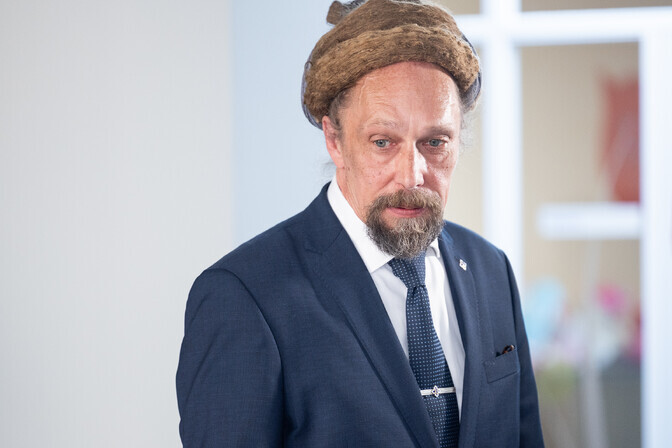
Ringo Ringvee, adviser at the Interior Ministry's religious affairs and civil society department, commented later on Thursday that Estonia is a state governed by the rule of law, where the supremacy of law applies.
"Freedom of religion is guaranteed in Estonia and will remain so. The state does not interfere in how anyone practices their faith. The Interior Ministry proceeds from the amendments to the Churches and Congregations Act that entered into force in the summer, which prohibit an Estonian religious association from having ties with a religious organization or spiritual leader based in a foreign country whose activities endanger the Estonian state," Ringvee said.
Ringvee added that the ministry has begun advising those religious associations, including the EKÕK, who feel affected by the legislative changes.
"Last week we met with the EKÕK and agreed to begin reviewing statutory ties. It is therefore surprising that the press release from the EKÕK and Pühtitsa Convent lawyers states that the interior minister has a firm intention to go to court to forcibly dissolve entities linked to the Moscow Patriarchate. We take the position that we are currently in a phase of dialogue. At the same time, the law must be implemented," Ringvee said.
Ringvee noted that everyone in Estonia also enjoys the right to take things to court.
"Nearly 600 religious associations operate in Estonia, and only the EKÕK, which is administratively linked to the Moscow Patriarchate, has challenged a law which the Supreme Court has recognized as constitutional," Ringvee said.
Ringvee added that the Interior Ministry cannot assess the arguments presented in the media, as the ministry has not seen the text of the complaint. "Based on the lawyers' press release, we cannot make a judgment on the text of the complaint. Nor has the Interior Ministry been involved in the proceedings by any court in connection with this complaint, so no steps are planned either," Ringvee added.
Editor's note: This piece was updated to include comment from Ringo Ringvee.
--
Follow ERR News on Facebook and Twitter and never miss an update!
Editor: Andrew Whyte, Mari Peegel


