The Third Fiscal Republic
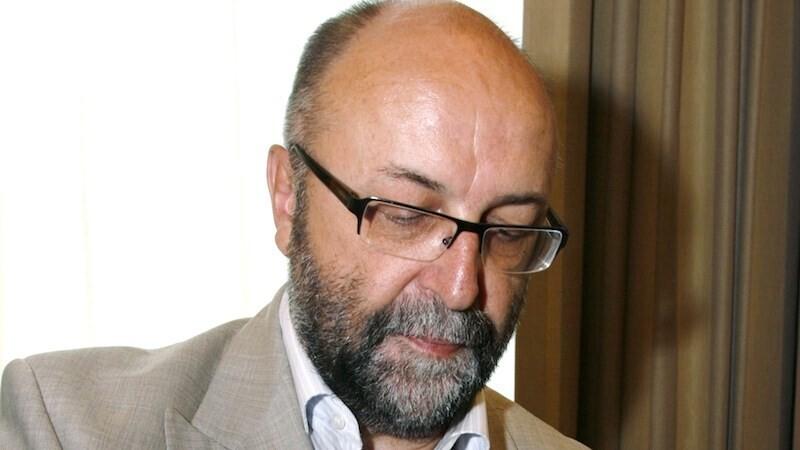
Rait Roosve, the head of the Bank of Estonia’s cash and security department talked with Michael Alexander of the London Banknote and Monetary Research Centre. They discussed the currency reform of 1928, the re-introduction of the Estonian kroon in 1992 and the 2011 adoption of the euro.
Michael Alexander: I’m pleased to be speaking with you just before Estonia’s final changeover to the euro, can you tell our readers when the current kroon was first introduced after Estonia’s re-established independence?
Rait Roosve: It was re-introduced in 1992, about a year after the Republic of Estonia regained our independence. Monetary reform took place in just three days, from June 20 to 22, 1992. This was a very important event for us, not just as a technical project but as a social event. There were a thousand volunteers who helped with the changeover and during this time, there were so few people in Estonia who had any experience with this kind of activity. If you compare the information available during the changeover to the Euro to what was available in 1992, it is totally different. There were only a few articles in Estonian newspapers and also some information on radio and television. I’m pleased to say that the monetary reform was very successful and it was very radical at the time because Estonians were able to exchange old Soviet rubles to a limit of 150 kroons. You could deposit as many rubles as you wanted, but you could only physically take 150 kroons per person which was a small amount even then. We waited a long time for our own money, and at that time there were experts who said that we would not be able to launch a successful currency. It was thought that the currency would last maybe six or seven months before it would collapse or something. But the reality has shown that the Estonian kroon has served us well almost 20 years.
You could say Estonia demonstrated it could be done and the Bank of Estonia paved the way for other countries to do the same from my own observation at the time.
Absolutely, it’s my personal opinion that at that time, there was such a strong psychological trust in the new currency from Estonians. Just months before the changeover the economic mood in the country was really terrible. The old ruble had an inflation rate of about a thousand percent a month which made the situation worse. My own personal memory of this time was when I received my own 150 kroons. I went to a small shop with a lot of western goods which you could buy, but only with hard currency, the shop did not accept rubles. Just from this first purchase with my own Estonian kroons, I felt for the first time that we were really free.
Although Estonia had a rather short history with its own separate currency, what were the challenges for Estonia in those early years [the 1928 changeover] in comparison to the challenges of 1992 with the issue of the second kroon?
In the early days, Estonia’s economy relied much more on agriculture than it does today, although agriculture is still an important aspect of our overall economy. The design of the banknotes of this era also reflected this reliance of agriculture with the depictions of men and women who worked on the land. Today, we are a more modern and diverse economy with reliance on the technological, industrial and e-commerce side. In the early days of Estonian independence and even during the Soviet years, we and the other Baltic countries were a very important region for food and still had some autonomy with regard to our agricultural methods. We were crucial for supplying food to Moscow and St. Petersburg. Today, we’re not as rural a society as we were. I think that’s the greatest difference from the kroon of pre-war Estonia and that of the Estonia in 1992 and today. With regard to the changeover in 1928, the 1992 monetary reform was much shorter than the 1928 reform as it took just three days to complete, all the denominations were launched simultaneously. During the very first monetary reform, different denominations entered circulation gradually, the 10-kroon banknotes were launched in 1928, 50-kroon notes in 1929, five-kroon notes in 1930, 20-kroon notes in 1932 and finally, 100-kroon notes in 1936. This meant the new currency was adopted over eight years.
Can you explain why the kroon, when it was introduced, was pegged at a specific ratio to the former Deutschmark?
The objective of both the monetary reform and Estonia’s central bank was and still is, price stability. The Deutschmark was the most suitable anchor currency owing to its stable exchange rate and to the volume of the currency in circulation, which provided an additional guarantee to our own currency’s stability. When the Bank of Estonia was planning monetary reform, a special committee was formed which included both Estonians and foreign experts including an Estonian who lived in Sweden, Rudolf Jalakas. Since Estonia was a very small country and with little in respect to assets or reserves of its own at the time, the move was taken in order to give the currency value and to “make it move” so to speak. The kroon needed to be supported and accepted by other countries. There was debate about this at the time but overall, the pegging of the kroon (EEK 8 = DM 1) to the Deutschmark sense. There was a guarantee of its value, and without this, it might have collapsed as the critics had suggested early on. It was also important at this time to build up our own reserves from 1992 and we have done this. We also had a high-speed development and still managed to add to our special reserves.
This made the kroon the closest related European currency outside the eurozone to the euro. Has this made the adoption of the euro in Estonia easier in some way?
Yes, it definitely simplified things. Since the past 20 years, the fixed exchange rate first to the Deutschmark and later to the euro has got the people of Estonia used to the fact that economic survival needs to be achieved in ways other than playing with the exchange rate. Economic adjustment must take place through regulating income and expenditure. I believe that today, when much of Europe talks about reducing fiscal deficits and debt burdens, this way of thinking has made it easier to reach decisions that are painful, but vital to take.
There was speculation that the country would adopt the euro as early as 2007, and I believe plans were underway for this date for quite some time. Can you tell our readers what the delays were?
After our accession to the EU in 2004, it had been the country’s goal to join the eurozone at the first opportunity, that is, when all the Maastricht criteria were met. In 2007, Estonia failed to meet the inflation criterion, because owing to the EU accession, our economy started growing faster than we had anticipated. The expansion was caused by a sharp improvement in the financing environment and a vigorous increase in trading with the EU. All these factors together caused the economy to grow faster than its potential, which, in turn, brought about high inflation.
Is there concern that when the euro is in circulation, Estonia will see similar prices for the cost of goods and services to that of Finland, for example, and that psychologically there will follow a significant increase in the cost of living? Is the Bank of Estonia doing anything to ensure that prices remain constant?
In Estonia, the adoption of the euro will not increase prices on its own. The price level is determined by people’s purchasing power and the introduction of the euro will not increase this in any way. The reason why inflation has been accelerating since spring lies in the growing price of commodities in the global market and also in the lagged impact of last year’s tax rises our government made to cut fiscal deficit. In the longer term, the Bank of Estonia expects inflation to remain slightly higher than the euro-area average. This will be due to the convergence process and not just because the euro is in circulation.
Do you think there is a greater sense of pride that Estonia is the first Baltic country to adopt the euro?
That’s a difficult question to answer. There was a while back, a general belief that we three Baltic States would progress at the same speed and eventually adopt the euro at the same time. The comparison of the economic conditions between our Baltic neighbors meant that about a year and a half ago it became clear that we would adopt the euro first. There was even a debate then that it might be better to wait for this. The prognosis for the euro and Estonia is good, so when there was the economic and political opportunity the suggestion was we must try and join the eurozone. I think most Estonians are proud of this achievement and development overall.
I personally will miss the kroon when I visit, but that aside, do you think Estonians will also miss their kroon, or do you believe that it is just the nature of the Estonian people to adapt and embrace change which benefits the country?
The Estonian people have got used to and have grown fond of the kroon, and it will be emotionally difficult to let go of the national currency. In a way, the situation is similar to our accession to the EU – people needed time to realize the need for that step. Both the government and the central bank are determined to make sure the practical changeover will be as smooth as possible. You can see on the back of the commemorative banknote folder which you have been given, there is an inscription which reads Having such a symbol of our nation in our hands every day allows us to say that the country is in the hands of us all. Young and old in our country are involved with this transition, and the government has been very active in showing how the adoption of the single currency is both an economical and a social process for the country. Economical stability is, after all, the dream of all Estonians.
Excerpted from Michael Alexander's longer interview. Read the full interview in Coin Update News.


