Estonia: Russian grain transit through Baltic ports 'not acceptable'
Estonia's leaders say Russian grain exports through its ports are "not acceptable" and practically non‑existent, as the Baltic states discuss joint measures to curb transit of Russian and Belarusian grain.
Estonia, Latvia and Lithuania are discussing joint measures to curb Russian grain exports as Moscow seeks alternative routes, with Lithuanian officials saying shipments will not pass unchecked.
Russia boosted grain transit through the Baltic Sea after Ukrainian attacks largely halted Russian shipments via the Black Sea, and so far this has continued due to commercial considerations, one expert said.
Prime Minister Kristen Michal (Reform) told ERR in a written comment that Russia has exported only "marginal" quantities of grain via Estonia and that any further exports would not be acceptable.
"Estonia's position is clear: We do not consider it acceptable for Russia to use Estonian ports to export its grain. Russia bears sole responsibility for the security situation in the Black Sea, which has seriously disrupted both Ukrainian and Russian grain exports. It would be cynical if Russia were simultaneously able to reroute its grain exports through Baltic ports. We are discussing a common approach with Latvia and Lithuania and reviewing what steps we can take in Estonia," Michal wrote.
The Ministry of Foreign Affairs also told ERR that the transit of Russian grain through Estonia is practically non‑existent and a solution is being sought with the other two Baltic states to make it wholly a thing of the past.
"Estonia is currently working with Latvia and Lithuania to find a common solution to block the transit of Russian grain through Baltic ports and prevent the export of grain stolen from occupied Ukrainian territories," the Foreign Ministry wrote.
Spokesperson for the Tax and Customs Board (MTA) Pavel Prokopenko said Russian grain is not transiting through Estonia, nor being imported.
"Since the beginning of the full‑scale war, no grain has been imported into Estonia from Russia, nor has any transited through Estonia. Imports of this commodity were relatively low even before the war. And since imports of grain of Russian origin are currently subject to high tariffs, it is not economically worthwhile for Russia to import it into the European Union," Prokopenko said.
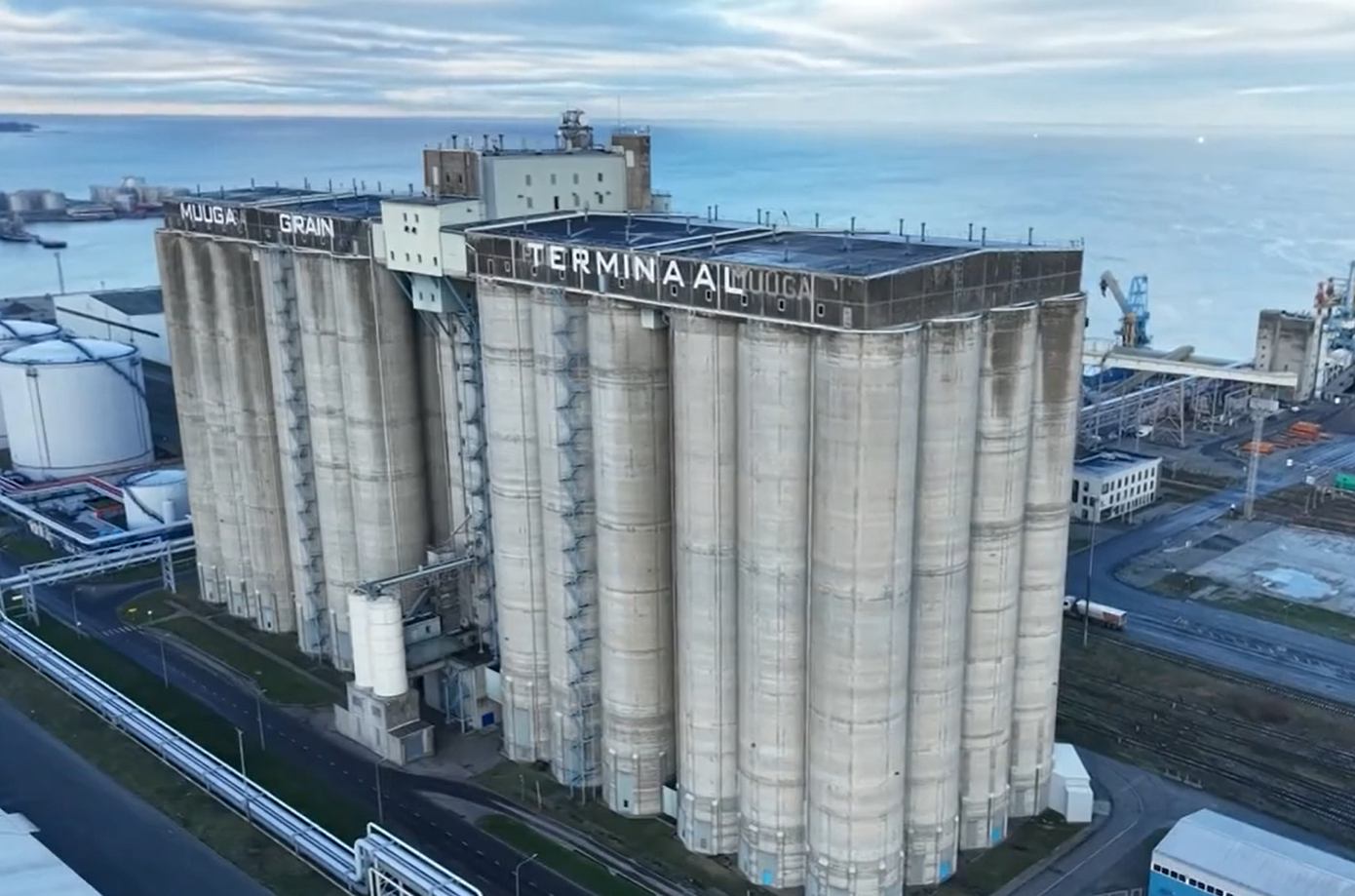
At the same time, logistics expert Raivo Vare said Estonia, Latvia and Lithuania do all have substantial grain‑handling capacities, particularly in Estonia; the large grain elevator at Muuga just east of Tallinn is evidence of this.
"In Estonia, [capacity] is five and a half million tonnes, in Latvia around two to three million and the same in Lithuania. That is very significant potential. All of our ports are operational and provide higher‑quality services than Russian ports. In relation to the markets to which grain is shipped — sometimes across the Atlantic or, for example, to the east coast of Africa, not to mention Europe — the Baltic region and Baltic ports are better positioned logistically," Vare said.
"At Muuga Port, we have a grain elevator built in 1986, with subsequent additions. At the time, it was the most modern in the world and remains absolutely state‑of‑the‑art today. More accurately, it should not be called an elevator but a grain terminal, along with the deep‑water berths at Muuga Port. These are unique because they can accommodate large grain tankers. Others do not have such capabilities because the berths in Lithuania and Latvia have a shallower draft," Vare went on.

"Latvia and Lithuania have developed their own capacity as well. The scale is somewhat smaller, but essentially all three Baltic states are very well equipped with state‑of‑the‑art facilities. Their ships are simply a little smaller, but otherwise it is all the same," the expert continued.
While Russian grain has been transported through Latvia and Lithuania, Vare said grain passing through Estonia has instead been Kazakh grain brought via Russia. Latvia has traditionally had the closest cooperation network with Russia, while the Estonian terminal is "entirely separate and independent" and Lithuania is also independent, though its capacity is substantial. Whether this should continue is now a matter of political decision‑making linked to the broader war, and Latvia and Lithuania have now reached the point where they are "ready to act," Vare added.
Asked why any grain or other transit from Russia has been possible at all four and a half years after the full‑scale invasion began, Vare said: "The honest answer is that, for some reason, nobody has touched it before. It is big business, big money, large volumes and a lot of work. It provides jobs and livelihoods for ports that have actually lost many other categories of cargo, above all Russian transit cargo, which had previously sustained them."
Speaking about Latvia's planned 300 percent customs tariff, Vare said such measures are generally intended to end or suppress business, but "a situation could actually arise where, in the absence of alternatives, the tariff is simply paid," making grain much more expensive and causing problems in destination markets. He noted that much Russian and Ukrainian grain goes to developing countries such as Sudan, Egypt, Yemen, Saudi Arabia and South Asia, meaning those countries will also be "put at risk." Vare said the UN previously intervened to allow Ukrainian grain exports to continue, but now that the agreement is no longer in force, he expects "a crisis situation" within six months in destination markets, as Ukraine has targeted stolen grain and Russia has sought new outlets to replace the Black Sea.
Latvia's government plans to impose a 300 percent tariff on grain arriving from Russia and Belarus, the Baltic country's Prime Minister Andris Kulbergs said on Monday.
LRT reported Lithuania has taken grain samples at Klaipėda, the country's principal port, for foreign testing, proposed border checks to prioritize exports, and plans to extend origin testing to other food products while seeking EU consensus.
Both Russia and Ukraine are among the world's largest grain producers and exporters, with key customers including countries in the developing world. A Black Sea grain corridor was set up early on in the current war, but Russia has repeatedly disrupted its functioning.
--
Follow ERR News on Facebook and Twitter and never miss an update!
Editor: Andrew Whyte, Aleksander Krjukov, Aleksandr Semjonov



