'Death to the fascist snake' Soviet-era poster prompts police action
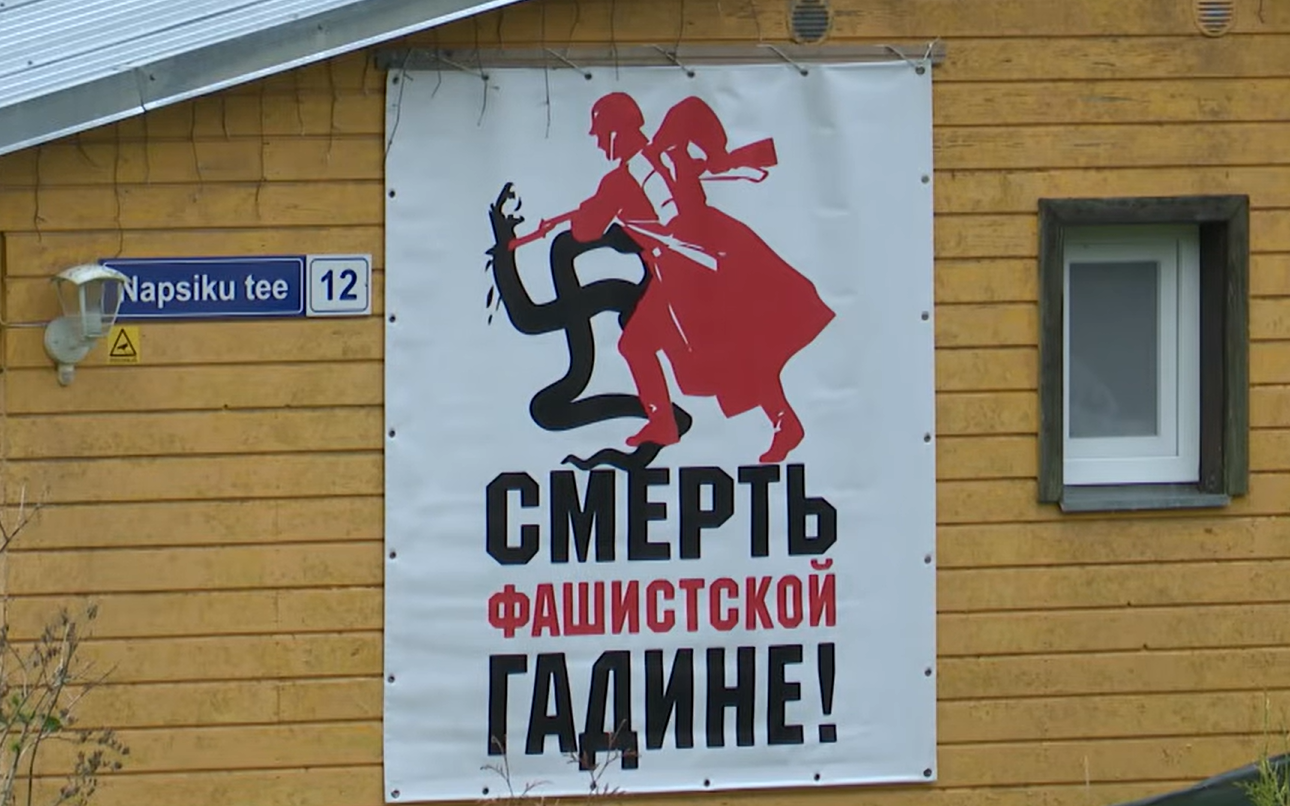
Misdemeanor proceedings have been opened following the appearance of a large World War Two-era Soviet propaganda poster outside a residence near Tallinn, Postimees reported.
At the end of last month, TV3 reported a Russian‑language poster had been hanging on the external wall of a private home and in clear view from the road, which had caused concern among residents of Vääna‑Jõesuu, west of Tallinn.
The poster bore the Russian‑language slogan "Death to the fascist snake" and depicts a Red Army soldier piercing a swastika‑shaped snake with a bayonet.
Triin Škubel, head of the general crime investigation group at the Lääne‑Harju Police and Border Guard Board (PPA) station, told Postimees' Russian‑language edition that misdemeanor proceedings had been launched over the appearance of the poster, under the section of the Penal Code dealing with incitement to hatred.
"The details of the incident will be established in the course of the proceedings," Škubel said, adding: "Publicly displaying a banner with such content and imagery is not consistent with the legal norms and general values prevailing in Estonia."
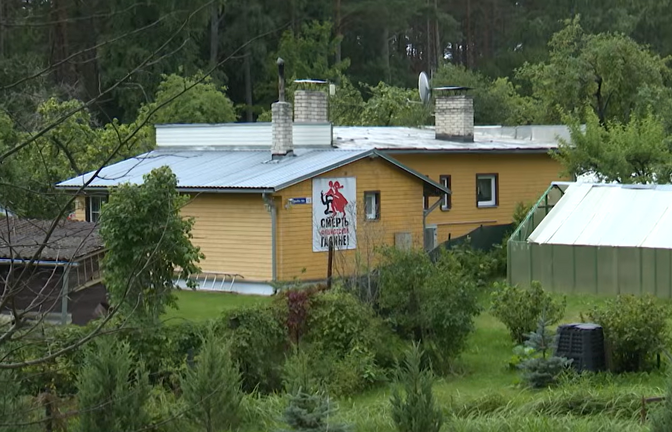
"We understand that this situation undermines the sense of security of the Vääna‑Jõesuu community," she went on, and said the PPA is looking for a "fair and swift solution to the incident," meaning the removal of the "provocative" poster.
Both the owner of the residence, on Napsiku tee, who was outside the country when Postimees spoke to them, and his son, who the paper also reached, initially denied knowledge of the placard, while the father subsequently added that perhaps it had, and asked what difference that would make, also suggesting phone footage of the offending item might have been doctored.
The image reported on was originally created by Soviet graphic artist Alexei Kokorekin (1906-1959), who produced many propaganda posters for the Soviet Union, and was published on June 24, 1941 – two days after Nazi Germany launched its invasion of the Soviet Union.
Following the Russian invasion of Ukraine starting in 2022, greater scrutiny has been placed on both displays, slogans, placards and other items, and on more concrete installations, monuments etc. which appear to glorify military aggression. In April 2022, the Riigikogu adopted a law banning hate symbols, and the PPA has reiterated that the use of symbols that justify or support military aggression are prohibited by law in Estonia. The present‑day Russian Federation states in its own constitution that it is a successor state to the Soviet Union.
--
Follow ERR News on Facebook and Twitter and never miss an update!
Editor: Andrew Whyte
Source: Postimees, TV3



