Expert: Ukraine's recent success an operational-level breakthrough
Ukraine's successful offensive near Lyman has achieved an operational breakthrough that could be repeated elsewhere, Maj. Gen. (Ret.) Neeme Väli told ERR.
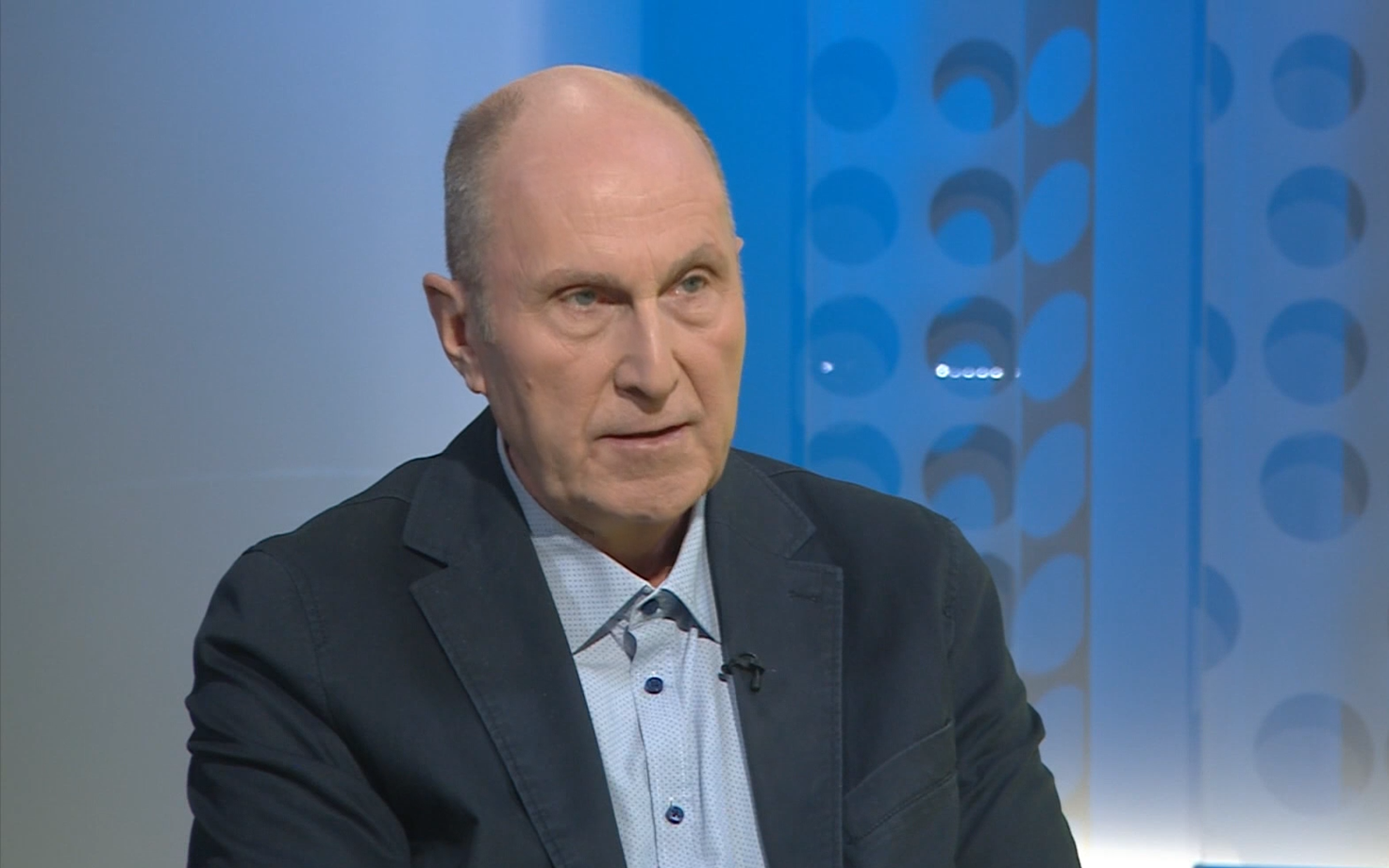
Väli told ETV's "Ukraina stuudio" that Ukraine's Third Army Corps had made significant progress in liberating occupied territory near Lyman.
"That is indeed the case, although this is the final phase of the operation because preparations took quite a long time — several months. The result is more than a tactical success of local significance. You could say Ukraine has also gained a substantial advantage at the operational level," Väli said.
"This was an operation planned and prepared over a long period, with several quite novel elements. For example, they made extensive use of unmanned systems in the air and on the ground and achieved something they had not particularly counted on: their actions blinded Russia's command systems. They were so successful at countering drones that Russia was forced to withdraw its Rubikon units — among the best-equipped, best-trained and most experienced Russian drone units — from the battle area. As a result, Russia lost its command systems, its eyes and ears, and Ukraine was able to retake a substantial amount of occupied territory. So it was a very successful operation," Väli said.
According to Väli, different sources estimate that Ukraine may have retaken between 125 and 250 square kilometers.
"If you go by the Institute for the Study of War's map, the area retaken is roughly 25 kilometers or more wide and 30 kilometers deep, perhaps a little more. That relieved pressure on the northern flank of the fortified line. So, in my view, it was a very successful operation. I cannot say exactly whether they reached the river along its entire length, but they certainly did in some places. Hopefully the defenses will hold there and I think both sides are now preparing for the winter season," Väli said.
Väli said Ukraine could use the same approach to retake territory elsewhere along the front.
"The Ukrainians actually started far behind the front line where they cut off and destroyed Russian logistics and supply routes. Then they moved closer to the front, blinded the command systems and did everything they could to prevent Russia from using its aircraft. Only after achieving that did they send in infantry units to eliminate Russian strongpoints. That pattern — one that works in modern drone warfare — will certainly be copied. One more detail: in a novel move, they used larger drones to carry ground drones to Russian strongpoints, which the ground drones then attacked," Väli said.
Väli also said he could not rule out the Russians learning from the Ukrainian offensive.
"If we look at tactical procedures or technological development, that has been the pattern throughout this war: one side comes up with something new, tests it and succeeds; after a while, the other side finds a countermeasure and that advantage disappears. That will certainly continue. A recent example is when Russia began producing jet-powered Geran drones, which are similar to Shaheds. At first, the Ukrainians had a serious problem because their interceptor drones were slower and could not shoot them down. By now, they have found a countermeasure. The battlefield statistics show that they can intercept those jet-powered drones too," Väli said.
--
Editor: Marcus Turovski, Aleksander Krjukov
Source: "Ukraina stuudio"



