Defense official: Russia's neighbors have stepped up responses to air threats
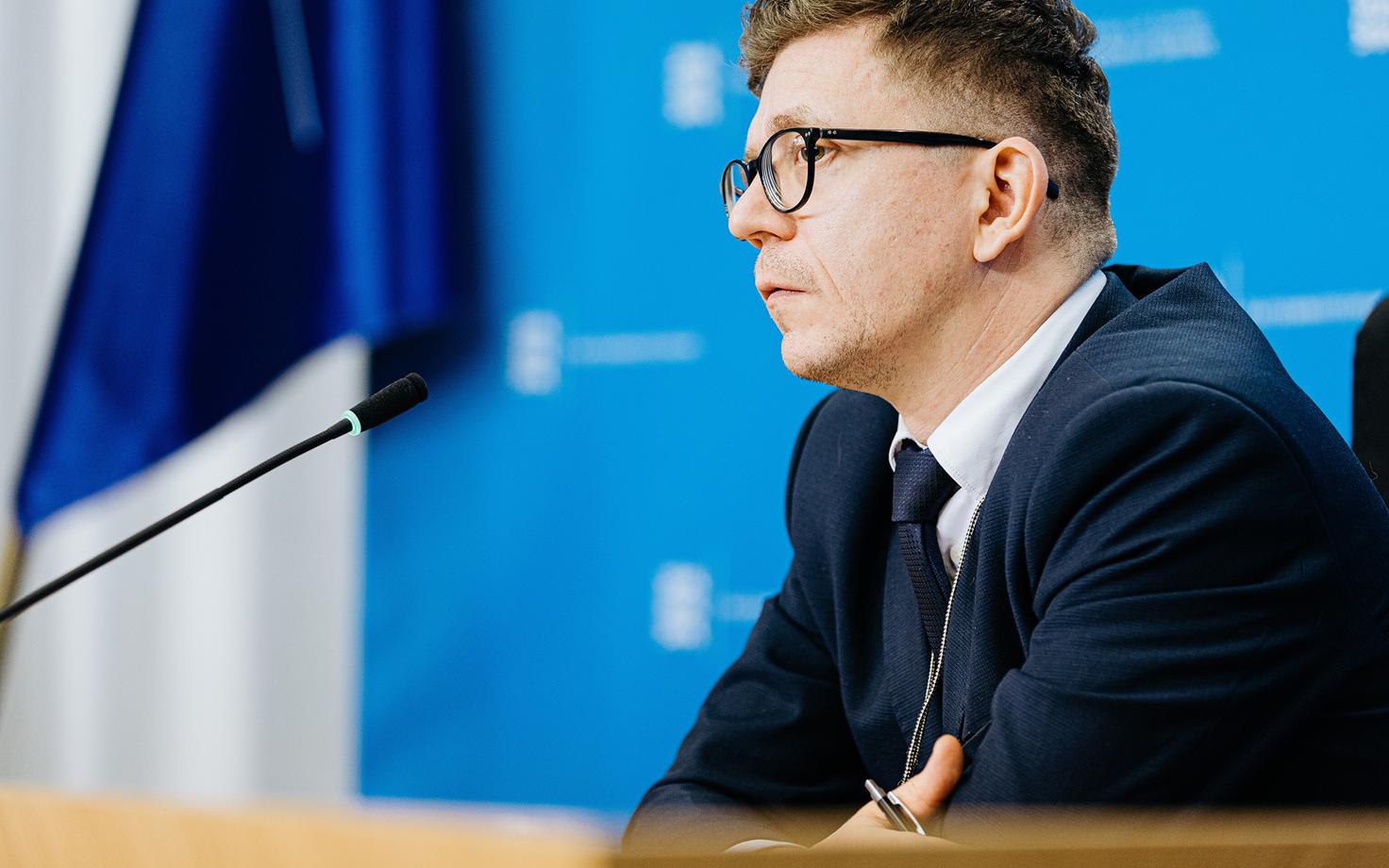
Due to Russia's war of aggression in Ukraine, more and more drones and even cruise missiles have ended up in neighboring countries, which is why the Baltic states and Poland have strengthened measures for responding to air threats, said Gert Kaju, head of the Ministry of Defense's defense readiness department.
The side effects of Russia's aggression are increasingly being felt in countries adjacent to the war zone; for example, 39 drones have entered Moldovan airspace this year, Kaju said on Friday at the weekly briefing held at the Ministry of Defense.
"In addition, drones have been shot down in Estonia, Latvia, Lithuania, Poland and also Romania. And Russian cruise missiles have also ended up in third countries — they have either flown through that airspace or somehow veered into it," he described.
"In response to this, the procedure for deploying air‑defense assets has been made faster, primarily in Poland and also in the direction of the Baltic states — meaning the chain of command has been simplified and accelerated in order to respond to this air threat," Kaju said.
According to the overview presented by the Ministry of Defense representative, Russia continues long‑range strikes on Ukraine's critical infrastructure, hitting residential buildings, industrial enterprises, administrative buildings and transport infrastructure in at least 14 oblasts over the past week.
"According to Ukrainian data, Russia has launched circa 1,900 jet‑powered drones in September, of which Ukraine claims to have destroyed circa 60 percent," he noted. "Due to these attacks, Ukraine has lost nearly 90 percent of its steel‑production capacity."
Ukrainian strikes against energy infrastructure
With its long‑range strikes, Ukraine hit oil‑refining plants in various Russian regions during the previous week of the war, including in Moscow, Yaroslavl and Samara oblasts. As a result of the strikes, Russia's oil‑refining capacity has suffered additional losses; Russia is losing production capacity, Kaju said.
"In addition to infrastructure related to oil refining, Ukraine continues to strike Russia's logistics centers, including in the Moscow region," Kaju added. "As for medium‑range strikes, here Ukraine's drone units have focused primarily on airfields in Crimea and Rostov oblast, as well as areas related to drone storage and launch sites, and also additional energy facilities in Crimea."
According to Kahju, more than 400 different energy facilities in Crimea have been hit since early July, and in the Sea of Azov and the Black Sea Ukraine has managed to put more than 300 vessels out of action.
Fighting continues in Donetsk, Zaporizhzhia and Kharkiv oblasts
Speaking about what is happening on the front line, Kaju said that the most intense fighting is still taking place in Donetsk oblast, in the direction of Pokrovsk and Kostyantynivka, as well as in the direction of Lyman. Following these in intensity are Zaporizhzhia and Kharkiv oblast.
Ukraine has carried out counterattacks primarily in Kharkiv oblast, including in the direction of Kupiansk, and in Donetsk oblast, where Ukraine's focus is primarily on the Lyman direction.
"Russia's combat losses are 1,500 soldiers per day, and therefore we can say that Russia's weekly losses are over ten thousand soldiers," Kaju stated.
Russia's threats and propaganda continue
Kaju also spoke about how Russia continues rhetoric in which it blames everyone else for what is happening in Ukraine, including Ukraine and the Western world, with Moscow claiming that the Western world is using this situation to generally escalate relations with Russia.
"Russia also continues pressuring countries that support Ukraine, so that they would abandon supporting Ukraine," he said. "As an example, we can point out the situation where the Russian Foreign Ministry summoned the chargé d'affaires of the United Kingdom in Moscow and issued an official protest against London's further increase of arms deliveries to Ukraine. At the political and communicative level, Russia continues to spread its worn‑out narrative," Kaju described.
"In addition to the fighting and the air threat described above in neighboring countries, hybrid activity has increasingly come into view in third countries — whether direct acts of sabotage, various types of information operations or other such activity. That is, companies involved in supporting Ukraine are threatened, attempts are made to attack them or force them to stop their activities," the Ministry of Defense official said.
"All of this is part of Russia's narrative, where their goal is to create fear and uncertainty on the other side, because creating fear and uncertainty is one part of Russia's deterrence policy, trying through this to show that Russia is a large and threatening force," he explained.
"Our response to this must be, on the one hand, that we monitor it, respond to these steps with our own steps, and in the case of incidents it is also important to attribute the event to its initiator," Kaju emphasized.
"So in summary — one thing is the war in Ukraine, but on the other hand its effects are increasingly felt in neighboring countries, primarily through the hybrid activities described above. Our task is to monitor and respond to them according to the nature of the threat," Kaju said.
--
Editor: Mait Ots, Argo Ideon