Minister: Trump-Zelenskyy UN encounter did not bring peace any closer
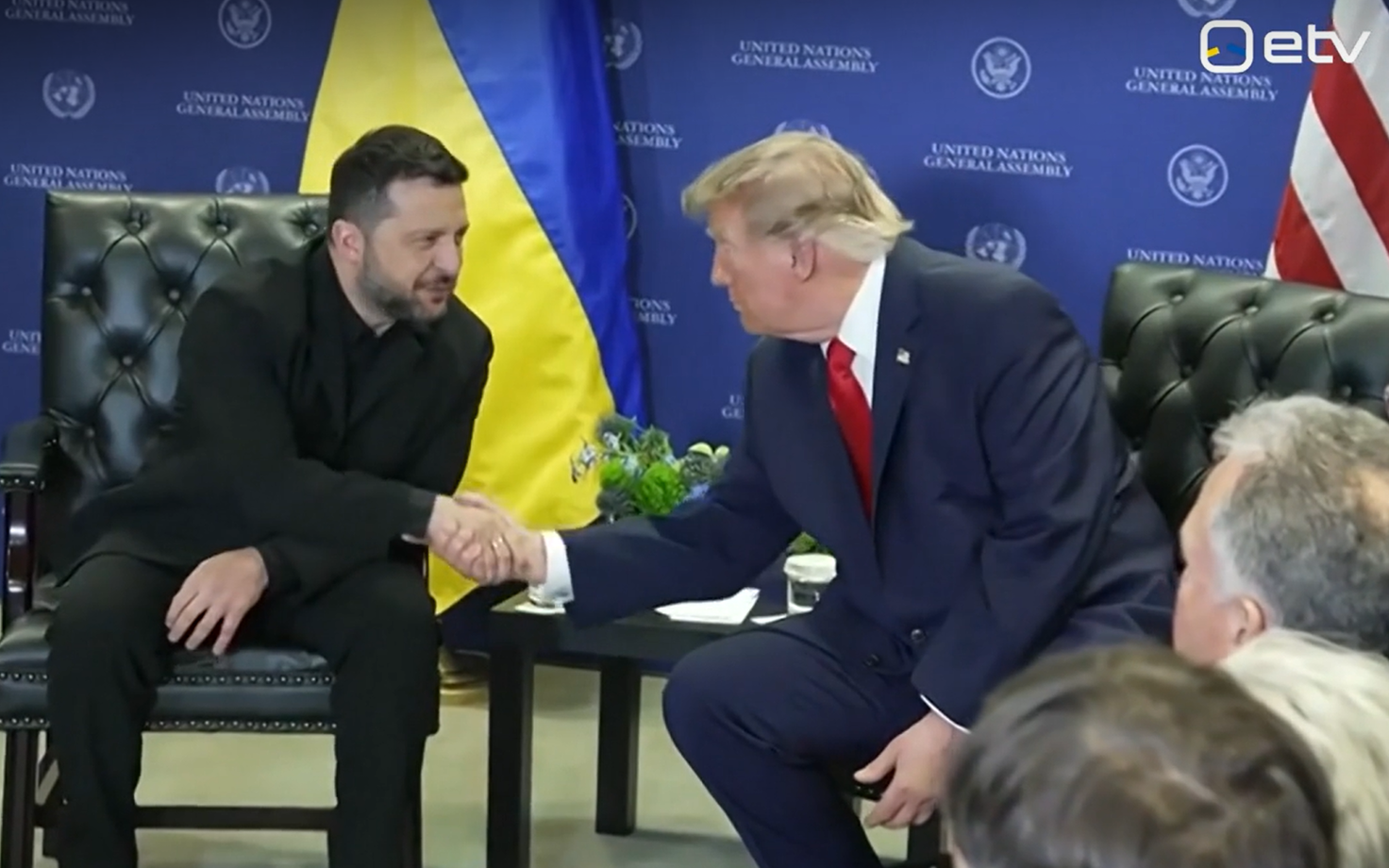
US President Donald Trump and Ukrainian President Volodymyr Zelenskyy's recent meeting did little to advance the Ukraine peace process, Foreign Minister Tsahkna (Eesti 200) said.
The meeting took place last Tuesday on the sidelines of the UN General Assembly (UNGA), which Tsahkna attended.
The minister noted it focused more on practical issues, such as licensing the production of Patriot systems under license, intelligence and defending Ukraine's energy infrastructure ahead of winter.
On the other hand, it did not move things any close to peace, Tsahkna went on, talking to "Ukraina stuudio".
"We have not actually moved any closer to peace, and Zelenskyy was absolutely right when he said in his speech and comments that it seems all the world's leaders want peace, but the only person who does not is Putin. The fact that the meeting with President Trump took place on the sidelines of the UN was good news by itself. I also got the opportunity to meet the Ukrainian foreign minister immediately after he came out of the room. He said it had been more of a practical meeting," Tsahkna said.
"President Zelenskyy has clearly said that they are prepared, if Russia stops bombing their energy infrastructure, to also halt their deep strikes. But in reality, nothing like that happened. And perhaps an even more interesting meeting, about which we know less, was the meeting between [U.S. Special Envoys] Steve Witkoff and Jared Kushner and the Ukrainian negotiating team, which took place after the meeting between President Trump and Zelenskyy, where perhaps something more practical was discussed," Tsahkna went on.
The meeting between US Secretary of State Marco Rubio and Russian Foreign Minister Sergei Lavrov bore little fruit, Tsahkna added.
"They were still talking about the same things: That President Trump wants peace and that further meetings would be arranged. And the only major step we know about publicly is that President Putin was invited to attend the G20 summit. /.../ Russian propaganda will certainly take advantage of this opportunity to show that world leaders want to meet him, that he is emerging from the pressure of isolation and that he is an equal among everyone else. And in some ways, that does nothing to help bring peace to Ukraine."
Tsahkna was also critical of the meeting between German Foreign Minister Johann Wadephul and Lavrov.
"We understand that Wadephul raised the issue of the Leipzig attack, but if we look at Russian propaganda, the image presented was essentially one in which Wadephul was very eager to meet. It was a total Russian propaganda victory, I would say, or at least they exploited it to the maximum, and it came across more as a humiliation. Just consider the historical ties between Russia — the successor to the Soviet Union — and Germany. Russia is essentially attacking Germany militarily today, although it is not at the level of Article 5, and then this meeting takes place, after which Lavrov even says, so to speak, that they accommodated the Germans by agreeing to meet and hear them out. And then comes the full-blown propaganda," Tsahkna said.
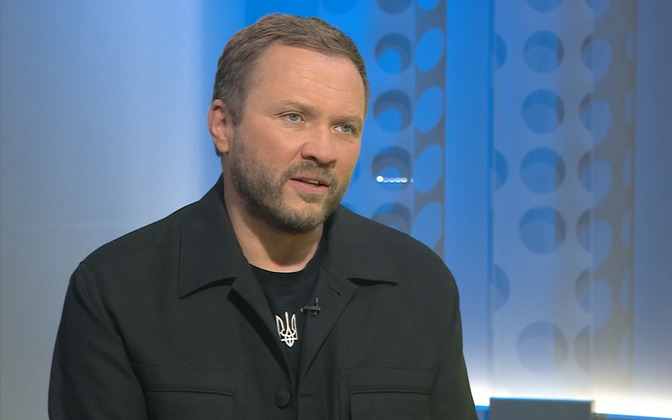
According to Tsahkna, Russia's top leaders have recently become increasingly amenable as diplomatic interlocutors as well.
"Unfortunately, they are increasingly being treated as acceptable interlocutors, with more and more meetings taking place. But I also had a longer meeting with the Indian foreign minister, who explained that India is currently working very actively to secure an agreement on the Black Sea, particularly on grain exports. And I would also remind you that the Russians sank or fired on ships carrying quite a few Indian sailors. This is something that greatly concerns India. So in that sense, the expansion of the war beyond Ukrainian territory, both into Europe and affecting other countries or citizens connected with other countries, is something that has made many people nervous, particularly the issue of food security and the closure of the Black Sea," Tsahkna continued.
Tsahkna said he had to explain to some colleagues the realities of hybrid warfare versus the credible threat of an actual attack from Russia.
"This is something people are very concerned about, and it also gives us an opportunity to explain that, first of all, we do not see Russia carrying out military maneuvers beyond our borders. However, Russia is using all kinds of hybrid methods, drone attacks, sabotage and terrorist attacks — no longer so much directly against the Baltic states as against Germany and some other large countries. And globally, nobody really likes that. An aggressive Russia is not something anyone likes, and this casts Putin in a bad light, in a new way," Tsahkna said.
"And if you look at the headlines, it seems as though Russia is preparing for war and is about to attack someone in this region. But if you read the intelligence reports or talk to our intelligence people, who have a very good view of what is happening in Russia, they continue to say that the likelihood of preparations for a military invasion or aggression remains extremely low," the minister went on.
"Many different things are being combined, and that only benefits Russia if it creates this atmosphere of fear, this fear of escalation. And that is very characteristic of the Western world: for God's sake, let's not escalate, let's not be the ones to escalate, because otherwise we might end up at war. And that is simply one method of pressure that Putin has been using very skilfully against Western democracies for years," Tsahkna said.
Zelenskyy said during Tuesday's meeting he urged Trump to press Beijing to marshal its influence over Moscow, in order to help bring the invasion to an end.
Washington meanwhile is seeking initial "technical" talks between U,S,, Ukrainian and Russian delegations, with the UAE suggested as a possible venue
Zelenskyy also said Trump had approved the process to allow Ukraine to produce Patriot air defense systems under license.
The Wadephul-Lavrov meeting on Saturday was the first such talks since the full-scale invasion of Ukraine by Russia began in February 2022, and was largely fruitless.
--
Follow ERR News on Facebook and Twitter and never miss an update!
Editor: Andrew Whyte, Aleksander Krjukov
Source: 'Ukraina stuudio,' interviewer Reimo Sildvee.



