eDNA-based monitoring helping identify invasive crawfish species in Estonia
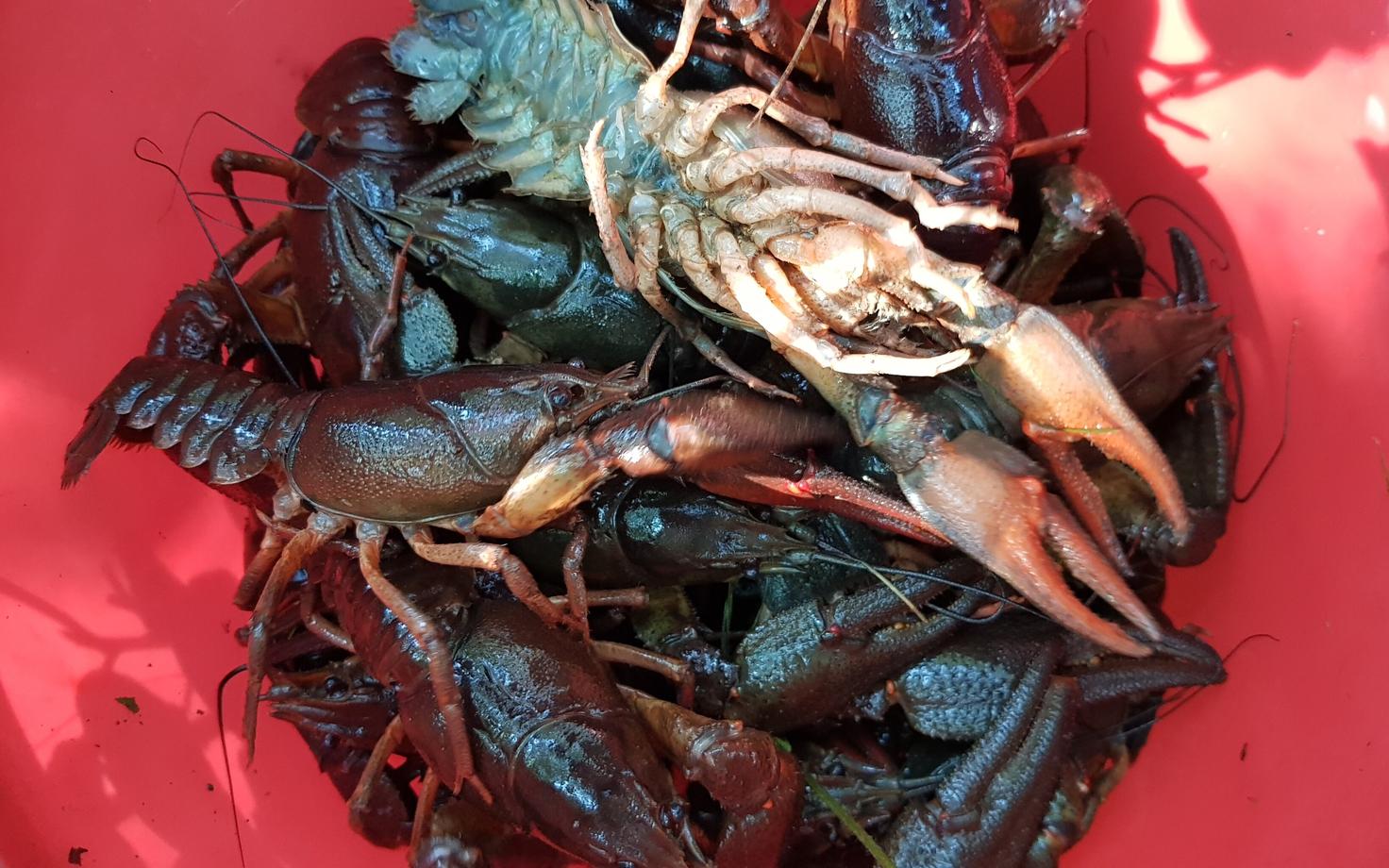
Traditional monitoring methods are insufficient to manage invasive species that threaten Estonia's native crayfish. However, eDNA, or environmental DNA, can help detect these species quickly and effectively, according to a doctoral thesis defended at the Estonian University of Life Sciences.
Invasive non-native crayfish species are spreading to new areas in Estonia's fresh waters, threatening the European or noble crayfish, the country's only native crayfish species. A doctoral thesis defended at the Estonian University of Life Sciences shows that traditional monitoring methods alone are not enough to control the spread of non-native species. However, the use of environmental DNA, or eDNA, makes it possible to detect non-native crayfish more effectively and at an earlier stage of their spread.
Michael Oliewo Aluma, a junior researcher at the Estonian University of Life Sciences' Chair of Aquaculture, examined the spread of invasive non-native crayfish species in Estonia in his doctoral thesis, "Distribution patterns of invasive non-native crayfish species and eDNA-based monitoring in Estonian inland waters for the conservation of noble crayfish (Astacus astacus L.)." He assessed the suitability of eDNA for monitoring noble crayfish, non-native crayfish and the pathogen that causes crayfish plague. The study combines long-term distribution monitoring with molecular methods to support the conservation of noble crayfish and freshwater biodiversity.
Signal crayfish spreading to new territories
The study found that since 2008, signal crayfish have become established in at least five new locations in Estonia and are spreading beyond previously known areas. At the same time, noble crayfish populations have disappeared from several locations, including Riksu Stream and the mouth of the Pärnu River. The findings indicate that the spread of invasive non-native crayfish species may have contributed to the decline or disappearance of native noble crayfish populations.
In his doctoral thesis, Michael Oliewo Aluma also assessed the effectiveness of the catch-based monitoring methods currently in use. The study found that while test trapping is an important monitoring tool, it has a limited effect on reducing invasive non-native crayfish populations. Trapping methods may also fail to detect populations that are small or have only recently begun to spread.
DNA in the water betrays species presence
In a significant innovation, Michael Oliewo Aluma and his colleagues used eDNA to monitor crayfish and crayfish plague in Estonia. They analyzed genetic material found in water, which makes it possible to identify species without catching them.
Using eDNA, the research team successfully detected the presence of noble crayfish, signal crayfish and spiny-cheek crayfish, as well as the crayfish plague pathogen (Aphanomyces astaci). Detection accuracy reached 100 percent for noble crayfish and 87.5 percent for signal crayfish.
The Estonian University of Life Sciences research team also participated in a large-scale interlaboratory proficiency test comparing the performance of eDNA analyses at different European laboratories. The results confirmed that the methodology used in Estonia is reliable and comparable to that of other European laboratories, supporting the wider adoption of eDNA-based monitoring.
Aluma said environmental DNA does not completely replace traditional monitoring methods but can significantly complement them. "It helps detect invasive species and pathogens earlier, thereby providing better opportunities to protect noble crayfish," the doctoral thesis author said.
The doctoral thesis concludes that preserving biodiversity in Estonia's fresh waters requires an integrated approach combining traditional monitoring with new molecular methods. eDNA-based monitoring provides a strong foundation for the early detection of invasive non-native crayfish species and crayfish plague. It could also be incorporated into national monitoring programs in the future.
The full doctoral thesis is available in the Estonian University of Life Sciences digital repository, EMU DSpace.
--
Editor: Airika Harrik, Marcus Turovski



