Energy communities need a clear purpose, less red tape
More and more energy communities are emerging in Estonia, following the example of Western Europe. Although they are also waiting for the chance to share their surplus electricity, each such cooperative must solve some local‑level problem, argue community leaders from Estonia and Sweden.
"I don't see any point in joint action just for its own sake. It has to solve a problem," says Markus Männik, founder of the energy cooperative Oma Elekter in Obinitsa. His own cooperative grew out of a practical need: a few years ago, the cold storage facility of the local business cooperative Seto Aiad's produce processing center had to find a more affordable source of electricity after energy prices rose.
The background story of the Energigemenskap Fegen energy community in the Swedish village of Fegen, which has now been operating for about a year, is just as practical. Its initiator, Tobias Karlsson, was bothered by a hefty electricity bill. "The biggest cost item on the bill was the grid fee. So I started thinking: why not connect with someone else? I looked into energy communities and ended up founding one myself," he recalls.
Since 2023, Estonian researchers have been running the international StartSun project, which aims to support emerging energy communities. At a recent project conference in Tartu, both Männik and Karlsson shared their experiences from the perspective of their home countries. "Right now, the biggest problem for all energy producers who have parks at home or in their companies is that they cannot share the electricity they produce over the grid," Männik sums up the common bottleneck in both countries.
First movers
The Obinitsa test area — Oma Elekter energy cooperative — set up Estonia's first community solar park this spring. According to Männik, the prehistory of the cooperative dates back to 2015, when entrepreneurs in Southeast Estonia began exploring together how to better market local agricultural products. "We went to see blackcurrant growers in Latvia, Lithuania and Poland and founded the cooperative Seto Aiad," he recalls.
By 2018, there were already so many berries that a cold storage facility was built in a renovated Soviet‑era building in Obinitsa to process them. After a few years of operation, however, the price of electricity rose sharply. "Then the idea was to build our own solar park and, when we weren't using electricity ourselves, sell it to the grid. Unfortunately, the price of the grid connection was so steep that we buried that plan," says Männik.
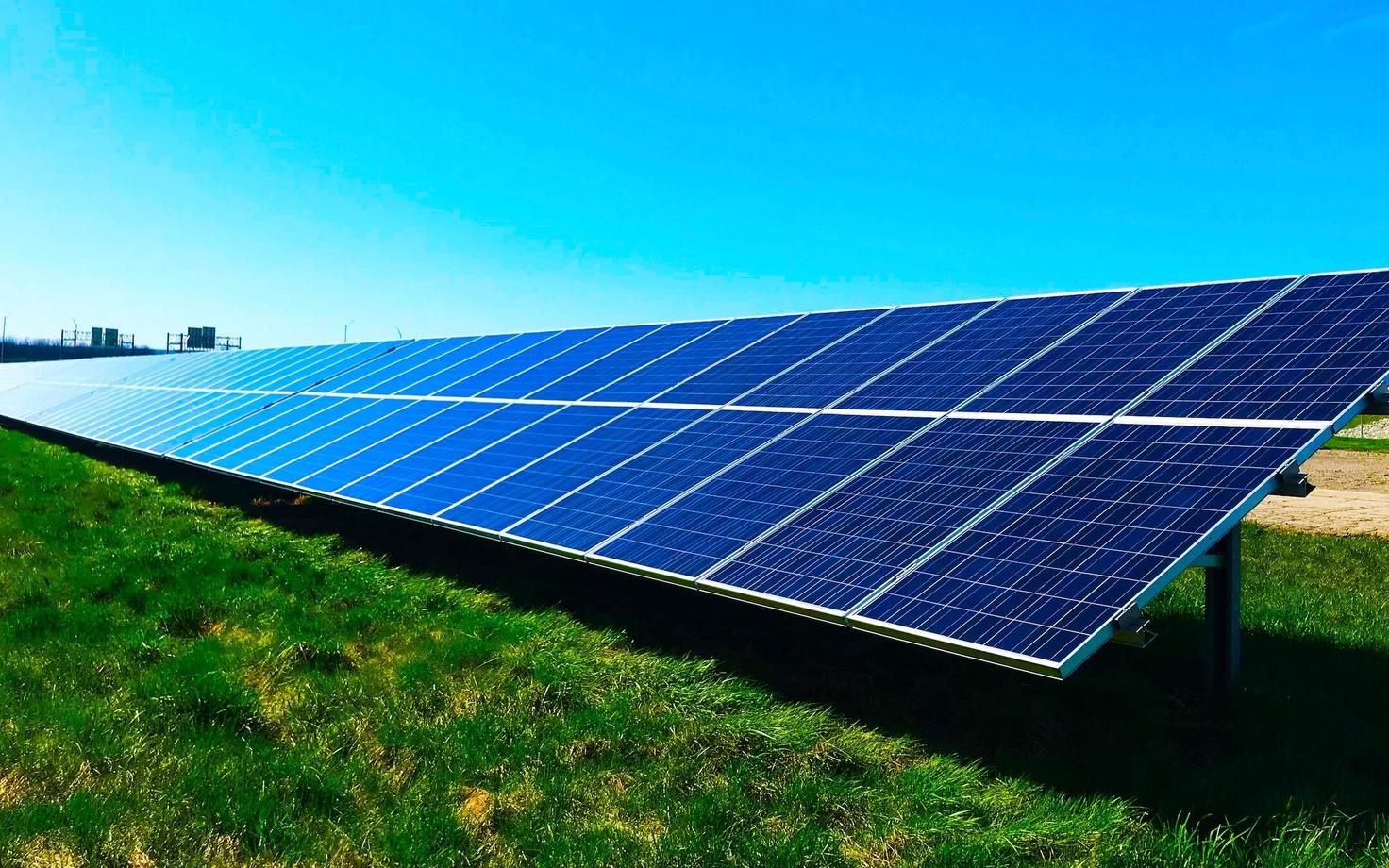
A couple of years later, Seto Aiad took advantage of the seed funding offered by the StartSun project. A solar park was built on the roof of the cold storage and a battery system was purchased. "Today the system works nicely: the cold storage gets 98 percent of its electricity from the solar park, and whatever is missing at night we take from the grid," Männik explains.
Alongside the solar park, a 1,700‑square‑meter produce processing center opened this spring on the same property. Its goal is to supply raw materials primarily to educational institutions in Võru County, but also across the rest of Southeast Estonia.
According to Männik, the center helps local small producers market their harvest, meaning the benefits of the venture go beyond a lower electricity bill. "Seto Aiad has now handed over its assets for the processing center to use, and the solar park no longer serves only the interests of cooperative members, but actually the whole community," he reflects.
The Fegen energy cooperative in Sweden also started about a year ago with support from the StartSun project, initially with five members—two companies and three private individuals. Although the cooperative has grown slightly, it is not currently accepting new members, says founder Tobias Karlsson. "In Sweden, sharing electricity is not yet allowed by law, which is why we currently have only eight members," he explains.
In Fegen, members share and store the surplus output from their solar panels. The total capacity of their local network is currently about 400 kilowatts. "Sometimes more is produced than consumed. Instead of selling the electricity back to the grid, it would be more efficient to share it locally," Karlsson argues.
The benefit isn't always money
Both community leaders say that the most difficult part of creating an energy cooperative is coping with regulations and bureaucracy. "In Sweden, it will only be allowed to start sharing energy after the New Year. That's why the economic rules are still being worked out," Karlsson explains. He hopes the Swedish system will end up similar to Austria's, where consumers living near an energy community receive discounts on grid fees.
According to Männik, it is not possible in Estonia to give surplus electricity from the processing center even as a gift to, say, the apartment association across the street—let alone sell it. "In principle, an organization like ours could donate its surplus electricity to a kindergarten or school, but we can't do it over the grid, because it's simply not technically possible," he notes.
On the Estonian side, the Obinitsa cooperative also struggled with applying for various permits and, according to Männik, had to navigate restrictions like skiing a slalom course. "Because we're so close to the eastern border, we couldn't get permission from the Ministry of Defense for a solar park larger than 50 kilowatts, since a bigger park was said to interfere with radar operations," he explains.
In Fegen, the goal is to connect all houses to a direct‑current network, but suitable equipment is not always available at the moment. Although a DC network may not be financially profitable, it increases energy independence, Karlsson says: "In the event of a disaster or war, it provides a stronger and more resilient electricity network—just look at the example of Ukraine."
Drawing on the Obinitsa experience, Männik advises anyone interested in creating an energy community to first think carefully about what problem it would solve. At the same time, the benefits of a cooperative do not have to show up only in an Excel spreadsheet, so to speak. "Profitability may not be direct. As I described in the Obinitsa case, it can indirectly affect all residents of the area who are not directly involved in cooperative activity but still gain indirect benefits," he notes.
Markus Männik and Tobias Karlsson presented their energy communities at the conference "From idea to community: launching solar energy communities" on 22 September at the Estonian University of Life Sciences.
--
Editor: Argo Ideon