Nuclear physicists: Plant would be Estonia's security guarantee
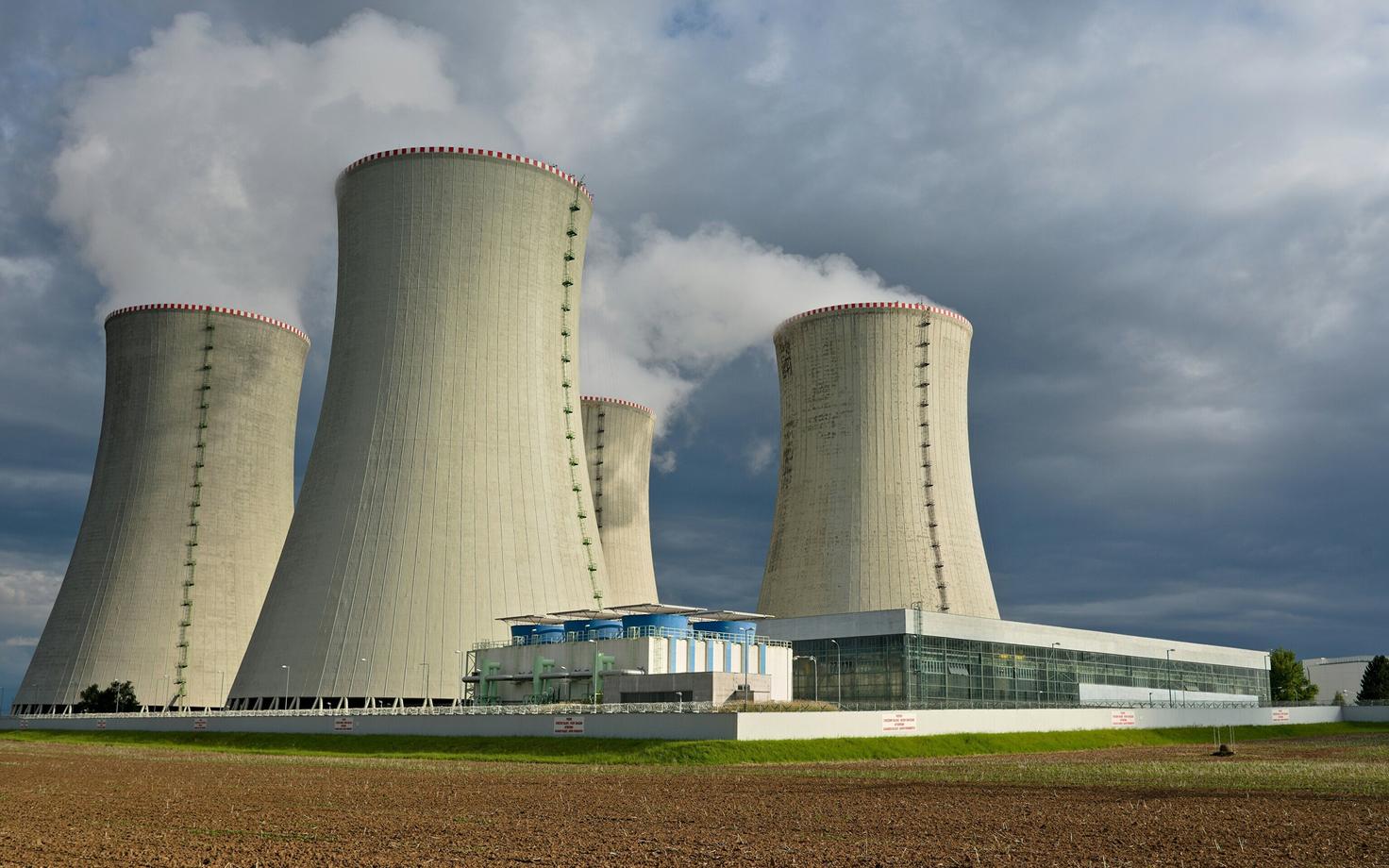
Estonia has no future alternative comparable to nuclear power, which would also provide a security guarantee, two nuclear physicists told ERR.
The world's first nuclear power plants were built in the 1950s. As in other areas of life, this one also witnessed a Cold War-era race between the U.S. and the Soviet Union. Both considered themselves the winner; in the U.S. state of Idaho, EBR-1 became the first nuclear power plant to produce electricity in 1951, going on to power the nearby town of Arco.
Three years later in 1954, the Soviet Union, however, achieved the first in opening a plant which could generate energy at a steady rate. This was at the Obninsk nuclear reactor in Kaluga Oblast. Both EBR-1 and Obninsk have ceased operations since then, Obninsk in 2002 and EBR-1 much earlier, in 1964.
Subsequent talk in the Soviet corridors of power in the 1960s concerned building a nuclear power plant near Lake Võrtsjärv, in Estonia. While nothing came of the idea, early on that decade, at the peak of the Cold War, the Soviet state started work on a land-based training center for the Soviet navy's first nuclear submarines, based in Paldiski. This went on to become a reality.
No real practical work took place at the training center in the wake of the 1986 Chernobyl nuclear disaster, and after the restoration of Estonian independence, Russian authorities removed the nuclear fuel from the reactors and dismantled the training rigs. However, both submarine sections containing nuclear reactors remained. To deal with this issue, reinforced-concrete sarcophagi were built around them.
The question of constructing a nuclear power plant came up again in the mid-2000s, when then Environment Minister Villu Reiljan proposed a feasibility study. Fermi Energia was founded, aiming to build the first nuclear power plant in Estonia, was set up in 2019. Although no concrete plan is yet in place, the Riigikogu this year adopted the Nuclear Energy and Safety Act, and the government has initiated a national designated spatial plan for a potential nuclear power plant.
While it has said and said again in the past that Estonia lacks experts in the field, that is changing, as this fall ,two nuclear physics PhDs were added to the ranks: Andrei Goronovski and Hando Tohver. Goronovski works as a nuclear engineer at the aforementioned Fermi Energia, while Tohver works as an adviser on radiation and nuclear safety at the Climate Ministry.

A nuclear power plant as a security guarantee
If a seven-year-old child is asked what they want to be when they grow up, the answers are often police officer, say, or doctor. Seldom is the answer a physicist; much less a nuclear physicist. Goronovski said his path to the field was complicated and thorny, as physics was not presented in an interesting way at school. "It was one of those subjects that was all very theoretical," he recalled.
An interest in machines and how they work nevertheless remained undimmed, and so Goronovski ended up studying electrical power engineering at Tallinn University of Technology (TalTech). Subsequent studies took him to Sweden, where he earned his master's, and then back to Estonia, where he recently defended his doctorate.
Tohver's path was in comparison more straightforward. "By the end of high school I was quite interested in physics; I had a very good physics teacher, Neeme Lumi," he explained. After completing military service, he went to Tartu to study physics, where in his third year, while searching for a topic for his bachelor's thesis, he came across nuclear physics.
Both newly minted PhDs agree the question is not so much whether Estonia will get a nuclear power plant, but when. "If Estonia wants to remain a successful and developing country, then nuclear energy aside, we have no other sustainable and economically suitable alternatives for electricity generation," Goronovski stated.
Tohver agreed, invoking the EU's carbon-neutrality principle, which according to current plans should be achieved by 2040. He added the precise role nuclear energy will play in Estonia is a matter for public debate.
"Looking at the next couple of decades, however, I believe nuclear energy is technologically the most mature and probably the only solution capable of offering reasonable prices in our market," he said. At the same time, nuclear power plants have their own risks, and Estonia's geopolitical situation adds another layer to this.
One can look to Ukraine for a precedent here. The country has four nuclear power plants, and while the worst case scenario since the Russian invasion started four-and-a-half years ago has so far been avoided, the Zaporizhzhia nuclear power plant has featured in the media a lot, including when it has gone offline: The facility lies in occupied territory.
"First, I'll use the Zaporizhzhia plant as an example: Rven though this plant is in occupied territory and bombs and missiles have fallen on it, no radiation has leaked from it. This shows that modern plants are protected. The plant has been placed in cold shutdown, it is sitting safely and nothing is leaking from it," Goronovski said.
"The plants themselves are designed so that even an aircraft can crash into them without causing a critical failure," Tohver noted.
Furthermore, nuclear plants have their own in-fixed implied security guarantee – an aggressor state hitting a nuclear facility would in effect be escalating the situation and face far wider consequences than solely those from the country it is aggressing against.
"Personally, I think that if we are talking purely about a conflict situation, I don't see nuclear energy as a greater problem. I even see it as a certain security guarantee," Tohver said on this.

Public opposition stems from lack of knowledge
Estonian society has split into two camps over the question of building a nuclear power plant here. For example, the Estonian Fund for Nature (Eestimaa Looduse Fond) is vigorously fighting it, arguing that building a nuclear power plant in Estonia is both unnecessary and harmful to the environment.
Goronovski said opposition often stems from ignorance of what nuclear power actually is. "People don't know what nuclear energy is or what the risks and dangers are with a nuclear power plant. Much of the information is based on ageing technologies. For instance, many people still associate nuclear power stations with the Chernobyl plant, and hold to a belief that modern facilties can explode in the same way and carry similar risks, which is not the case," Goronovski said.
Tohver meanwhile pointed out opinion polls which show public support for nuclear power plants in Estonian running quite high. Over the past couple of years, reported support has fluctuated 60-70 percent, which he said is higher than for any other energy source.
According to both nuclear physicists, there does not appear to be any problem with the next generation of specialists, even as there is a shortage of teaching staff. "This is inevitable with every new field – when we start doing something new, initially there are no people. It is largely a matter of inertia: once you get the process going, competent people start emerging in the country who can in turn train new people, and that is how the system gains momentum," Tohver said.
Although highly educated specialists are needed to plan and construct the plants, those responsible for a facility's day-to-day operations do not need that level of qualification. "A nuclear power plant is similar to conventional power plants – there are lots of pumps and pipes. They need maintenance and operation, and doing that does not necessarily require higher education," Goronovski explained.
According to Goronovski, Fermi Energia's plan is precisely that, to retrain specialists who already work at Estonia's conventional power plants today, giving them the additional knowledge required for the nuclear field.
Tohver and Goronovski's doctoral theses
In his doctoral thesis, Tohver proposed an innovative solution for managing radioactive waste in countries which are only beginning to adopt nuclear technologies. According to the dissertation, open-source programs can be used successfully in assessing safety, rather than using restricted commercial software.
Using the Wastimate software he developed, Tohver found a shortcut for managing nuclear waste. It emerged that by as it were deliberately mixing fresh and old waste together in a single package, the hazardous load can be placed in a safe location decades earlier than planned.
In addition, Tohver studied how Estonian oil shale ash and basalt-boron fibers (BBF) could be used in a new type of radiation-shielding concrete. The results demonstrated that BBF reduces hazardous secondary radiation by more than half. The finding is also important for Estonia because more than a thousand cubic meters of shielding concrete will be needed to package waste generated during the decommissioning of the Paldiski nuclear site.
In his doctoral thesis, Goronovski studied naturally occurring radioactive materials (NORM) found in red mud, an industrial waste product of the aluminium industry. He developed a new NORM impact category and integrated it into life cycle assessment (LCA) methodology.
He found in the course of his work that natural radiation in the built environment has previously been underestimated and that its impact on people is significant. Through practical measurements, Goronovski showed that using red mud in construction materials entails an extremely low radiological risk, lower even than the impact of traditional materials.
--
Follow ERR News on Facebook and Twitter and never miss an update!
Editor: Andrew Whyte