President at the UN: A turning point where the old is out and the new doesn't yet exist
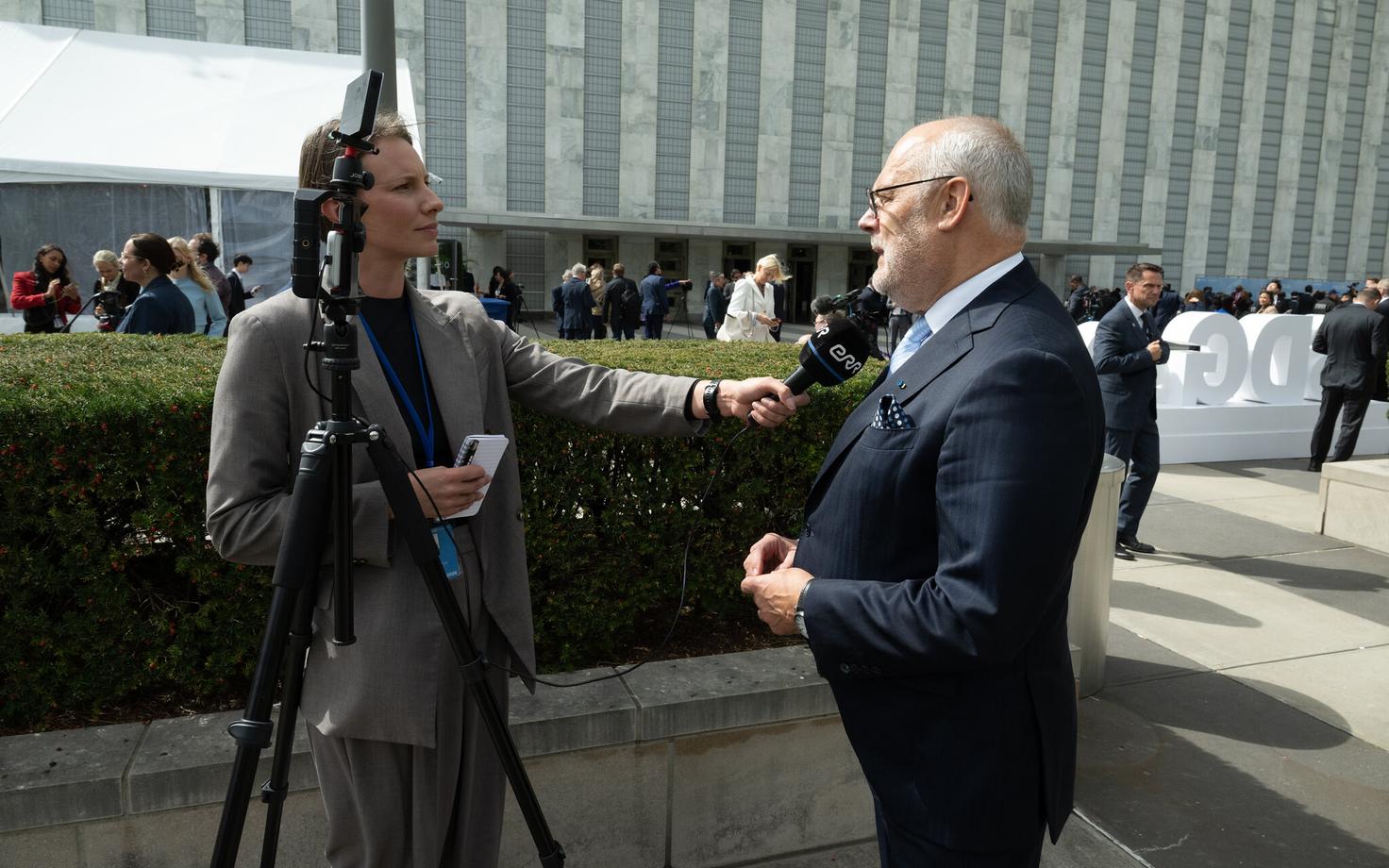
According to President Alar Karis, the world is currently at a turning point where the existing international order no longer fully functions, but a new one has yet to emerge.
This is your final UN General Assembly High-Level Week as president. Did you come here with a different feeling this time?
Perhaps it feels a little different this time because there seem to be more people here.
When we talk about the UN potentially beginning to fall apart — and I have spoken about that myself — perhaps that fear is bringing more people here to see what is happening and to seek support here. After all, this is the only place where you can look a great many people in the eye, face to face, and talk about your concerns.
One of the central messages of your national address was the need to defend the UN Charter and international law. How much faith do you still have that the current international system can actually protect small countries?
As we know, most countries in the UN are small countries. If we join forces, then I believe that collective force is quite strong.
But small countries, including us, are of course very sensitive to all these kinds of storms, although at the same time, experience has shown that they have managed to weather them.
But as some speakers here have also said, we are at a turning point where the old no longer applies and the new has not yet been born.
That makes people a little nervous — the uncertainty, the unknown. But what helps us get through it is taking action and doing something rather than remaining on the sidelines. And the same applies to small countries.
As president, you have dealt with two very different U.S. administrations. How has the relationship between Estonia and the United States changed during your term in office and what do you see as the most important test for that relationship in the coming years?
It is understandable that leaders are different, but for us, the United States remains the United States, regardless of who happens to be president. Our relations have been very good for a very long time and I believe they will continue to be.
I see no reason to think that relations between the United States and Estonia should deteriorate in any way.
Of course, there are fluctuations from time to time and perhaps at the edges there are some signs of fraying. But generally speaking, I think that we — and by that I mean Europe as a whole — cannot manage very well in today's world without America, just as America cannot manage very well without Europe at a time when other major powers are already rising.
So perhaps together, we too are bigger.
The United States has confirmed that its military presence in the Baltic states will continue. Did that news come as a relief?
It is another sign that the United States cares about this region and is present here. Exactly when they will come and on what scale remains to be seen. The government will provide more precise information about when, who and how many.
This is one of your last major foreign visits as president. As you meet with the Estonian community here in New York and look back on your term in office, how do you see the role of Estonians abroad in preserving Estonia and carrying Estonia's message to the world?
There are an estimated 30,000 people of Estonian descent in the United States. Given the size of our population, that is quite a large number. Their role is, in many ways, both to introduce Estonia to others and to preserve our Estonian language and culture.
We can see that the older generation, who came here after the war, is already passing away and there are not many of them left. New generations have followed and will continue to do so. They come here to study or work.
So they need to be reminded continually to keep Estonia alive here because nowadays that can sometimes begin to fade away.
Everything is so easy now: You can call someone back home and you can even see your relatives and friends on a screen. So you do not necessarily think about the fact that perhaps you should also be doing something here to sustain the community.
--
Editor: Marcus Turovski, Mirjam Mäekivi