Canadian cycling experts: The car still feels like king in Tallinn and Tartu
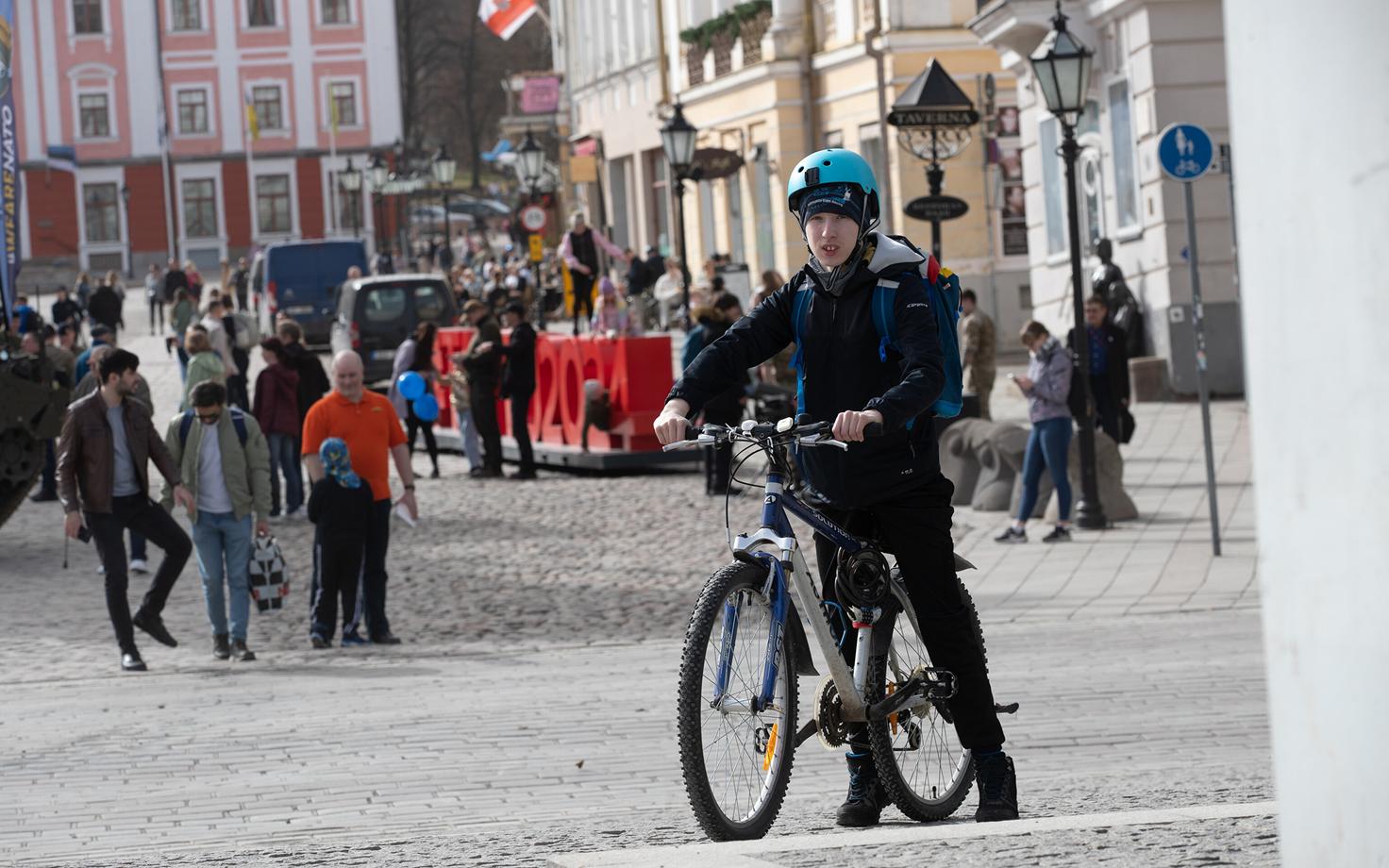
Although cycling and pedestrian infrastructure in Tallinn and Tartu has improved in recent years, there is no common standard, sustainable mobility experts Melissa and Chris Bruntlett noted
The Bruntletts say better options would ease congestion and make Estonia's cities more accessible to all, and not just to drivers.
"Both Tallinn and Tartu have a lot going for them, especially when it comes to recent developments. At the same time, there is plenty of room for improvement in both cities," Chris says. Together with his wife Melissa, he visited Estonia's two largest cities earlier on this month, and they tried for themselves getting around both cities by bicycle.
"It feels very inconsistent. It feels like something only the most dedicated people, or people who are really committed to using these modes of transportation, will do," Chris Bruntlett says.
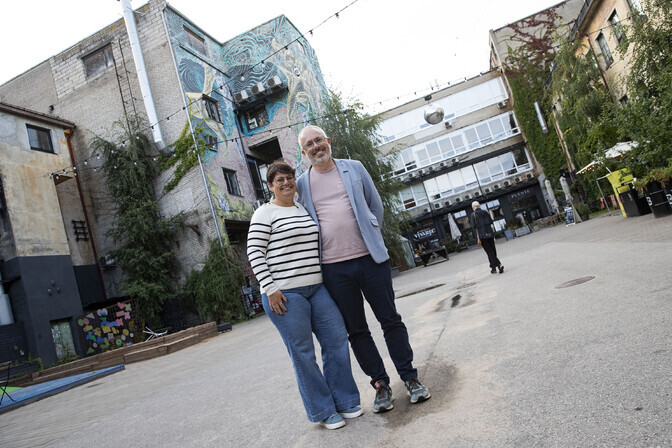
Originally from Canada but now already in their seventh year living in Delft, in the famously cycling-friendly Netherlands, the married couple assess cities around the world through the prism of the transport culture of their adopted home country. Based on their experiences in Tallinn and Tartu, they say that the different modes of transport have been developed unevenly here. "If you want mass walking and cycling in your city, you really have to make it enticing, attractive," Chris points out.
From the Bruntletts' perspective, the ideal urban environment is one like Delft's. "The ideal city is one where you see public life being enjoyed by everyone, all different ages, abilities, genders," Melissa says. In an ideal city, she says, the environment is more social and lively streets encourage people to spend more time outdoors.
Walking and cycling are thus an integral part of life in the Bruntletts' ideal town. "People can make their own choices about what mode of transport they want to use and the route they want to choose, instead of the city making that choice for them," Chris explains. According to the couple, transport should be seen as a tool for making the city a better place for everyone to live. In other words, the broader goal is livability, rather than mobility for the sake of itself.
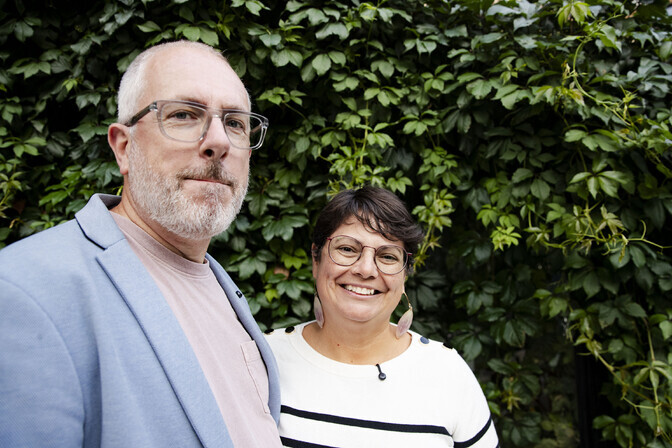
While getting around Tartu, the experts did catch glimpses of their ideal. Tartu's two official bicycle streets, Tähtvere and Õnne, felt different to them from the rest of the urban environment. "Thanks to the greenery, flowers and trees, they were much more inviting. They were pleasant places where people genuinely want to spend time and feel proud of and connected to their neighborhood," Chris says.
While cycling in Tallinn, however, Melissa encountered somemore uncomfortable situations. "There were a lot more situations where I felt really uncomfortable, and that can also be because of the size of the city and the number of people moving around," she says. She also noticed more children, adults and elderly people using active modes of transport in Tartu than in the capital. This showed that despite the patchy development, Tartu has made greater progress in diversifying its transport landscape. "The challenge now is to keep going with that momentum, and it sounds like things have gotten a little bit stalled here," Melissa points out.
Despite these developments, both Tartu and Tallinn still appear car-centric to the Bruntletts. "In full direct Dutch mode, the car still feels like king in both Tallinn and Tartu," Chris says. At the same time, any city must take into account that not everyone can drive because of their age or health. "If we say that the car is freedom, then we're saying that only people that can drive can enjoy that freedom," Melissa says.

According to the couple, not everyone has the same choices. Chris notes that about a third of the population does not have the physical or financial means to drive a car, and that this group is often left out of the conversation. "They're not part of the conversation. Many of them can't vote, and the politicians aren't necessarily listening to them," he says. "A city should not cater only to that one third for whom the car is the only way of getting around," Melissa adds.
At the same time, the experts stress that they are not asking everyone to give up their cars. If driving is essential because a person lives far from the city center, the Bruntletts say that is entirely understandable. However, they do not recommend planning cities solely around the needs of people living in the suburbs. "We're not saying no. We're saying if it's needs must, then yes. But not everyone lives on the outside of the city, some people live on the inside," Melissa says.
According to the couple, the issue ultimately comes down to social justice: does everyone have the opportunity to participate in society and access services? An elderly person in poor health or someone with a visual impairment, for example, cannot independently get around the city by car. "If we start from that when planning cities and think about how to provide alternatives for those who cannot drive, we also turn sidewalks into a genuine option," Melissa points out.
Chris says people are accustomed to thinking of transport as a zero-sum game in which creating opportunities for one group of road users means that others lose something. In reality, if there were attractive alternatives to driving, drivers themselves would also benefit, because fewer cars on the roads would mean less congestion. "Drivers in the Netherlands, which has really high rates of walking and cycling and public transport, are among the most satisfied in the world. They have the best driving conditions, they have the lowest levels of traffic congestion because they have less competition on the street with other drivers," Chris says.
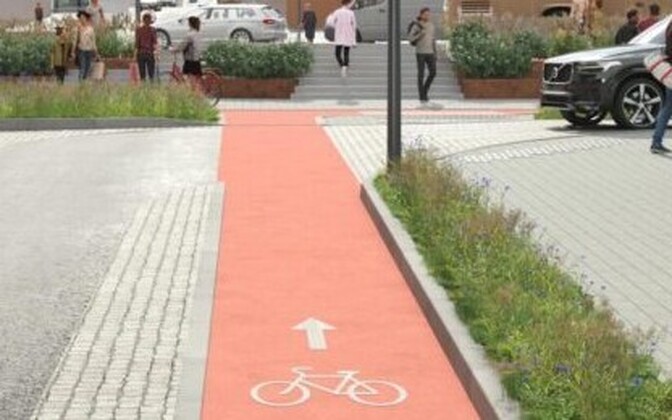
According to the couple, national infrastructure design standards would help improve the situation in Tallinn and Tartu. In many countries, such standards specify how wide sidewalks or cycle paths must be. They also prescribe the materials to be used in construction. "If cycle paths are built piecemeal and without a broader vision for a coherent network, cycling is not treated as a serious mode of transport. Then only 5–10 percent of the population will use it," Chris says.
He recommends setting high standards, committing to investment in infrastructure and then building it out. Cities must also be prepared for change to take decades. "It took the Netherlands 50 years to get where it is today," Chris points out. "When you design a system for one mode of transportation, it doesn't work for anybody, including the car drivers."
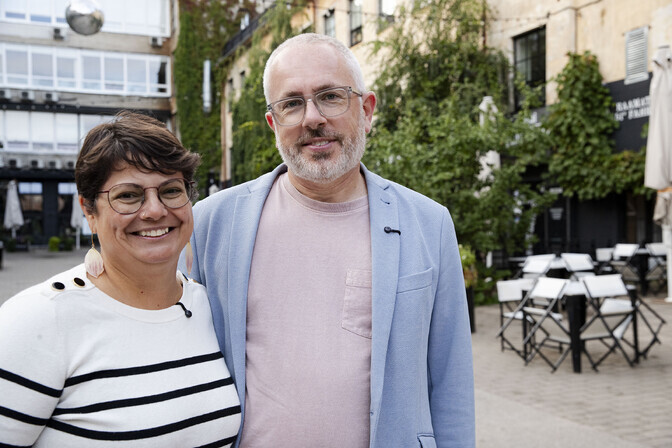
During their time in Estonia, Melissa and Chris Bruntlett also presented their new book "Women Changing Cities". In it, they examined why women in city leadership had succeeded in 11 significant cities where previous leaders had failed.
"We concluded that there are five leadership qualities that each of the women we talked to exemplified that helped make their approach different," Melissa recalls. For example, the female leaders studied were empathetic in their work, understanding that their own lived experience was not the only lived experience. They also listened to different stakeholders and trusted community members' knowledge of what worked and what did not in their neighborhoods.
However, there is a long way to go. "The problem is that there are currently too few women in leadership positions. As we mentioned at the presentation, when we were writing the book, only 25 of the world's 300 largest cities had female mayors, or fewer than nine percent," Chris says. Although male leaders by all means can also display all the qualities highlighted in the book, he says women are accustomed to being criticized regardless. As a result, they are often more prepared to make difficult decisions and bring about change.
Melissa says that, more broadly, it is important for the people who lead and shape cities to better reflect their communities. "If half of your population is women, half of the people running your cities should probably also be women, but they should also be of varying ages, varying backgrounds, because we are informed in the way that we approach our work by our lived experience," she says.
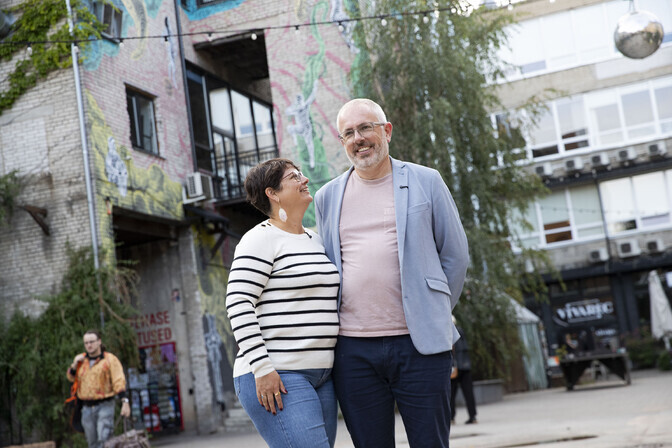
At the end of the day, Melissa says, it is easy to feel frustrated. "But we see the potential here, and I think a lot of people see that potential in themselves and in their cities. It's not always easy and it can get very frustrating, but that community is there," she says. "Everything is not all lost. There is that hope at the end of the day."
ITALIXS Melissa and Chris Bruntlett were invited to Estonia by landscape architect Aljona Galazan to explore the country's towns and to give presentations. In addition to presenting their book, the Bruntletts held a communications workshop in Tallinn for local advocates, experts and representatives of local governments. In Tartu, they met members of the Tartu cyclists' association and city government representatives and familiarized themselves with Tartu's bike-sharing system. ITALIXS
--
Follow ERR News on Facebook and Twitter and never miss an update!
Editor: Andrew Whyte
Source: Novaator


