Estonia mulls allowing dual citizenship in certain circumstances
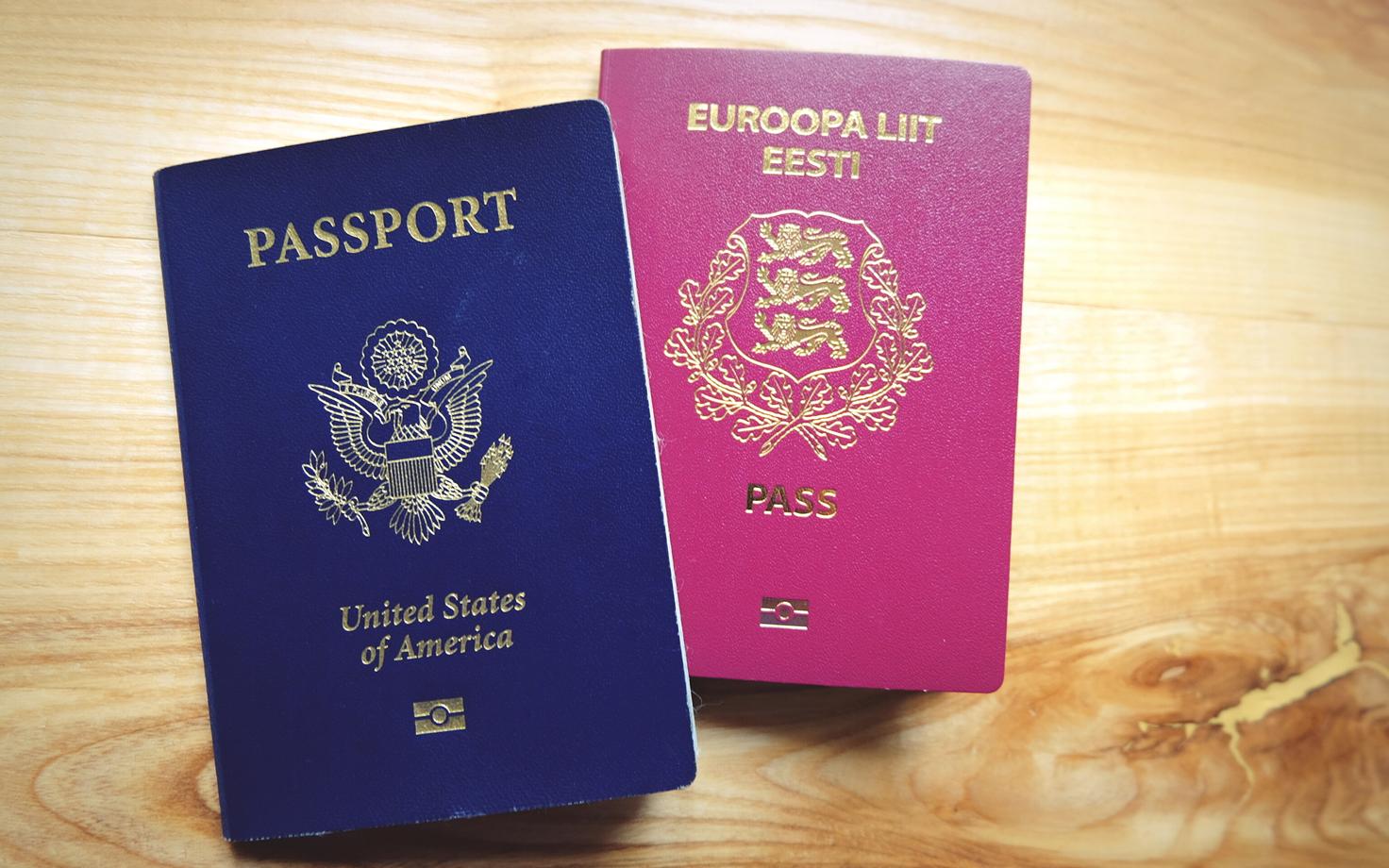
The coalition parties want to allow Estonian citizens by birth to hold dual citizenship. The opposition questions what problem the change is intended to solve.
On Wednesday, the Reform Party and Eesti 200 parliamentary groups in the Riigikogu jointly introduced a bill that would allow Estonian citizens by birth to hold dual citizenship. The bill would allow Estonian citizens by birth to apply to have their Estonian citizenship restored even if they had previously lost or renounced it after acquiring citizenship of another country.
Under the Constitution, Estonian citizens by birth cannot be deprived of their citizenship. However, the Citizenship Act stipulates that people who are Estonian citizens by birth but also hold citizenship of another country must choose between the two when they turn 18.
Minister of Justice and Digital Affairs Liisa Pakosta (Eesti 200) said at a government press conference that this was the wrong approach. "There is no reasonable justification for this whatsoever," she said. Pakosta argued that if an 18-year-old receives a letter telling them to choose between U.S. and Estonian citizenship, for example, but wants to retain both, they are fully entitled to do so.
Dual citizenship would be possible only in the case of select countries
According to Pakosta, this is precisely why the law needs to be brought into line with reality. The countries with which dual citizenship would be permitted include European Economic Area member states, as well as the United States, Canada, Australia, New Zealand and Switzerland. These countries are home to large Estonian communities.
The opposition does not understand what problem the proposal is intended to solve. Estonian citizens by birth cannot be deprived of their citizenship. Vadim Belobrovtsev, deputy chairman of the Center Party's parliamentary group, suggested that the coalition was trying to push through a proposal ahead of the elections that actually requires more extensive debate.
He said that because the bill applies only to Estonian citizens by birth, it would give some people an advantage over others.
Military service one potential stepping stone
Evelin Poolamets (EKRE) said the bill would create further confusion, particularly regarding compulsory military service. She explained that questions would arise over whether a young person should complete military service in Estonia or another country and which country's military reserve they would be assigned to.
Poolamets noted that the Citizenship Act contains various provisions affecting citizens, including matters related to social security and pensions. "Perhaps the goal is precisely to give dual citizens more opportunities," she said. However, Poolamets added that there was no guarantee a person would contribute equally to both countries.
Valdo Randpere (Reform Party) said times and circumstances have changed, with many young people living abroad and that citizenship is one way to maintain ties with Estonia. Randpere hopes the bill will secure the necessary 51 votes this time.
"I've spoken with both unaffiliated MPs and opposition representatives and I haven't received a firm no," Randpere said. He has not discussed the issue with EKRE representatives. "They would definitely say no," Randpere explained. He hopes at least one opposition party will allow its MPs a free vote.
--
Editor: Marcus Turovski, Merilin Leetna