PÖFF artistic director: We're a discovery festival for new voices in cinema
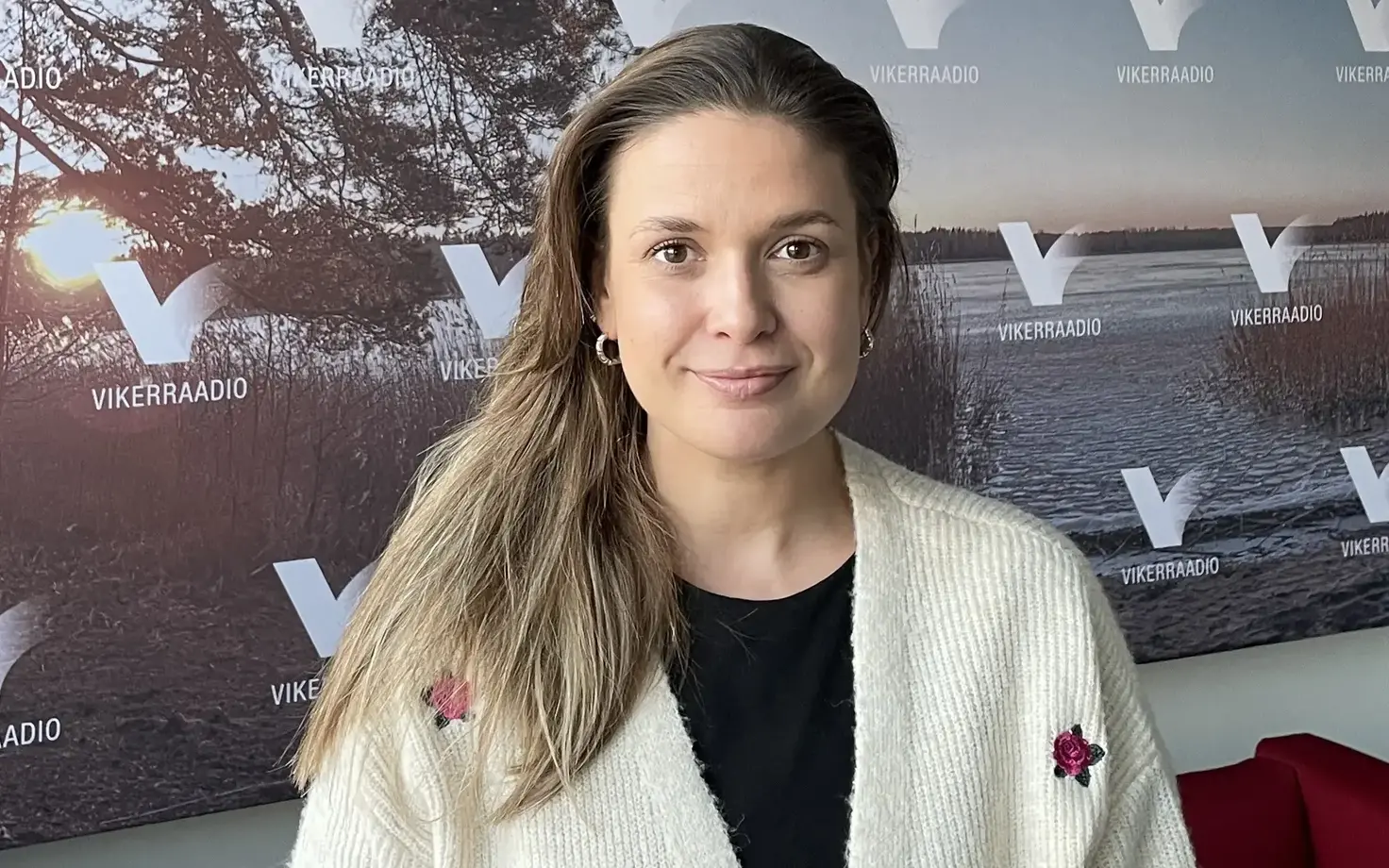
As PÖFF celebrates its 30th anniversary, new artistic director Triin Tramberg discusses the festival's place in an increasingly competitive international film landscape and the challenges of selecting films.
The Tallinn Black Nights Film Festival (PÖFF) has developed a strong identity over 30 years. As the festival's new artistic director, how do you balance that identity with the need for change?
PÖFF has definitely changed. The very first PÖFF had 25 films in its program; today, we have around 183 feature-length films. So, of course, times have changed considerably and I think it's extremely important for a festival to keep up with developments around the world while maintaining its identity. Over those 30 years, PÖFF has really established its identity among filmmakers, within the industry and with audiences. We have grown into a respected brand associated with quality, both internationally and locally.
Who are PÖFF's main competitors at this time of year?
Of course we have competitors, considering how extensive the film festival landscape is, and it's very difficult to stand out. From August through November, there are about 20 festivals that require world premieres, so there is a lot of competition for new films.
But at the same time, now that I've really gone through the submissions, having previously focused more on debut films, I can see a pattern. For filmmakers, we are definitely a very serious Plan B if they can't get into Venice.
I think that's completely normal within the festival landscape. The big five — Cannes, Berlin, Venice, Toronto and Sundance — are the festivals where filmmakers want to premiere their films. We have to acknowledge that this is often because these festivals are where major deals, particularly film sales, are made.
So I understand why filmmakers want to go there. But I'm very happy to see that they submit their films to us at the same time. And when we look at the festivals around us, I can't say that we've lost a significant number of films. We are one of the last festivals of the year, so there is an important distinction between us and other festivals.
One of PÖFF's advantages is its very large film industry event, Industry@PÖFF & Baltic Event.
Indeed, I think this is also one of the reasons we're attractive, because we present all kinds of projects — new projects in development or in postproduction.
I think our industry section can be compared with the one in Cannes. When it comes to panels and discussions, we're quite innovative, I'd say, and we're bold in addressing certain subjects.
We really do tackle the issues facing the industry, and we also try to bring leading industry representatives here to discuss these questions and find answers.
So I think our industry section really complements the festival, and vice versa.
PÖFF now has seven competition programs, alongside the competitions at Just Film and PÖFF Shorts. How many competition programs does the festival need and how often should they change?
That's a very good question and it's something I've started looking into closely. But I've said that I won't make any changes in my first year. First, I want to see how this year's festival goes.
I think adding the documentary competition was essential, considering the volume of submissions we received. It just felt unfair to ask filmmakers to pay a submission fee for films we couldn't include in our programs. We were seeing documentaries that had real value, but there was nowhere to put them. So this was essential.
As for the number of films, I reduced the number in all the competition programs, simply because otherwise it would have been impossible to navigate the competitions.
And I think when these competitions were established, the film industry was different. There was a very clear distinction between a major art-house film and a smaller art-house film.
Now, I would say everyone is looking for audience-friendly films with artistic value. So finding a way to distinguish between them is definitely this year's challenge.
For now, let's see whether there will be changes to the competitions in the coming years.
Despite taking place at the end of the festival year, PÖFF still attracts a considerable number of new films. With so many films being produced, should the festival become more selective?
I think there's definitely an overproduction of films, especially here in Europe. I believe more than 2,500 films are produced each year, which is definitely too many. That's also why it's possible to select excellent European films, because not all of them can go to Berlin, Venice, Cannes or Locarno.
So yes, I do believe there's an overproduction of films and we have to be very selective. That's also one of the reasons I decided to reduce the size of the competitions.
As a festival, we have an obligation to showcase new films that will travel around the world and highlight directors who deserve recognition within the film industry. So we have to be selective and think carefully about whom we give the spotlight to.
How do you approach politically charged films?
I think the question is also about how they are politically charged. I'm not someone who usually rejects a different point of view.
In general, I think film is political — it's a platform for different voices to be heard. But at the same time, the film has to be good. That's my main requirement for including a film in our program.
I've taken risks at this festival, of course. You can't ignore the fact that if someone wants to find problems, they will find them. But for me, these films represent voices we've given a platform to because they needed one.
Would PÖFF screen films made in present-day Russia with state or regime funding?
No. I would say that, for me, Russian and Israeli films made with state or regime support are not something we should screen under those circumstances.
But at the same time, I do feel we need to look for filmmakers who may not share the beliefs of their home countries, who have fled, for example, and we shouldn't punish them.
And again, the question is: What are their films about?
I think it's always a slippery slope when you make such a decision and there will certainly be people who are strongly opposed to supporting anyone from these countries.
As an end-of-year festival, does PÖFF feel obligated to present the best films from other major festivals, including titles that already have distribution deals?
I would say that right now, with seven competition programs and up to 185 films in the program, 60 percent are in the noncompetition sections and 40 percent are new titles.
And of course, as an end-of-year festival, creating a Best of the Fest program is one of the highlights for film lovers who want to catch up on films from all the major festivals.
But I also think our noncompetition program is very important for our audience. It helps provide context for our competition programs and, ultimately, it also helps us generate the box office revenue we need as a festival.
If we didn't bring these films to the screen and didn't have this relationship with the box office, with revenue that we also share with cinemas, we simply couldn't manage.
But again, I see some questions emerging. Previously, perhaps a couple of years ago, local distributors focused mainly on award-winning titles. Now they're acquiring more films throughout the festival circuit, which also complicates our ability to meet expectations.
So we have to address the question of what role the festival should play for films that are going to be released in theaters anyway.
And, as I said earlier, there's an overproduction of films. So maybe we should reconsider our approach to showcasing the best films from other festivals. That's probably a question I'll need to address in the coming years.
Yet many PÖFF competition winners never reach Estonian cinemas afterward. Of course, that's also a question for distributors.
I still think we have to take it step by step.
First of all, we've now found that distributors are acquiring films they previously wouldn't have considered when PÖFF really wants to screen them. So we have to negotiate.
I think distributors are also trying to find their way. And let's see, over the coming years, what kinds of films I'll select for the competitions as the festival's artistic director. I can't predict that.
Hopefully that will change, so winning films can have a life in Estonia beyond the festival.
Hopefully. And I think it would be quite a boost for the festival if we could distribute these films ourselves, but that's a completely different business strategy.
So you haven't worked on that?
No, we've always considered the idea, but it requires a different approach.
Again, I come back to the issue of film overproduction. If distributors see what works in Tallinn, perhaps they'll start taking these risks as well.
We do have a lot of sales agents who pick up films and our films go on to travel around the world, to different festivals and also to local audiences.
Some of them have been quite successful. Many directors made their debuts here and launched their careers at PÖFF.
Indeed, their second films have already been screened in Berlin, Cannes and other festivals. That's one of the things about us — we're something of a discovery festival.
As the festival's new artistic director, how would you define PÖFF's identity? It brings together three groups — audiences, filmmakers and the industry. Which is most important to you?
All of them are important, because that's how the program comes together.
Personally, I always think about the audience, so for me, I guess that's the most important part.
For me, the most fascinating thing is to discover something and create an emotional response.
Throughout history, cinema has been one of the easiest and most accessible forms of entertainment. Even when times are tough, going to the movies with your family is still an event.
You go to the movies and experience a new culture, a new point of view, a new emotion. That's the most important thing for me.
I always say that no story is unique — the question is how the story is told.
I think PÖFF today offers a guarantee of quality for everyone looking for something new in cinema.
For filmmakers, I think Tallinn is a platform that allows them to present daring stories.
Our mission is to discover new voices, new stories and new approaches to the language of cinema.
As I can also see from this year's submissions, we have a lot of debut films. In fact, we received around 400 submissions for first feature films alone.
So Tallinn is a place where filmmakers can establish their careers.
And for the industry, it's a place for discovery. Companies find new people to work with and develop new projects.
Restored classics are becoming increasingly prominent at film festivals. Is this something PÖFF wants to develop as well?
Yes. First of all, I'm young, so I still have so much to see myself.
I mean, there are so many films and so many references and there's an entire generation that hasn't seen certain important films at all, myself included.
Therefore, I think it's also our mission as a film festival to bring these films back to the big screen.
That's why I'm very happy about the "PÖFF Celebrates" program, which features films from our very first festival.
We would have brought many more of these films to Tallinn if they had been digitized, because the main problem nowadays is that they exist on 35-millimeter film prints and aren't available in Digital Cinema Package (DCP) format.
But it was fantastic to revisit these films and this is definitely something we'll continue doing in the future.
Is this also how film festivals can adapt to the growing importance of streaming services such as Netflix?
Definitely. Of course, it's great to watch Netflix on a rainy Sunday — we just watched "The Sixth Sense" with my daughter. It was a great experience.
But at the same time, nothing beats watching a film on the big screen with all those heightened emotions, especially if you have guests present and a Q&A or if you're seeing something for the very first time.
You feel part of something special and unique, hearing all those live reactions to a scene and realizing there are so many like-minded people — or the opposite, when you find yourself wondering, "Why are they laughing?"
So I think nothing compares to the collective emotional experience that cinema provides.
Naturally, all these platforms have their place, but they'll never match the experience of watching a film in a movie theater.
Because cinema and the moviegoing experience are alive.
Exactly.
--
Editor: Marcus Turovski


