Estonia, Latvia at odds over cross-border wind farm
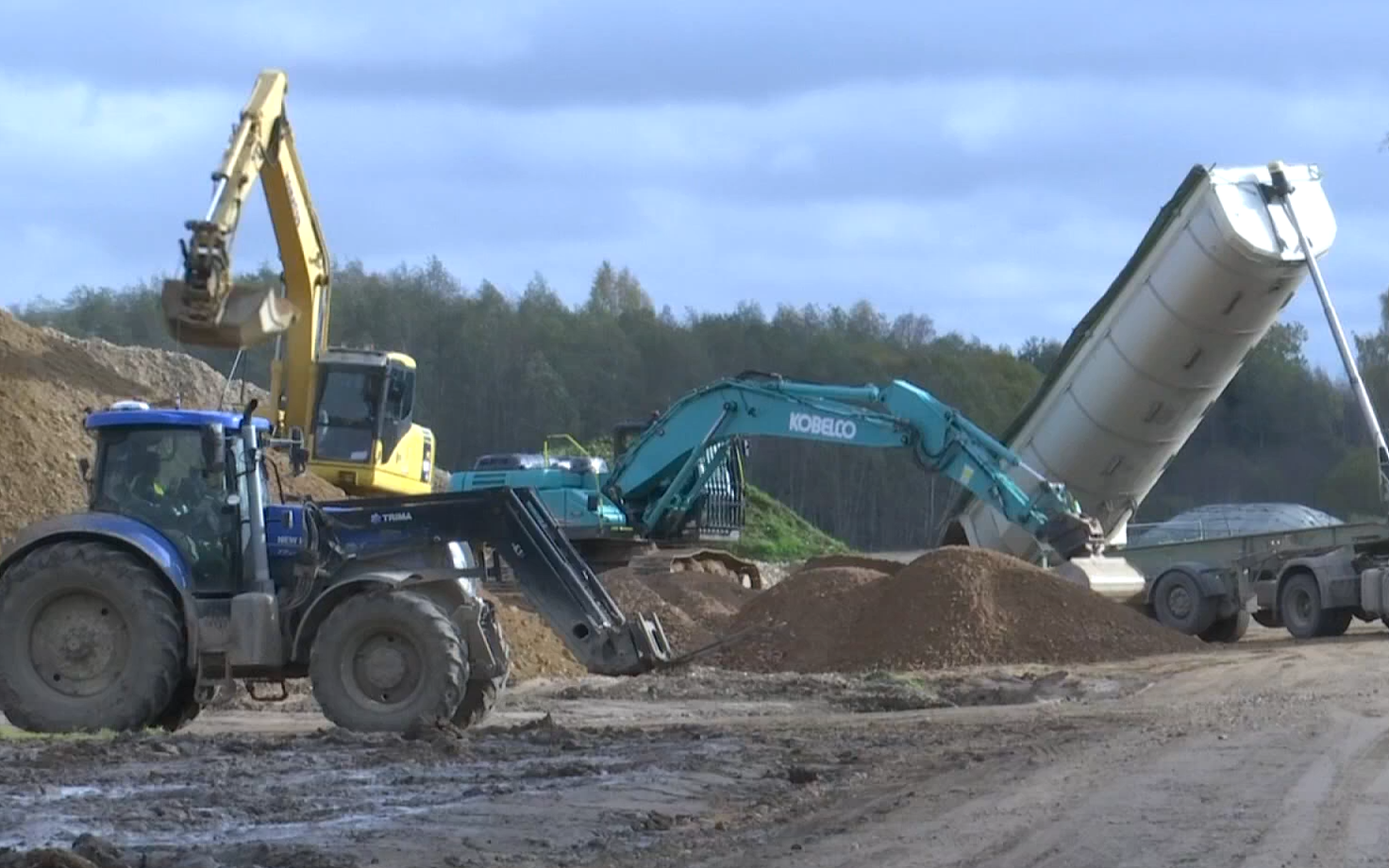
A hybrid wind farm under construction in northern Latvia is stirring tensions across the border, where nearby Estonian villages are facing the greater impact.
Utilitas Wind is building Lode Hybrid Park just across the border in Latvia, with 18 wind turbines and battery storage, and company executives say the site was chosen largely for its connection to the third electricity interconnection between Estonia and Latvia.
The Lode project is the first wind farm to be built directly on the border.
Earthworks are underway near Arakste, where the first foundations have been poured and equipment ordered. The park is expected to start generating electricity in about a year, with full completion planned for the first half of 2028.
The €200 million project also includes battery storage, and Utilitas hopes to build four additional turbines on the Estonian side as well.
"We have 18 wind turbines, along with battery storage capable of delivering 60 megawatts (MW) of power for four hours," said Utilitas Group CEO Priit Koit.
He said the entire complex is connected to the third Estonian-Latvian power link, "so electricity can flow in either direction depending on where demand is higher."
100 trucks a day
Latvia's Ministry of Climate and Energy says the project will bring local economic benefits.
"Up to €300,000 a year will go to the municipality and local residents," said ministry parliamentary secretary Einars Cilinskis, emphasizing that people will see economic benefits and regional development spurred by the wind farm.
But construction has also brought disruption to nearby Estonian villages. For the next six months, around 100 big trucks a day are expected to pass through the usually quiet village of Penuja, hauling sand and gravel from Estonia.
New speed limit signs have been installed and truck drivers are being careful, but a road originally intended to support tourism in the area is now carrying mainly construction traffic.
"We have a very good working relationship with the developer," said Penuja resident Reet Paju. "Some residents do object, of course, but since we had no say in the decision to build the wind farm, we have to accept it."
Mulgi Municipality tried to challenge the project in a Latvian court but lost, as Estonian local governments have no legal standing to appeal decisions made by Latvian ones.
'Too many wind farms'
Local leaders, however, say the concern extends beyond Lode, with several other wind farm projects planned in the wider area.
"This isn't just about the Lode wind farm, but wind farms more broadly," said Mulgi Municipal Mayor Imre Jagomäe.
He pointed to eight potential turbine sites in his municipality, two projects in neighboring Saarde Municipality and a planned development on the Latvian side in Ipiķi.
"Clearly, that's just too many wind farms for this area," he stressed.
With the municipality's support, the nonprofit Looduse ja Inimeste Eest is conducting environmental studies in the area.
"Underway and also partially completed are environmental studies of birdlife, bats and ecological coherence," said board member Urmas Maranik.
Lode Hybrid Park is expected to produce enough electricity to meet the annual needs of 110,000 households.
--
Editor: Marko Tooming, Aili Vahtla