Photos: First Swedish prisoners arrive at Tartu under prison‑rental deal
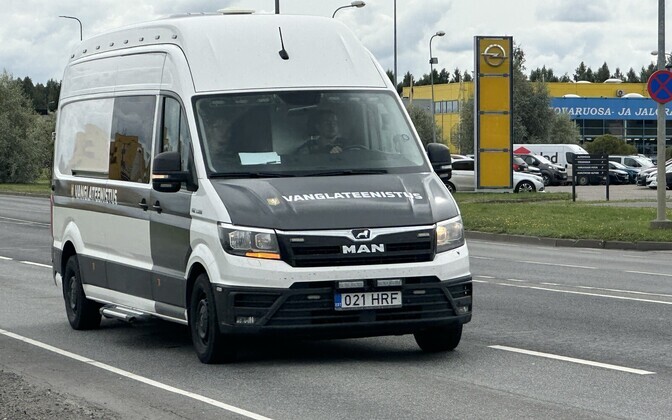


On Tuesday, the first four Swedish inmates arrived at Tartu Prison under the prison‑rental agreement concluded between Estonia and Sweden.
"All the inmates who arrived are male Swedish citizens," said Estonia's Minister of Justice Liisa Pakosta.
The inmates arrived in Estonia on 18 August on a charter flight to the Ämari air base. From the airport, they were transported to Tartu Prison accompanied by the Prison Service's armed escort unit, the service announced in a press release.
Upon arrival at Tartu Prison, the inmates underwent the necessary intake procedures and were placed in the living unit designated for them. During the first days, the focus is on introducing the new environment, the prison's daily schedule and rules, and starting up everyday work routines.
Receiving the first group is an important milestone for which the prison team has prepared thoroughly, said Tartu Prison director Merle Ulst.
"We have been preparing for this day for over a year — training staff, practicing procedures, and working closely with our Swedish colleagues. Today's reception went safely and as planned; we have begun the practical part of the project according to the same high standards on which the Estonian prison system relies every day. Now begins the next stage for us: daily work with the Swedish inmates," Ulst said.
All inmates arriving in Estonia have undergone thorough background checks by both countries before being sent here, and Estonia gives separate consent for the acceptance of each inmate. In the list submitted by Sweden for assessment of the first group, more than half of the inmates were rejected.
According to Prison Service director Rait Kuuse, the selection process for the first group shows that the agreed‑upon control is not a formality.
"Each inmate is assessed individually, and Estonia makes the final decision on whether to accept them. If we do not have enough information about a person or doubts arise about their suitability, we do not give consent. In the case of the first group, Estonia agreed to accept fewer than half of the candidates submitted by Sweden. For us, it is important that every decision is thoroughly considered and justified, and we will continue this work just as seriously with all future inmates," Kuuse said.
Under the prison‑rental agreement, individuals involved in organized crime, terrorists, radicalized inmates, women, minors, and other categories excluded by the agreement will not be brought to Estonia. The same control process and Estonia's consent are required for the acceptance of all future inmates.
Tartu Prison will remain entirely under Estonian management and control, the Prison Service emphasized. Estonian prison officers will work with the inmates, and their detention will follow Estonian law and Tartu Prison's operational procedures. Swedish officials will support cooperation and information exchange with the Swedish side.
The arrival of Swedish inmates will take place in stages. By the end of September, up to 100 Swedish inmates are planned to arrive, and by the end of the year up to 200. Under the agreement, a maximum of 600 Swedish inmates will serve their sentences in Estonia. For security and privacy reasons, the exact arrival times of future groups will not be announced in advance, but the Prison Service will provide ongoing updates to the public on the progress of the project.
Estonia and Sweden concluded the prison‑rental agreement in 2025 in order to make use of the available capacity at Tartu Prison and to maintain the readiness, competence and jobs of the Estonian prison system. All costs related to the reception and stay of foreign inmates in Estonia are covered by the Swedish state.
Justice minister Pakosta said that unfortunately a great deal of false information is spreading about the Swedish prisoners.
"I want to reaffirm once again that although every person on Estonian territory has the right to submit an asylum application, not a single inmate brought here from Sweden will receive asylum in Estonia — all of them will return to Sweden. This follows from a very simple fact: Sweden is a safe country, and under both the agreement and international law we send absolutely all inmates back there. So even if someone were to submit an asylum application, it would be completely pointless and would not be granted," Pakosta said.
"Another myth that has been maliciously circulated is that hordes of family members will now start arriving in Estonia and all of them will receive residence rights. This absolutely does not correspond to the truth," the minister added.
Story updated Tuesday afternoon after prisoners reached Tartu; photos added.
--
Editor: Argo Ideon
Source: Interview with minister Liisa Pakosta by Johannes Voltri





