PM: Estonia will monitor neighboring countries' fuel excise decisions
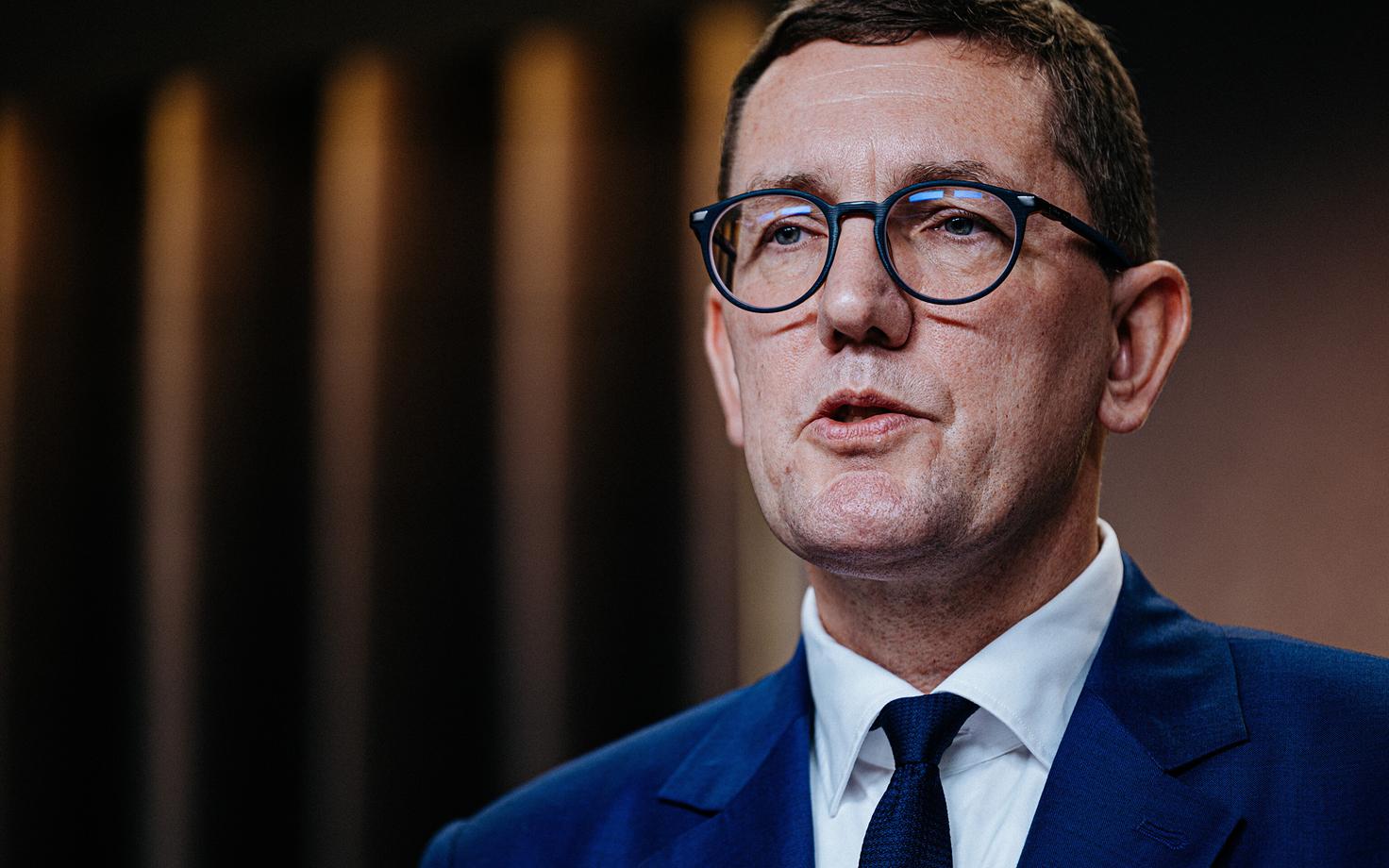
Prime Minister Kristen Michal says Estonia is watching its neighbors' fuel tax cuts but cannot afford further relief while trying to reduce its budget deficit.
Last week, organizations representing Estonia's transport, logistics and fuel sectors called on the government to immediately lower the diesel excise tax to the European Union's minimum level. They warned that the significant price gap between Estonia and Latvia could shift as much as a third of Estonia's diesel excise tax revenue to other countries. Finance Minister Jürgen Ligi refused to lower the tax.
Prime Minister Kristen Michal discussed the situation in more detail, saying the government is closely watching its neighbors' excise tax policies.
"It is difficult to assess Latvia's tax cut under the current forecast because fuel is more expensive in Latvia and Lithuania than it is here. If half of that cut is passed on to prices, they will probably become quite similar to ours. We'll see what effect it has. I have said that we are monitoring our neighbors' excise tax decisions. My recommendation was to cancel the planned tax increase, which we did. But we must not allow misunderstandings to arise," Michal said.
Despite geopolitical tensions, Sweden's right-wing government lowered its fuel excise tax and asked the European Commission for an exemption.
"Sweden had an election and Latvia will have one soon. Hopefully these pre-election tax cuts will benefit those who promised them. We are certainly watching what our neighbors and other countries do. The problem is on the supply side and events in the Strait of Hormuz have driven price increases across Europe. That affects public transportation, fuel prices and gas prices and could also affect agriculture. As we discussed in relation to the budget trajectory and debt burden, excise tax relief can only come at the expense of something else," Michal explained.
Next year's state budget provides less funding than expected for pay raises for teachers, rescue workers, police officers and cultural workers. Michal said no one had failed in the negotiations; the outcome reflected the limits of the state's finances at a time when the budget deficit must be reduced.
"People rarely come up to you, shake your hand and say you've produced a great budget. When the state needs to reduce its recurring costs and narrow its budget deficit, it cannot increase those costs at the same time. This is the first time since the major financial crises in Estonia's history that this is being done," the prime minister said.
He also pointed to layoffs on what he described as a historic scale, citing the Unemployment Insurance Fund and the Land and Spatial Development Board. Even so, the government found room to increase the payroll budgets of four priority sectors by 3 percent.
"A fifth of the Unemployment Insurance Fund's staff were laid off and went to register with the fund the next day. The Land and Spatial Development Board has more than a fifth fewer employees. As for pay raises, the 3 percent is an increase in the payroll budget. It is up to ministers and sector leaders to decide how to distribute it within their areas and agencies. We could raise payroll budgets in only four areas: teachers, cultural workers, rescue workers and police officers. I think that is entirely justified and I would be glad if we could do more, but this is the limit of what we can afford," Michal said.
Asked about Jürgen Ligi's recent remarks in which the finance minister suggested that poorly paid rescue workers had "other options," the prime minister responded critically.
"I don't think that was a particularly successful choice of words. Police officers and rescue workers do essential work. I'm glad they chose those jobs and I hope the state's finances improve so we can pay them more," the prime minister added.
--
Editor: Marcus Turovski, Johanna Alvin
Source: "Stuudios on peaminister"



