Raul Rebane: In praise of the provinces
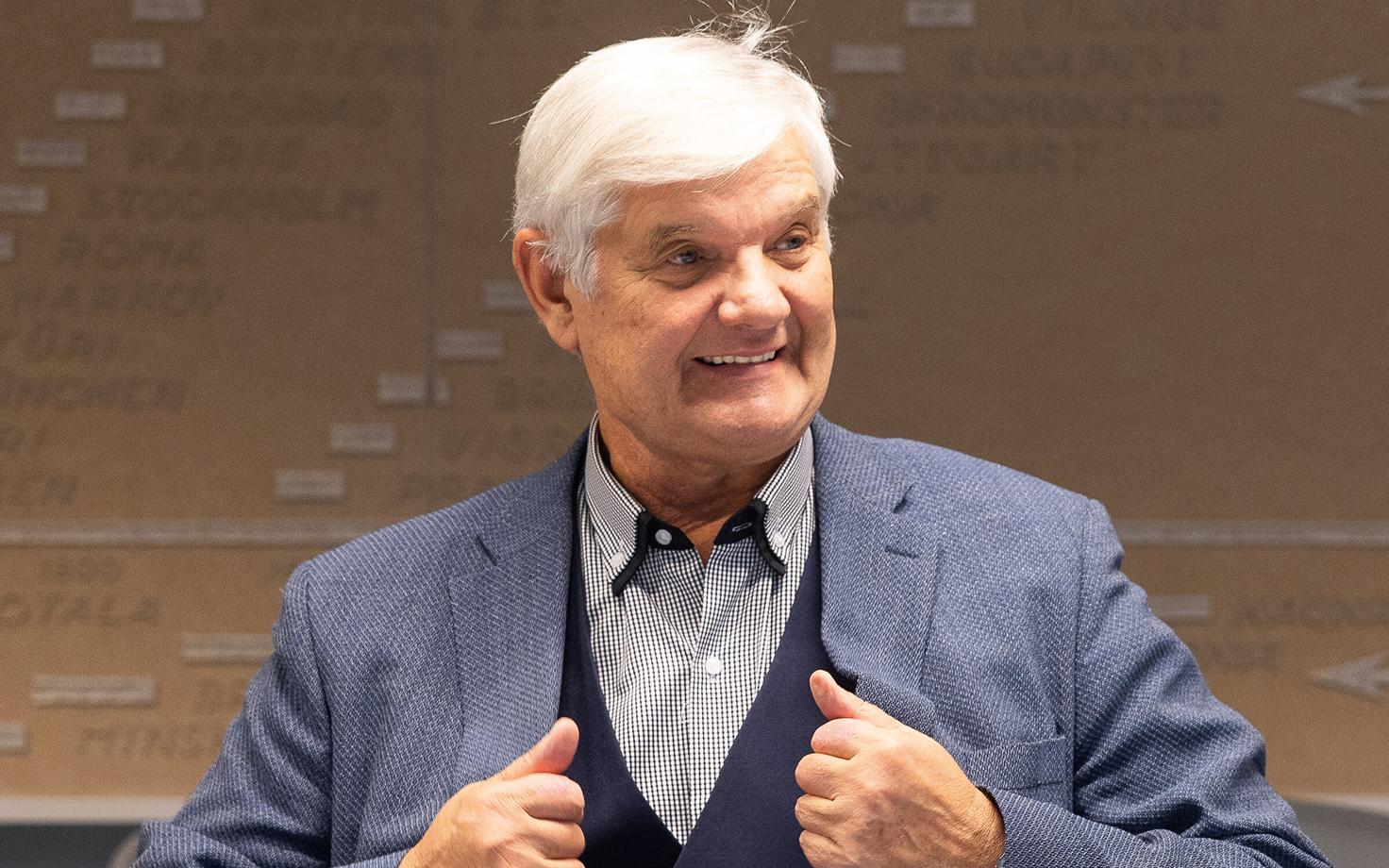
Estonia shows a pattern in which many county centers are, relative to their population, almost oversupplied with sports, education, culture and public services, Raul Rebane writes.
I titled my piece "In praise of the provinces," and I recommend not trying to squeeze this into metropolitan Tallinn. I will prove my point by asking where the most suitable environment for raising children is.
This topic once came up in a conversation with Gerd Kanter's coach, the Icelander Vesteinn Hafsteinsson. He claimed firmly that in the Nordic countries, the best places for children are medium‑sized towns with about 10,000–20,000 inhabitants. He has lived and worked in such towns in several countries, so he knows what he is talking about.
His claim is supported by several arguments. In the Nordic countries — and also here — such towns generally have good schools and solid opportunities for development in both sports and music. The biggest advantages, however, are the significant time savings due to the proximity of important places and, certainly, safety.
Nordic studies use the term "children's independent mobility." This means that a 10–14‑year‑old child saves a great deal of time each day on the route school‑practice‑music school‑friend‑home compared with a big city — perhaps even a whole hour. In Moscow, travel time by bus or metro can easily be two hours; in a normal town, it is 20–40 minutes. That is a major difference in quality of life.
In addition, in a small town it is possible to get around on foot or by bicycle, which is certainly more sensible than bouncing around on a bus. From a child's perspective, the ideal town is not necessarily the one with the most opportunities, but the one where the child can access those opportunities independently.
There is a little‑known term for this: the Goldilocks zone. It comes from the fairy tale where Goldilocks tries three bowls of porridge — one too hot, one too cold, and one just right. "Just right" is the concept that describes optimal size. It is a town large enough to offer choices but small enough for a child to reach them on their own.
We are used to this. Unfortunately, in many countries' big cities, one parent inevitably becomes the child's chauffeur. Children are not allowed to move around alone. According to studies, countries with restricted independent mobility for children include France, Israel, Brazil, Ireland, Australia, Portugal, Italy, and Canada.
Several families who have returned to Estonia say it is a great blessing when a child can move independently and safely, not by car under the supervision of security guards.
Our "just right" towns are slightly smaller than Nordic examples like Porvoo, Rauma, Lillehammer, or Visby, but most of our county centers fit the "just right" concept very well. Viljandi, Võru, Rakvere, Kuressaare, Haapsalu, and many others have the same logic: a strong balance of services, safety, and short distances.
For example, Viljandi and Rakvere have everything — schools, lots of sports, lots of music, good facilities, plenty of extracurricular activities. At the same time, most of the town can be crossed by bicycle in about 10–15 minutes, meaning an 11–12‑year‑old can organize much of their day independently.
In Estonia, one can even say that many county centers are, relative to their population, almost oversupplied with sports, education, culture, and public services.
What does this mean in practice? One aspect is certainly competitiveness — the ability to spend more time on hobbies.
Those who doubt this should consider the fact that the last individual Olympic champion from Tallinn was speed skater Ants Antson in 1964. Yet the capital has roughly as many people, money, facilities, and opportunities as the rest of Estonia combined.
With this story, I tried to turn the word "province," which some see as derogatory, into something else — an environment to be desired.
We are in the right place. The Anglo‑Saxon and parts of Southern Europe's car‑centered child‑rearing model — "an adult escorts the child" — does not suit us. We follow and develop the Nordic and German model, where the child moves independently.
A simple conclusion follows. If we move to Tallinn to increase children's opportunities, we may actually be moving farther away from those opportunities.
--
Editor: Kaupo Meiel, Argo Ideon


