Waste management, farmers feel the squeeze as diesel prices soar

Estonia's rising diesel prices are putting pressure on waste collection businesses and farmers alike, leaving both grappling with sharply higher operating costs.
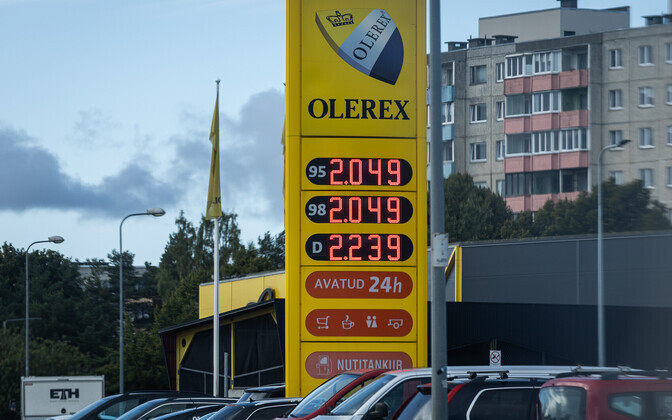
Amid the ongoing crisis in the Middle East, diesel prices in Estonia have climbed to around €2 a liter this fall. For waste management provider Eesti Keskkonnateenused, the increase means it may have to negotiate higher waste collection fees with local governments before the end of the year.
Southern regional manager Mart Laidmets said waste collection contracts are generally signed with local governments for several years at a time, with an option to extend them, but such sharp fuel price hikes are difficult to anticipate.
"We have no choice but to negotiate with local governments about whether and by how much they are willing to raise prices," Laidmets told ERR, adding that the company was already close to the limit of how much it could offset rising costs through greater efficiency.
Eesti Keskkonnateenused's southern region operates a fleet of about 30 vehicles, using roughly 60,000 liters of diesel a month to serve Tartu, Estonia's second-largest city, as well as further-flung regions including Setomaa Municipality.
Higher fuel costs are also being passed on by the company's transport partners, Laidmets noted, including those hauling waste and other loads between Tartu, Tallinn and Võru.
'Where can I save that money?'
Farmers are feeling the impact as well. Jõgeva County grain farmer Tõnis Soopalu said filling up his tractor's 450-liter tank has soared, more than doubling from €270 to €550. That's enough fuel, he noted, for a single workday.
During the busiest periods, when combines and grain dryers are running, his farm can go through more than 1,000 liters of diesel a day.
"When it comes to cutting costs, the big question is, where can I save that money?" Soopalu asked. Cutting back on inputs can reduce yields, while skipping necessary work or stopping the dryer could damage the grain.
While the farmer said there was no reason for panic yet, he acknowledged the volatility was making it harder to plan costs. Rising natural gas prices are another concern as well, because gas is used to produce nitrogen fertilizer.
"If oil prices stay this high, we've seen before that it's not sustainable for very long," Soopalu said. "Right now, it's a question of how much will be produced, whether it will be produced at all and what availability will look like. There's plenty to worry about."
--
Editor: Aili Vahtla


