Estonia mulls longer truck driver hours in emergencies to secure supplies
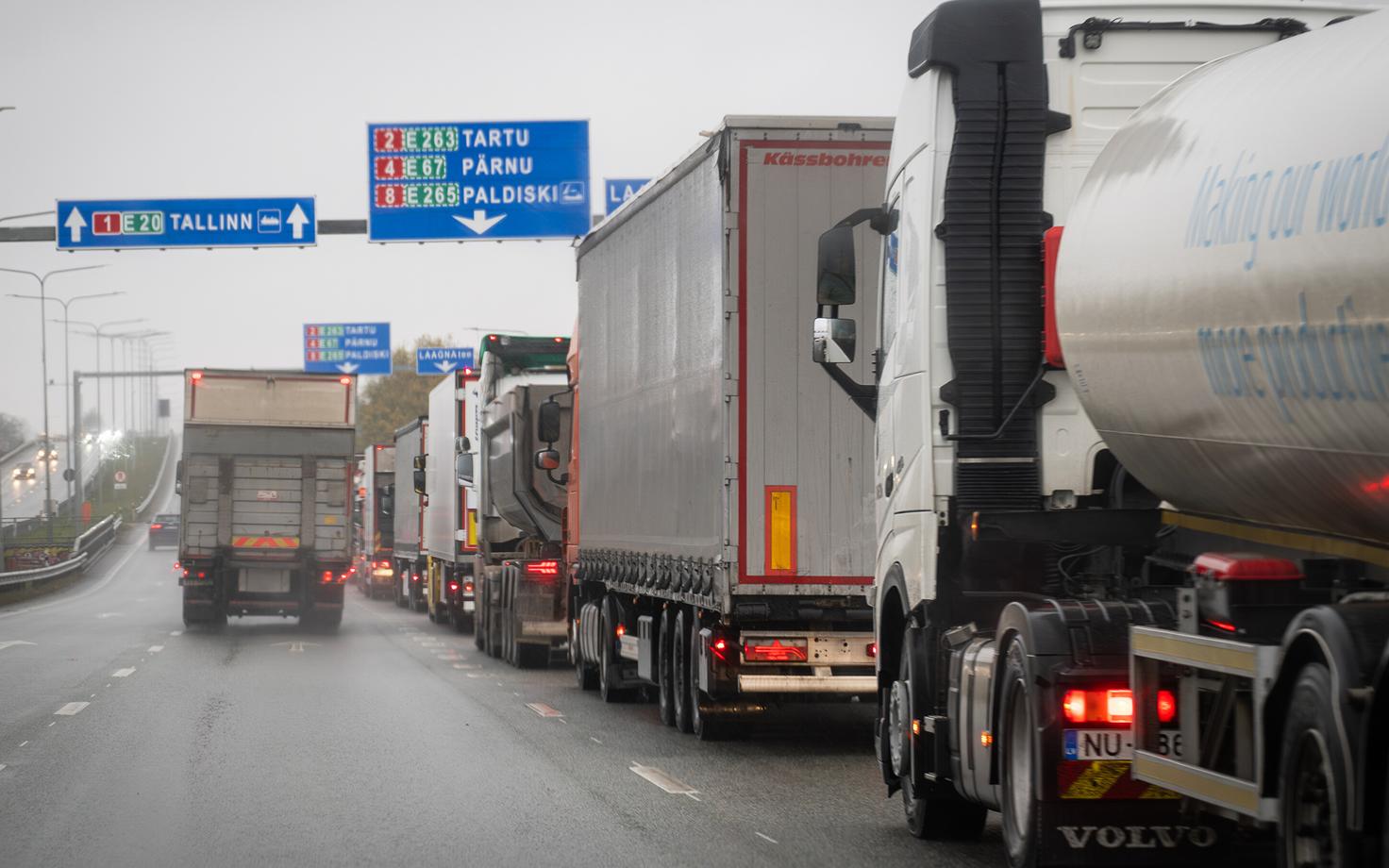
The Climate Ministry says it wants truck drivers to be allowed to work longer in emergencies to help prevent disruptions to supplies of essential goods.
Estonia is continuing to prepare for a variety of crises which could affect the country, and the transport sector is included in these preparations.
The ministry is preparing a legislative amendment which would allow professional drivers to work longer hours and take less rest than current law allows in emergency situations. This may be necessary, for example, to ensure supplies of essential goods such as medicines or motor fuel during a crisis.
Priit Tuuna, chief specialist at the Ministry of Climate's roads and railways department, told ERR that Estonia has not faced a situation in recent years in which an exemption from working and rest time requirements has been needed. However, that does not mean the country should not be prepared for such situations, he added.
"The coronavirus period was difficult, but it did not directly create a need for operational intervention on our part. However, if we look at neighboring countries and European Union countries in general, unforeseen situations can arise in which rapid action is needed. Natural disasters have happened, for example, and some countries have suffered major storm damage. In such cases, the need for transport has also risen," Tuuna said.
In such situations, the working and rest time requirements could be relaxed by ministerial regulation. For instance, the daily driving time could be extended, the daily rest period shortened, or the deadline for a driver's next rest period could be postponed.
Though longer working hours also increase driver fatigue and the risk of traffic accidents, the ministry says this temporary risk is still smaller than the harm society would suffer if the supply chain for essential goods were to be disrupted. As is the case right now, employers would still remain primarily responsible for ensuring that employees get sufficient rest during a crisis.
"Even now, under normal circumstances, it is the company's own responsibility to ensure that the way its staff's work is organized does not conflict with the rules laid down by law. If an emergency situation arises, it will also be very clearly specified that, for example, one additional hour of driving is permitted. Both the employer and the driver must then comply with that," Tuuna said.
Kersten Kattai, head of the national road transport association (Eesti Maanteetranspordiliit), said he did not believe there was a significant risk that professional drivers would become excessively fatigued during a crisis, particularly when everyone would likely be on heightened alert.
"We still assume that emergencies are emergencies and that both professional drivers and the people assigning them work will retain their common sense and good judgment," Kattai said.
Under the Estonian Constitution there are two definitions covering a state of emergency and a state of war, plus two lesser tiers; of these latter two, the "Emergency situation" (eriolukord) was declared during the Covid crisis.
--
Follow ERR News on Facebook and Twitter and never miss an update!
Editor: Andrew Whyte


