Kharkiv mayor: No safe place left in the city as winter approaches
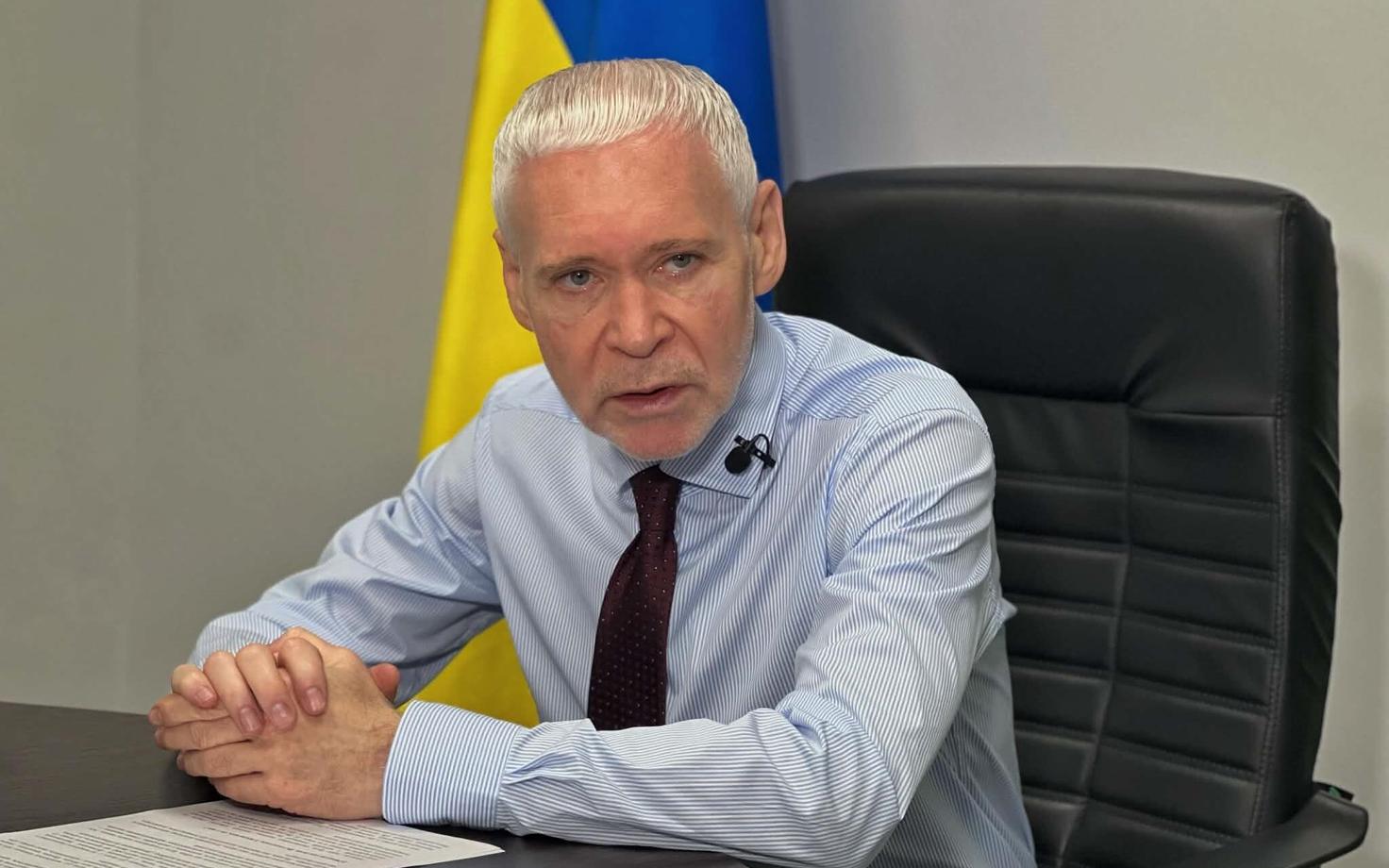
The northern Ukrainian city of Kharkiv is now targeted by Russian drones as well as missiles, but the city lives on mayor Ihor Terehhov told ERR.
Being just 30 kilometers from the Russian border, Kharkiv has suffered a lot over the past four and a half years but is unbowed and is trying to rebuild what has been destroyed,
The mayor noted the coming winter will be very hard without any "energy truce", but the city survived the last winter and the previous ones too.
Mayor Terehhov was talkng to ERR at a time when Russia has been hitting Kharkiv in lethal strikes involving bombs, missiles and drones.
It is mid-autumn already and winter is approaching. How is Kharkiv preparing, and how did it survive the last winter?
If there is no so-called energy truce — Ukraine ending strikes on Russian oil refineries in exchange for Russia ending attacks on energy and other critical infrastructure in Ukraine, which is currently widely under discussion — then the coming winter will be very hard. We understand that perfectly.
I warned everyone last autumn that the winter would be tough, and so it has turned out to be. The enemy has been destroying energy infrastructure, targeting thermal power plants and water supply, leaving residents without basic utilities.
We all understand this all too well, yet we survived last winter, even though it, too, was hard. Due to the strikes on the power plants, we had not a single megawatt of electricity generation of our own. The heating system was damaged. There had been 50 attacks on electricity and heating networks. So it was a hard winter, but we held out. As for next winter, we are preparing for that too. We have been preparing since 2022.
Two years ago, in our previous interview, you spoke about the need to create energy "islands". What are these islands, and have they been created?
We wouldn't have survived last winter without those energy islands. I can't tell you everything, but if I were Estonia, I would be setting up energy islands too. It is effective. In essence an energy island is an autonomous energy source fed by small boiler houses. People get electricity, heat and water from it.
How many people currently live in Kharkiv? Initially people left, and then, as you said, they began to return. Two years ago you estimated the population at 900,000. Kharkiv has also become a destination for internally displaced people from the front line and occupied areas. What is the trend today?
During the war there have been times when the city's population fell to 350,000 and even to 320,000. But the trend has been positive, and currently around 1.4 million people live in Kharkiv, of whom 225,000 are internally displaced persons. This is a serious challenge for the city — these people have to be resettled and cared for.
Our hospitals cater to these people; their children attend our schools. They have lost everything, and it is our duty to care for them, but they also need help from the state. They have been left homeless, so the state should issue them housing certificates, but so far no state program has been implemented. So there are many challenges we face every day. But the fact that there are 1.4 million people living in Kharkiv today is actually good news.
How is responsibility for internally displaced people divided between the city, the oblast and the central government? Is the city obliged to provide them with housing?
In my view, providing housing for those who have lost everything — that is, internally displaced people — is the state's obligation. I mean a construction program for internally displaced people, so they have the opportunity to get living space where they want. The situation is not like this in Kharkiv alone. Yes, most of our people are displaced from Donetsk, Luhansk, Kherson, Zaporizhzhia and Dnipropetrovsk oblasts. So such a program is needed.
As for Kharkiv residents, we currently have 160,000 people who have been left without shelter. No other major Ukrainian city has suffered destruction like Kharkiv has. As of today, we have 10,000 damaged, severely damaged or completely destroyed residential buildings, but during the war we have managed to repair and restore nearly 4,000 buildings. Of course, the city's budget deficit is very large, and according to government forecasts it will be even larger next year.
Where is the money coming from?
Financial assistance from international partners is required. It is no secret that we depend on funds allocated by our international partners. This is public information; both the president and the government have said so. We have to use state and city budget funds very carefully.
On September 28, Russian attack drones destroyed practically the entire stairwell of a multi-story block. Do you have reserve apartments to relocate residents somewhere?
We offered people accommodation in a dorm. Two families initially agreed, but then said they would go to live with relatives. Most of the residents of that building are internally displaced people who were renting apartments there. And now they are looking for other apartments.
For our part, we closed the building shell (a temporary measure where holes in walls and broken windows are covered with plywood — ed.), restored the electricity supply and restarted the heating and water systems. All of this is financed out of the city budget. The victims have been documented and are receiving payments. But the stairwell is still destroyed, from the third floor to the fifth, and with this I think the state should already allocate money for restoration. At first we were restoring everything ourselves at our own expense, but the city budget is already exhausted.
So what is the city's current budget deficit? How much money do you need?
That is a complicated question. You could say there is a deficit, but also say there isn't, depending on how you calculate it. Without reconstruction costs, we are on the edge, but still not in deficit. If we want to carry out the programs we consider necessary, then a deficit comes up. For us, the most important thing is to ensure reconstruction support and that payments are not delayed, as sometimes happens.
I saw three buildings in [residential district of Kharkiv] Saltivka that had been heavily damaged at the start of the war, then repaired, and now they are in order and people are starting to return (apartment repairs are not the city's responsibility but the residents' — ed.). But the Saltivka area is not the safest place in Kharkiv, to put it mildly. Is it worth spending money on rebuilding something that could be destroyed again the very next day?
I am convinced that rebuilding is essential. If we don't do it, people will stay in other countries and not return. People do not come back to places where there is nowhere to live, work or educate their children. We consider it important that Ukrainians, Kharkiv residents, come back from abroad, which means we have to rebuild in any case. Moreover, the current situation is such that a strike can hit practically any Ukrainian city. There is no city in the country so safe that you could say it definitely won't be attacked.
Have you been taking part in international conferences on Ukraine's reconstruction? In June a conference like that took place in Gdansk, Poland; next January one is going to be held in Tallinn.
I was at the Gdansk one. We held a special event and we managed to attract money from international partners, specifically for preparing for the heating season. That meeting was a productive one for Kharkiv.
I was in the Pyatykhatky neighborhood, and anti-drone nets are being installed over the road there. At the same time, some nearby streets are not covered with nets; I saw at least one car destroyed by a drone strike. On what criteria do you decide what to cover with nets and what not to?
The nets are not installed by the city but by the regional military administration, and they are installed where the military says so. Only the military decides where the anti-drone nets get placed. For our part, we are also installing protection against fibre-optic FPV drones. We do this in conjunction with the military, but at the city's expense. This protection is our know-how, developed in cooperation with the military and engineers.
Which places in Kharkiv are currently the most dangerous, and which are the safest?
In Kharkiv, as in the rest of the country, there is no safe place. I can't tell you that Pyatykhatky is dangerous but the city center — say Shevchenkivskyi or Kyivskyi districts — is more or less safe, because at any moment it could be hit by anything, from a missile to an FPV drone. As long as the war continues, nowhere in Ukraine can be a hundred percent safe.
Do you have any advice for your Estonian colleagues — mayors, municipal leaders — on preparing for crises?
Estonia is a sovereign state and we respect that. If you need our advice, there is no problem there. We will talk and show everything as openly as possible, though that information is not intended for the wider public consumption.
--
Follow ERR News on Facebook and Twitter and never miss an update!
Editor: Karin Koppel, Andrew Whyte