Government rules out fuel excise cut despite business pressure
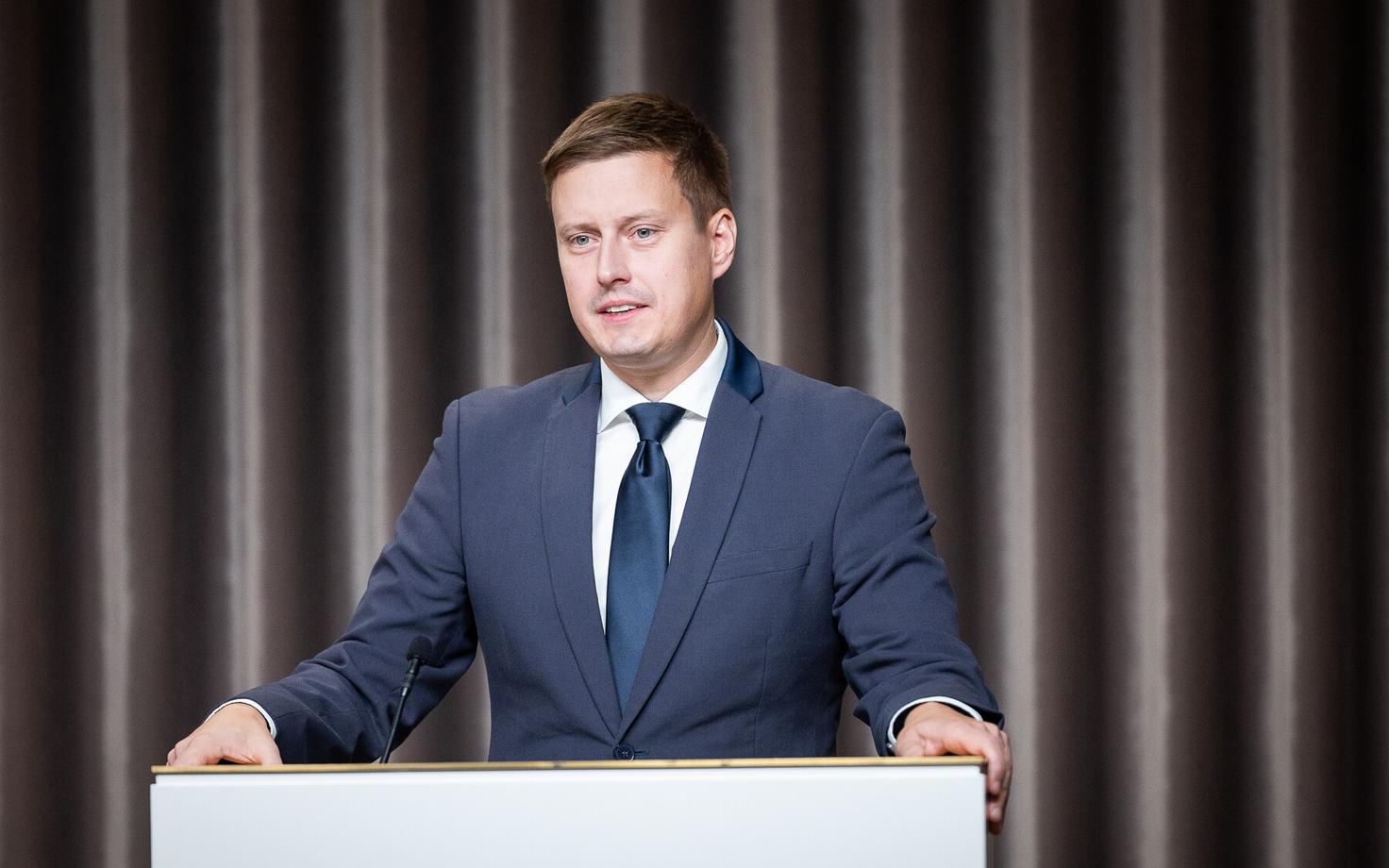
The government says it has no plans to cut fuel excise despite a proposal from the Chamber of Commerce and Industry to do so, Climate Minister Erkki Keldo (Reform) said.
Lowering both fuel excises to the EU minimum would cut excise revenue by about €210 million a year, Keldo said. The government is observing whether a recent excise duty cut by Latvia will lead to a significant rise in consumers from Estonia heading south of the border to refill.
The Chamber of Commerce and Industry (Kaubandus-tööstuskoda) has proposed lowering the diesel excise rate to the EU minimum for six months, from the current 42.8 cents to 33 cents per litre, at a time of soaring world diesel prices resulting mainly from the Middle East conflict.
"Reducing the excise rate is necessary to preserve businesses' competitiveness and curb inflation," said Mait Palts, director general of the chamber, in a letter to Prime Minister Kristen Michal (Reform).
The chamber also recommends creating a transparent, operational, data-based mechanism to assess how far diesel excise could reasonably be reduced in the event of sudden and exceptional circumstances — even temporary ones — and raised again once those circumstances have passed..
"Such an approach would ensure that the process of temporarily lowering the excise rate would be more operational, more transparent and based on data, and that the favorable excise rate would apply only during the period when it is economically justified," Palts said.
He added that several EU countries have cut excise, adding 18 out of the other 26 member states have lower rates than Estonia. Latvia's diesel excise duty is currently 33 cents per liter, Sweden's 11 cents, though Lithuania's (50 cents) and Finland's (51.1 cents) are higher.
"If Estonia has a higher excise rate than our nearby region and several other countries have decided to reduce it, even temporarily, this harms the competitiveness of Estonian businesses," Palts said.
Keldo said the fuel price rise is being driven not by taxes but by the world market, where supply has clearly fallen due to the Strait of Hormuz crisis. Higher fuel prices also do not translate to the same increase in tax revenues, since consumption falls, he added. Conversely, excise duty cuts do not fully get passed on to prices at pump, the minister said.
"We have to watch what our neighbors do, and we are watching very closely. Latvia has now made its first excise cuts. The Latvian Competition Authority's latest best knowledge says that 53 percent of the excise cut — essentially only half — reached pump prices," Keldo said.
As of Monday, diesel average €2.09 per liter at pump in Estonia compared with €2.12 in Latvia. The figures for gasoline were €1.94 per liter (Estonia) versus €1.96 (Latvia).
"What this shows is that the market as a whole is dynamic, and regional price differences and market competition affect it — there is no single solution here," Keldo said.
Latvia decided late last month to cut its excise duty rate on diesel fuel and unleaded petrol from October 1 until the end of this year.
Keldo said the chamber's proposal would cost the state budget a great deal. Taking both fuel excises to the EU minimum for all of 2027 would reduce excise revenue by approximately €210 million, he summarized.
The prime minister said the government is watching the fuel market primarily because Latvia is restructuring various taxes and introducing temporary measures; it would be advantageous to know how great the risk of cross-border trade is.
"We are assessing the situation and taking it seriously — what options there are for steps on cross-border trade if Latvia takes steps, or whether we need to take steps ourselves if price fluctuations from the world market affect our own price rises and inflation," Michal said.
Pump prices have risen by more than 60 cents per liter since the start of the Hormuz crisis in late February, and government decisions could affect the price by 10 to 12 cents per liter, he said, "perhaps more under some conditions."
"Possible costs in that case are about €10 million a month if we take excises to Latvia's level, and if we do more, the costs are greater. So about €120 million a year is the so-called minimum option," Michal added.
Keldo has been tasked by the government with monitoring world market fuel prices and the effect of price rises on consumer confidence and inflation.
Ahead of the mid-term elections, U.S. President Donald Trump threatened a diesel export ban on EU states if reserves were not released to counter soaring prices. The G7 countries earlier this week opted to release 100 million barrels of oil and diesel from reserves.
--
Follow ERR News on Facebook and Twitter and never miss an update!
Editor: Andrew Whyte, Marko Tooming, Karin Koppel


