British commander in Estonia: 'I go straight into the fight, without delay'
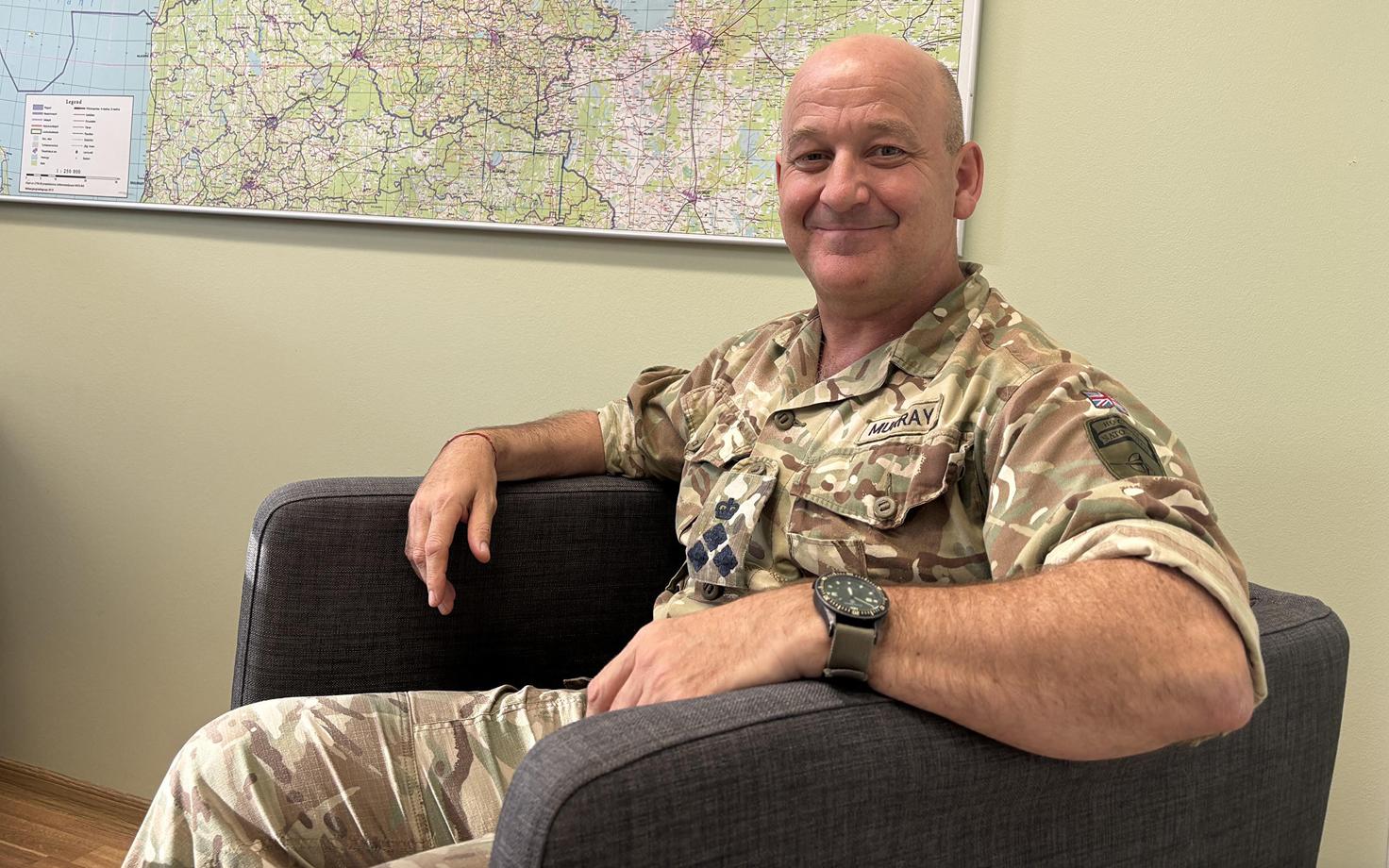
Brig. Jamie Murray, commander of the British contingent in Estonia, says close U.K.-Estonia ties and NATO readiness are key to deterring Russia and adapting to modern warfare.
Murray, commander of the U.K.'s Operation Cabrit and deputy commander of the Estonian Division, has led the British contingent in Estonia since arriving in June 2025.
He said his two-year posting reflects a broader effort to keep more allied personnel in Estonia for longer periods rather than rotating them through six-month assignments between the U.K. and Estonia.
British troops have been in Estonia for nine years. About 900 British soldiers are currently stationed in the country, with that number expected to rise to nearly 1,200 next spring.
"I arrived with all the understanding, goodwill and respect between our forces," Murray said.
He recalled the countries' earlier cooperation in Afghanistan, which he said gave Estonia and the U.K.'s military relationship a major boost. The commander described the two countries' current cooperation as exceptionally close.
"From all of my experience — nearly 30 years in the army — we are working closer with Estonian forces than any other forces anywhere on the planet, in my view," Murray said.
"We are shoulder to shoulder in every aspect of our jobs, from thinking about how to operate and how to be victorious, to the very tactical," he continued. "How do we talk to each other on the battlefield, how do we transfer data between each other, and how do we gain advantage by maneuvering or by fighting in a modern way, drawing on lessons from conflicts, in Ukraine in particular. I think we are incredibly well integrated, to the point where our battlegroup force, which is based in Tapa, is commanded by an Estonian brigade. It is under their command."
Murray added that in allied operations, cooperation isn't just about technical capabilities; it's also about mutual trust.
"There's a phrase in the army that 'You can't surge trust,'" he explained. "You can't just trust someone immediately; it takes time."
Estonia and the U.K., he said, have steadily built that trust over the past nine years, reaching a point where they increasingly see each other as one team rather than separate units.
Lessons from Ukraine don't translate directly
Like Estonia, the British Army is also drawing lessons about modern warfare from the war in Ukraine.
"The United Kingdom, because of its support to Ukraine, has been in a very privileged position, just as the Estonians have been, of being able to learn the lessons of what's happening in Ukraine," Murray said. "We must be careful not to learn the wrong lessons, but at the same time observe very carefully the modern way of fighting."
For example, the widespread use of drones in Ukraine does not mean traditional military capabilities have been rendered obsolete. British Army leaders have remained clear that a combination of capabilities is needed.
"Nobody in the British Army, or in most of the armies that I see, is saying that the era of heavy armor or heavier capabilities is over," Murray said.
Rather, the balance between capabilities needs to be reassessed. Alongside the most expensive and sophisticated platforms, he said forces also need enough systems that can be deployed and lost in larger quantities if necessary.
The British Army has adopted a 20-40-40 model, where about 20 percent of resources go toward expensive, heavy systems intended to be protected and preserved.
"We are then committing 40 percent of our resources to things that we would call more attritable: things that you don't want to lose, but you can afford to lose because they're cheaper and you can produce them at a larger scale," Murray explained.
"The final 40 percent is just on consumable, expendable things: precision munitions and fired projectiles that you don't get any immediate return on your investment for," he continued. "The 20-40-40 mix is one that the British Army has landed on, and we believe that is the right balance."
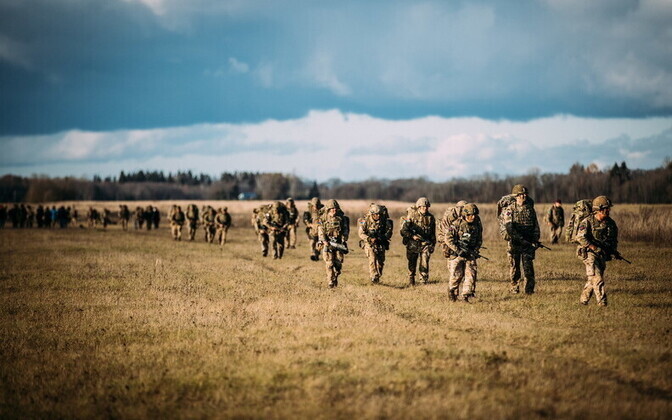
The commander nonetheless stressed that no overly simplistic conclusions should be drawn based on the war in Ukraine, since what works on the Ukrainian battlefield may not apply in the exact same way in another conflict or geographic environment.
The new British contingent arriving in Estonia next spring will mark the end of the current concept of armed forces, instead built specifically around Estonia's operating environment, with mobile vehicles, modern weapons systems and drones with a range of up to 250 kilometers.
Britain takes NATO's eastern flank seriously
Europe has seen a growing number of security incidents recently, from drone attacks to state-organized migration — with Russia believed to be behind them.
"First of all, I want to reassure those who are reading or listening that this is something we take extremely seriously; it's our purpose," Murray said. "The defense of Estonia equals the defense of NATO, which by extension for the United Kingdom, equals our own defense. This is something that we do not take in any shape or form lightly."
He said there is good reason to believe Europe's security environment has changed, and pointed to Germany's decision to attribute recent hostile activity at Leipzig Airport to the Russian government and the diplomatic measures that followed.
NATO must increasingly account for activity below the threshold of open military conflict, the brigadier said, arguing that Russia is trying to destabilize Western societies through actions that may not trigger NATO's conventional military response mechanisms.
NATO not 'asleep'
NATO's defense plans and Estonia's own national defense plans are closely linked, Murray said, highlighting the advantage this provides in possible times of need.
"These two plans are symbiotic," he said. "They are fully complementary to each other."
The British contingent commander is confident the alliance can act quickly in a crisis.
"SACEUR, the Supreme Allied Commander, will make the decisions that he's required to make," he emphasized. "Which means that I go straight into the fight if it's required, without delay."
Murray rejected claims that NATO could hesitate or respond too slowly to a potential Russian attack.
"The decision delay has long been held as a stick over NATO —you see many books and articles today talking about how something could happen and NATO will be asleep, or they won't have woken out of their beds in Tapa," the commander said.
"I am here to say to anybody reading that this is not true," he emphasized. "All we do is think about how quickly we can react and how fast we can move into the positions we're meant to move in, in order to stop Russia from invading."
NATO's goal, Murray added, isn't to attack Russia, but to deter any potential Russian attack.
"Our goal is not to invade Russia or put Russia under any threat, but to stop them from coming," he explained. "We want to explain to them as clearly as we can that the cost of doing that far outweighs the benefits."
The commander underscored that any Russian threat to Estonia would also constitute a threat to the entire alliance.
"Narva may be the border of Estonia and Russia, but I see it as NATO's border as well," he said.
Brits don't consider Estonia dangerous
Murray said the U.K. is actively debating how much it should spend on its own defense and on NATO defense, acknowledging that the need for defense spending must inevitably be weighed against other social needs, particularly as people face cost-of-living hikes, inflation and high fuel prices.
"The United Kingdom's values are identical to Estonia's," he said. "When we pitch a conversation at home about why we're in Estonia, that values conversation is by far the most important, and that, to my experience, has always worked."
He also rejected the idea that Estonia has become a place British people are reluctant to visit due to its proximity to Russia.
"I have never heard of people in the United Kingdom saying they don't wish to travel to Estonia because it's not safe," Murray emphasized.
"My wife lives here with me, my children live here with me, and there is a large community of British expatriates in Tallinn and in Estonia," he said. "My feeling is that people in the U.K. do not think of Estonia as being any different from any of the other nations in this region."
--
Editor: Aili Vahtla


