Operators baffled by Estonia's plan to buy new gas and electric buses

Bus companies say they do not understand why the state is buying new gas and electric buses when they already have buses of their own and have no immediate need to receive buses from the state.
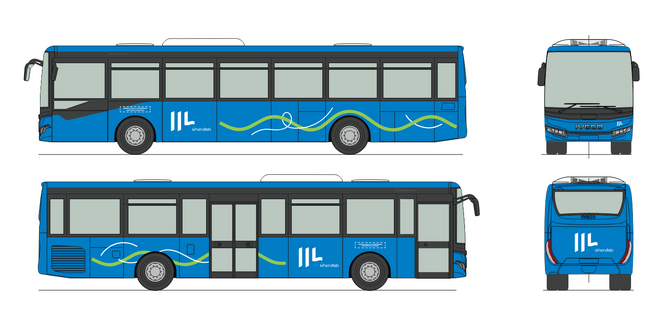
The Ministry of Regional Affairs and Agriculture recently announced a procurement tender to purchase up to 10 electric buses and up to 30 gas-powered buses. The procurement is being conducted under a framework agreement, meaning five electric buses and nine gas-powered buses will be purchased initially.
The buses will be purchased using proceeds from the sale of CO2 emission allowances and provided to bus companies for use on public county routes.
The ministry's procurement has raised questions among bus operators who do not understand why the state needs its own fleet of buses.
Mart Raamat, a board member of bus company Sebe and the Association of Estonian International Road Carriers, called the ministry's procurement absurd.
"The era of a state-owned bus fleet should already be behind us and left in the Soviet era. Until now, the system has worked very efficiently: A tender is held to provide public bus services and the operator obtains the buses itself," he said.
According to Raamat, the bus market functions very well under public transport contracts, with all bus companies financially strong and well-capitalized. However, if the state begins handing out buses, companies that lack the capacity and willingness to maintain them properly could reemerge, putting passengers at risk.
There is a recent precedent for the state purchasing buses with proceeds from the sale of CO2 emission allowances and providing them to operators. In 2011, the then-Road Administration purchased 110 buses from Iveco, providing 100 of them for use on county routes and 10 to the City of Tallinn.
"A couple of the operators that received the buses didn't repair them, because repairs cost money, and if you don't own the bus, you don't see it as your responsibility to repair it. There were news reports at the time about buses catching fire on the highway. And if you now give gas and electric buses to incompetent operators, the risk to passengers is even greater. Gas and electric buses are very expensive — they cost about 50 percent more than diesel buses. This is a very risky and absurd decision and it also poses a significant risk to passengers," Raamat said.
"I think this should be a wake-up call that perhaps state-owned buses shouldn't simply be handed out for anyone to use, with no rhyme or reason," he added.
Ministry: State buses help bring down price per kilometer
Responding to Raamat's criticism, the Ministry of Regional Affairs and Agriculture said the state's goal is not to become a bus operator itself or establish a separate state-owned bus fleet.
"The buses are being purchased to support the introduction of more environmentally friendly public transportation and to reduce vehicle acquisition costs as part of the cost of providing public bus services," said Andres Ruubas, head of the ministry's public transport department.
This should help lower the cost per route kilometer, allowing state funding to be used, for example, to increase the frequency of bus services.
The ministry's reasoning is as follows: Typically, operators purchase the buses they need before new transport contracts begin and the cost of acquiring those buses is subsequently included in the price per route kilometer. This means the state indirectly pays for the buses through the fees it pays for the service. Under the new approach, the state will instead cover part of the cost of acquiring the vehicles directly.
"Operators that are provided with these buses for use under public bus service contracts will not include the acquisition cost of those vehicles in the price of their transport services. This will help reduce the price per route kilometer and allow more public transportation subsidies to be directed toward improving the service itself, such as increasing the frequency of connections," Ruubas said.
Raamat disagrees with the ministry's reasoning, calling it simply a matter of moving money from one pocket to another, which he says will ultimately cost taxpayers more.
"We've already been through this, both during the Soviet era and afterward, and it's difficult to understand why they're trying to make the public transportation subsidy look smaller on paper. By all indications, it will actually end up costing taxpayers more," he said.
Companies already own environmentally friendly buses
Raamat said the argument that the state is now purchasing more environmentally friendly buses, allowing greater use of biomethane and electricity, is also unconvincing.
"The reality is that nine out of 10 [privately owned] buses that will operate under any contract are already completely carbon-neutral today. From a technological standpoint, it no longer makes sense to buy diesel buses when gas and electric buses also make more financial sense for operators. [The ministry] is engaging in a smoke-and-mirrors exercise — the state isn't solving any problem here other than the fact that it doesn't know what to do with the climate funding," he said.
Raamat said transport companies have told the ministry that it makes no sense to engage in what he described as "foolish exercises."
"We've raised the issue and said that, in our view, this isn't the right approach, but as I understand it, the ministry is moving ahead with the plan for reasons that are unclear," he said.
How much the buses will cost the state will be determined through the procurement process. Ruubas said whether the state exercises its option to purchase all the buses will depend on several factors.
"The decision will primarily take into account the funding available, the results of the procurement, bus delivery times and the expiration dates of public bus service contracts," he said.
--
Editor: Marcus Turovski


