Expert: Trump does not have the power to force Ukraine to capitulate
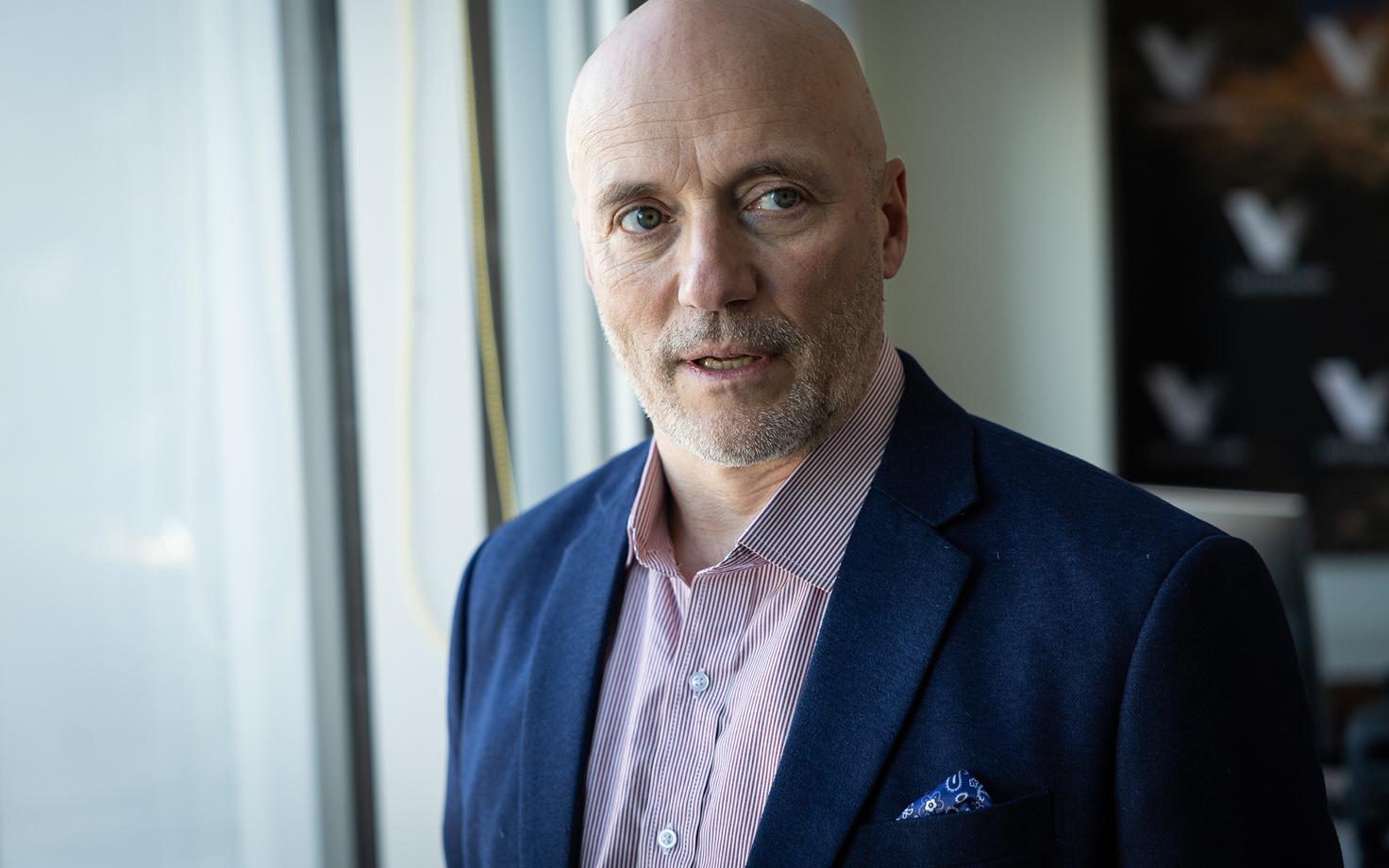
While Donald Trump's unpredictable behavior and disruptions to Starlink are complicating the situation in Ukraine, the U.S. president does not have the power to force Ukraine to surrender, security expert Ilmar Raag finds.
Security expert Ilmar Raag shared his view on social media that U.S. President Donald Trump is not Estonia's ally. Raag explained on ETV's "Ringvaade" that Trump and the United States should not be equated.
"We have American allied troops here in Estonia and when our military personnel interact with them, they are doing their own jobs. I also hear about what is happening in Washington. Following Trump's latest statements, there are senators in the Republican camp who say they disagree with him. I have to say that if there are Americans anywhere whom I consider my Americans, they are the Republicans who are currently standing up to Trump."
Trump, who has recently been pressuring Ukrainian President Volodymyr Zelenskyy to make peace, signed a diesel fuel deal with Kremlin leader Vladimir Putin last week in an attempt to regain popularity in the United States ahead of the midterm elections. In recent days, he has also threatened to stop sharing U.S. intelligence with Ukraine and has partially restricted the war-torn country's access to the Starlink satellite communications system. During a visit to the United Kingdom, Zelenskyy told journalist Piers Morgan on his show that he felt betrayed by Trump.
"First of all, we can say that no major catastrophe is going to happen immediately, for two reasons. First, although American intelligence is very important, it does not do everything. When we talk about Starlink, it serves many different functions in drone warfare, but not all of them. For example, units can still communicate with one another via Starlink and headquarters can communicate with teams on the front line operating these drones. That accounts for half of what Starlink does. The problem is that the most effective drones the Ukrainians have will naturally be affected if Starlink's more important functions — those provided by Starshield — are not working," Raag said.
According to Raag, it is impossible to say for certain whether the Starlink disruptions were accidental or deliberate, but the coincidences are significant enough to suggest that something else may be behind them.
"It appears to be some kind of unilateral action by a smaller group. You can see that Ukrainians are receiving warnings about incoming missiles too late after Starlink actually stops working for them. The Americans are not speaking with one voice, saying they made a decision and acted accordingly. Some are saying one thing, while Trump is already saying it never happened. This shows that the head does not know what the tail is doing, or vice versa. That brings us to the second argument that describes the current situation: Trump, being as unpredictable as he is, could change his mind yet again," Raag explained, adding that this was a sign that Europe needed to take responsibility for its own affairs.
European leaders have responded to Trump's statements and decisions. While many have condemned the U.S. president's rhetoric, others believe Trump should be approached more calmly to avoid provoking him further.
"It is true that Trump is a very emotional man and in some ways he thrives on conflict — he can always escalate things further. In that respect, European leaders have already realized that if they keep their heads down and wait a little, perhaps the midterm elections will come around and Trump will lose much of the power he currently holds. That is what many are hoping for," the security expert said.
According to Raag, surveys conducted in the United States show that most Americans consider Putin the aggressor and support Ukraine, raising hopes that if Trump suffers a defeat in the midterm elections, Congress may adopt a more supportive position toward Ukraine.
"Ukraine cannot afford a situation in which people are losing their lives while Trump is allowed to play games, shifting back and forth. People are dying in the meantime. In that respect, Trump is influenced most by his approval ratings in the United States, fuel prices and, ultimately, European leaders as well. He has now demonstrated several times that when Europe says a very clear 'no,' Trump returns to his previous positions," Raag said in response to the host's question about whether diplomatic exchanges had become too heated.
There are also concerns that if Trump stops receiving praise from Europe and Ukraine, he may become more interested in holding talks and making deals with Putin.
"But what can he really agree on? Trump can conclude various economic agreements with the Russians and do business with them. But Trump does not actually have the power to force Ukraine to capitulate. That is not going to happen and Trump has realized that as well. Perhaps that is also one of the sources of his frustration — that he simply cannot do it, just as he cannot impose on the Iranians the peace terms he has been announcing for quite some time," Raag said.
According to Raag, the war has escalated since August, but the Ukrainians are holding out and have already learned how to deal with the challenges they face.
"The escalation began in August when it became clear that the Ukrainians currently lack sufficiently effective air defenses against ballistic missiles and therefore face a very difficult winter. However, they have spent several years learning and the Ukrainians themselves say that although they curse Trump and Putin, they will survive this," Raag said.
--
Editor: Marcus Turovski, Johanna Alvin
Source: "Ringvaade"