Christopher Moseley, champion of Estonian literature in English, dies
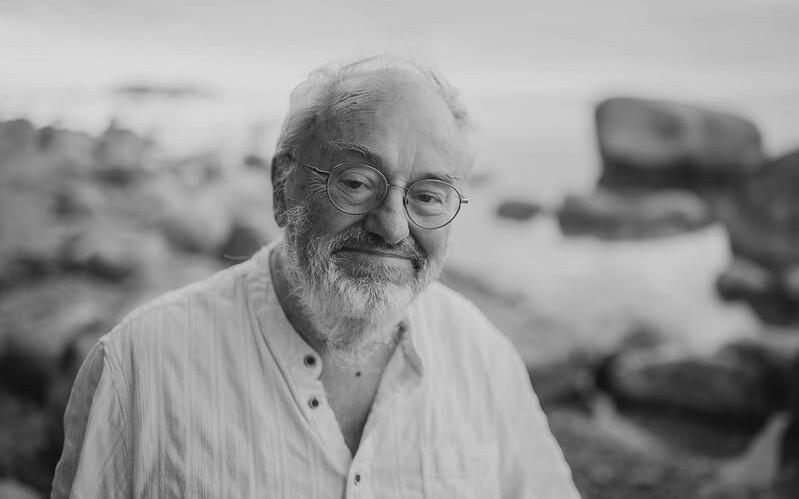
Christopher Moseley, the Australian-born translator and language teacher who devoted his career to bringing Estonian, Latvian and Nordic literature to English-language readers, has died. He was 76.
Moseley was born in Australia and came to Britain in 1974 to study Scandinavian languages, but his interests soon moved somewhat eastwards to Finland and the Baltic states, even while the latter countries were still shackled under the Soviet occuption.
He studied Finno-Ugric languages in Finland and the UK, and his fieldwork on Livonian between 1987 and 1993 was his first direct work with a minority language. It led to his Master's thesis at the School of Slavonic and East European Studies (SSEES), part of the University College London (UCL), and later to his book Livonian (2002).
He also authored the Estonian language installment of British publisher Routledge's "Colloquial" range, and co-authored its Latvian course too.
For many years he taught Estonian language and Baltic literature at SSEES and UCL, along with evening courses in Estonian and Latvian. He also worked as a translator and journalist specializing in Baltic affairs at BBC Monitoring for nearly two decades, before becoming a freelance translator and editor.
Moseley's own translations from Estonian into English included A.H. Tammsaare's classic "Põrgupõhja uus Vanapagan", Andrus Kivirähk's "The Man Who Spoke Snakish", Indrek Hargla's "Apothecary Melchior" series, and Ilmar Taska's "Pobeda 1946". His final translation, Rein Raud's "The Sun Script", was published by Norvik Press just this year.
From 2008 Moseley was General Editor of UNESCO's Atlas of the World's Languages in Danger, which became a key reference for the world's threatened languages. He was also a dedicated member of the Foundation for Endangered Languages.
In 2018, he was one of the speakers at the opening of the University of Latvia's Livonian Institute.
The Estonian Literature Center remembered Chris as a warm and friendly person with unceasing passion for languages and literature.
--
Follow ERR News on Facebook and Twitter and never miss an update!
Editor: Andrew Whyte


