Military officer: Destroying Kerch Bridge could significantly disrupt Russian military logistics
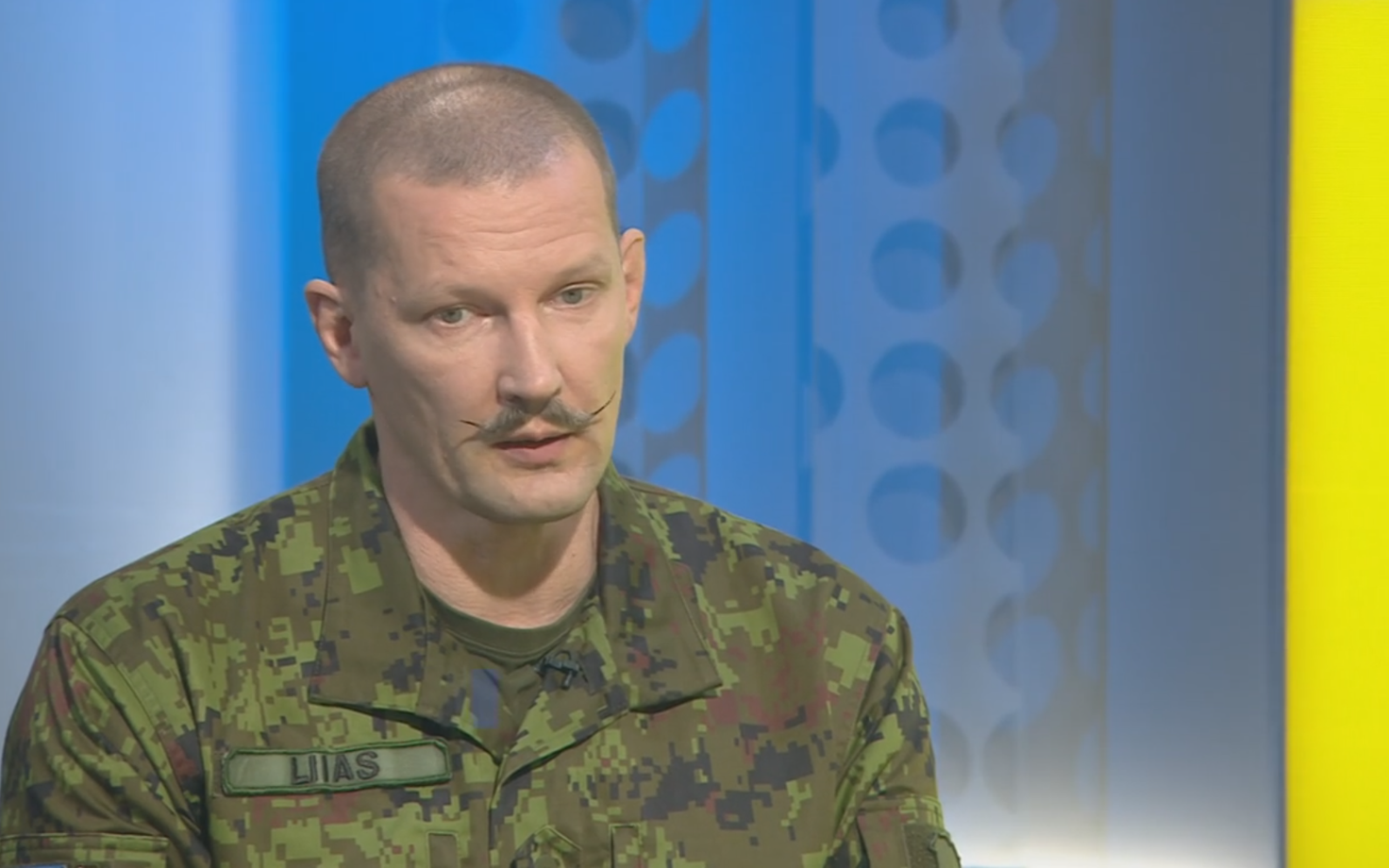
Ukraine's attack on the Kerch Bridge damaged a key transportation link between occupied Crimea and Russia. Estonian Defense Forces Lt. Col. Taavi Liias says that if Ukraine succeeds in disabling the rail connection as well, it could significantly complicate Russian military logistics on the southern front.
Last week's most striking development in the war was the destruction of the road section of the Kerch Bridge connecting occupied Crimea and Russia, along with damage to the railway bridge. How did the Ukrainians pull this off? The bridge is a highly symbolic structure for Russia, in some ways a symbol of the occupation itself. Was this operation prepared for quite a long time?
It was not a simple operation. Some sources claim it involved seven stages. Ukrainian forces had to cross a 150-kilometer land corridor to reach the bridge. Along the way there were numerous air defense systems, electronic warfare assets and mobile air defense groups. The operation's complexity lay in the fact that they first had to destroy air defense and electronic warfare capabilities in order to create a corridor and favorable conditions for the strike package to move in.
You cannot prepare something like that too far in advance because once you create a gap in a defense network, commanders immediately begin working to fill it. Everything depended on precise timing and intelligence information to ensure those corridors remained open. They managed to conduct the operation without relying on Starshield connectivity.
They used technology that had been introduced about a year ago but had not previously been needed because Starshield had worked well and was faster and more convenient. This time they used airborne relay systems that extended communications from one aircraft to another, and then on to a third relay and additional repeaters distributed across multiple aircraft, creating a radio communication network.
The system proved resilient against electronic warfare interference and was able to transmit video feeds back to command centers, allowing larger-warhead cruise missiles such as Neptune and Flamingo to be guided to their targets. In total, the operation involved 11 different systems. Only one was foreign-made; all the others were domestic products. The list was so extensive because the operation had multiple phases: first air defenses and electronic warfare systems had to be neutralized, and only then could the larger-warhead weapons reach the bridge.
Can this communications setup be compared to a network of airborne communication devices?
There is nothing fundamentally new about it. The relay was simply mounted on an aircraft. Normally relays are ground-based because directional antennas work best when stationary. In this case, they were placed on aircraft. They likely used a very broad frequency spectrum with frequency hopping, allowing them to jump away from interference. If they encountered jamming, they switched channels outside the affected frequency range.
The road bridge has been destroyed. How successful have the Ukrainians been in damaging the railway bridge?
Fortunately, the road bridge collapsed. We hope the operation continues and the railway bridge is taken out as well because rail transport is the backbone of Russian military logistics. Even though Putin claimed the bridge was not used to transport petroleum products or military equipment, many bloggers have posted videos showing large military convoys and fuel trucks crossing it. Hopefully the railway bridge will also be destroyed, completing the operation's final objective.
How long could repairs take, and are they feasible under wartime conditions?
They are certainly feasible. The bridge is effectively a monument Putin built for himself. Now the Ukrainians have knocked its nose off with a hammer and hope to knock off its ears as well, turning a badge of honor into a symbol of embarrassment. Restoring the bridge is a top priority for Putin, and I am sure no expense or effort will be spared. Current estimates suggest repairs could take about a year.
Symbolically, this is an extremely important target. To what extent does its destruction weaken Russia's southern front?
Even though Russia officially claimed military equipment was not transported across the bridge, it almost certainly was, along with other cargo. Now transportation must either move by sea across the Sea of Azov, which is less efficient, or along the R-280 highway.
The highway runs through occupied territory via Mariupol toward Crimea. When it was built, it lay about 150 kilometers from the front line and was considered reasonably secure for transport traffic.
Today, some sections are under heavy attack. In May alone, Ukraine reportedly destroyed 120 cargo vehicles on that route. Few people want to drive there. It is increasingly difficult to find civilian drivers willing to use what has effectively become a death road. That means supplies will become even more limited. If the railway bridge is also destroyed, the impact on the southern front and its logistics could be substantial and eventually produce operational effects.
Russia has carried out attacks on bridges in Kyiv. How successful have those strikes been?
Russia's ballistic missile production is running at full capacity, and it has missiles available for such attacks. A single ballistic missile strike on a bridge is not necessarily devastating. If it does not hit a critical support structure and instead explodes on the roadway, repairs are often relatively straightforward.
However, recent strikes damaged three of Kyiv's eight bridges. None has been completely closed, but traffic has been disrupted and slowed. It certainly creates inconvenience and additional pressure. It is not catastrophic at this point, but if the attacks continue, physically dividing the city could become a realistic possibility. Hopefully that does not happen, but the risk exists that transportation links between the two sides of the city could be severely disrupted.
That would be particularly difficult for Kyiv because a great deal of traffic depends on those bridges, and the city spans both banks of the river.
There are eight bridges within the city itself, but there are additional crossings outside the city. Ukraine certainly has the capability to repair bridges as well.
What is the current situation at the front? Can it be said that there have been no major changes, or is there something notable worth mentioning?
There is continued pressure in the Pokrovsk and Kostiantynivka directions, which remain the focal points of Russian operations. The number of attacks is increasing and approaches 200 per day toward the end of the week. Russian losses continue to exceed 2,000 personnel per day. The pressure is intense, but Ukrainian forces have been successful in defense and no Russian breakthrough appears imminent.
Ukrainians have also achieved successes in several counterattacks. Can it be said which side currently holds the initiative?
I would not say so. The situation has remained fairly stable.
Could the approaching winter change the situation at the front?
To some extent. Poor weather tends to affect Ukraine more in close-combat areas because Ukrainian forces rely heavily on drones to repel assaults there. The attacks themselves are still carried out by infantry, and infantry can keep moving despite the weather.
Adverse conditions may therefore favor Russia slightly, but in previous years weather has not been a decisive factor.
--
Editor: Merilin Leetna, Argo Ideon


