Ambassador Hanso presents credentials to President Trump at White House
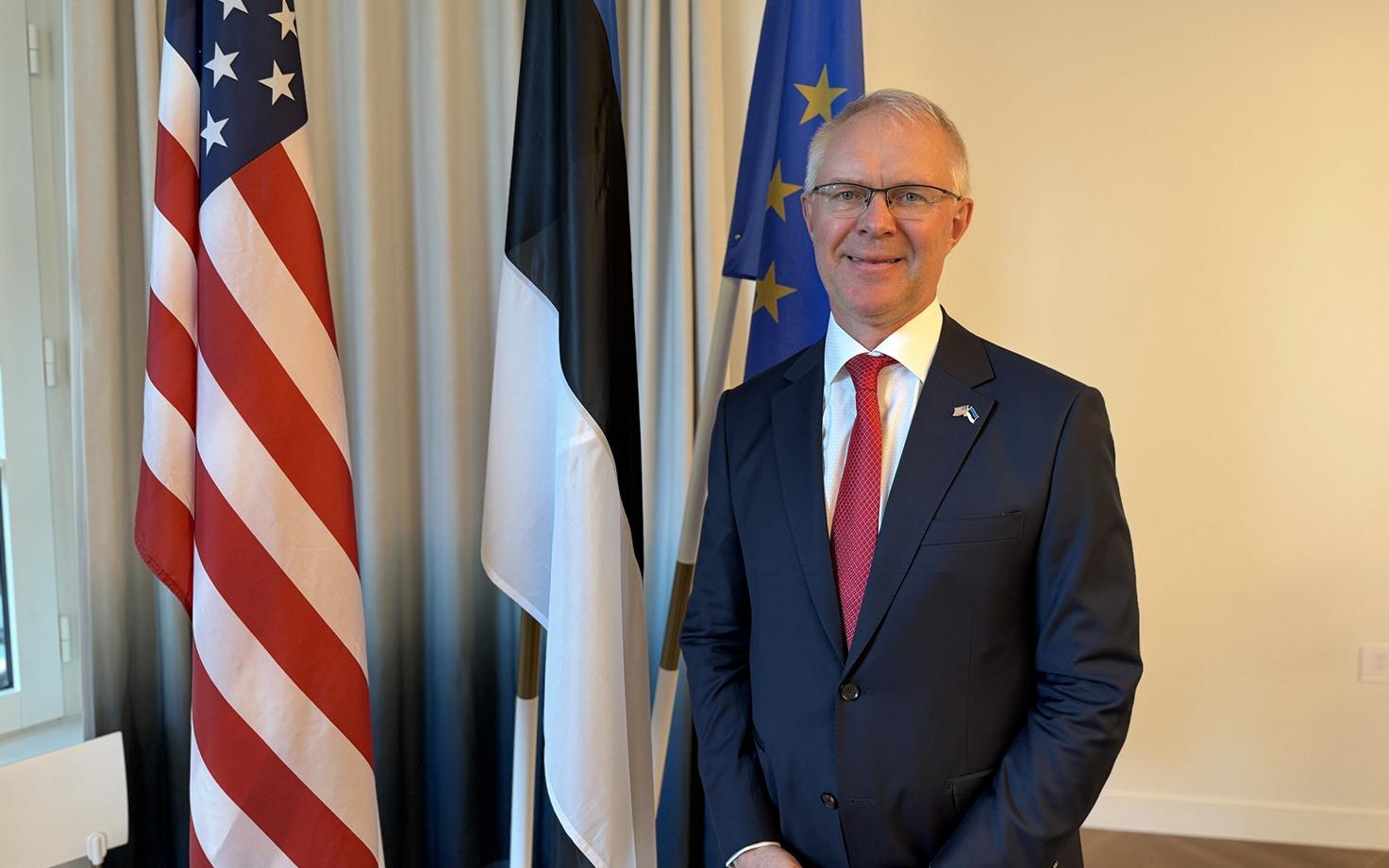
Estonia's ambassador to the United States, Hannes Hanso, presented his credentials to U.S. President Donald Trump on Tuesday at a ceremony held at the White House. In addition to Estonia, ambassadors from 13 other countries also presented their credentials.
ERR asked Ambassador Hanso in Washington for his first impressions of the meeting at the White House and spoke more broadly about the nature of his work in the United States and how it differs from his previous posting in China, where he also represented Estonia.
Trump received the credentials of 14 new ambassadors. What does such a ceremony at the White House look like?
Protocol‑wise, it is a very memorable and unique experience. First, the ambassadors gather at Blair House, which is across the street from the White House.
From there, the ambassadors are taken to the White House and given instructions on what to do and how to do it in the Oval Office, where President Trump awaits.
When the door opens, you walk about ten steps to the piano, where the president stands. The chief of protocol introduces you as Estonia's ambassador, Hannes Hanso, and then I walked up to President Trump.
With what words did you present your credentials to President Trump, and what did the U.S. president reply?
I said that I am from Estonia, and that he knows the country as a computer country. Trump is very familiar with Estonia's digital achievements and had discussed them earlier with people we consulted before going to meet him.
Then there was a handshake and the presentation of the credentials. He opened them. I asked whether he would like to read them in Estonian. We presented the credentials in Estonian, as is customary. He laughed at that.
So there was no opportunity for a longer conversation?
I have heard that historically there have been different practices, but the new custom really is in quickly and out quickly.
The ambassador presenting credentials also writes a letter to the president, emphasizing important and mutually significant topics and what he hopes to achieve during his term.
The president replies. Trump had a very beautiful written response, which I received at the White House. The president emphasized shared values and freedoms, the importance of transatlantic and security relations, and praised the good relations between the Republic of Estonia and the United States.
In that sense, one can be optimistic. He certainly also stressed entrepreneurship and business, as well as the growth of prosperity. These were very pleasant and appropriate messages.
Speaking of business, the Trump administration values personal contacts and tangible results. How can Estonia make use of that?
Before this meeting, there was a whole series of senior administration officials with whom we had longer conversations.
I spoke about the Ukraine reconstruction conference we are organizing in Estonia. I spoke about the memorandum of understanding on critical rare earths, which we have been working on for some time and would like to sign with this administration.
After that, there was a longer conversation with, for example, the U.S. deputy secretary of state responsible for the Europe and Eurasia portfolio. These conversations and meetings lasted quite a while after the official credential ceremony.
These are actually important conversations, because these are the people we work with on a daily basis.
You have now presented your credentials as ambassador to the presidents of two major world powers: Xi Jinping in China and now Trump in the United States. How did these ceremonies differ?
The White House is quite a homey place: small and charming. Trump comes in, pats you on the shoulder, and shakes your hand. In China, it is more like a palace the size of a small city. The Great Hall of the People in the city center, with enormously high ceilings and wild staircases several dozen meters tall.
Approaching President Xi is also different. You walk through a vast space for twenty or even fifty meters before reaching the president. You are not allowed to speak.
You present the credentials, which are immediately taken from the president's hands. Then you briefly turn toward the photographers and leave.
In that sense, things here are much warmer and more personal. All the conversations before and after are, of course, things you cannot do with senior officials in China. Here, people immediately exchange mobile numbers, promise to invite you for coffee, visit, and talk.
In that sense, the attitude in the United States is entirely different. They are much more accessible.
It may be too early to ask, but precisely for that reason it will be interesting to look back later: by what concrete result would you like to judge at the end of your term whether your time as Estonia's ambassador in Washington was successful?
My posting should end in 2031. By then, there will certainly have been many changes in U.S. politics.
Our job is to build a relationship with this country, which is our most important partner in many matters, especially security, that survives all administrations and all individuals. That this cooperative relationship continues and that the United States' presence in European affairs remains significant.
These are the main metrics. But I would say that alongside security issues, economic relations are also extremely important and must be developed.
We have many companies that are very interested in the United States. We want to pursue that cooperation.
And we have a very significant community here — more than 30,000 people of Estonian descent who consider themselves Estonians in this country. That is also an important area of work.
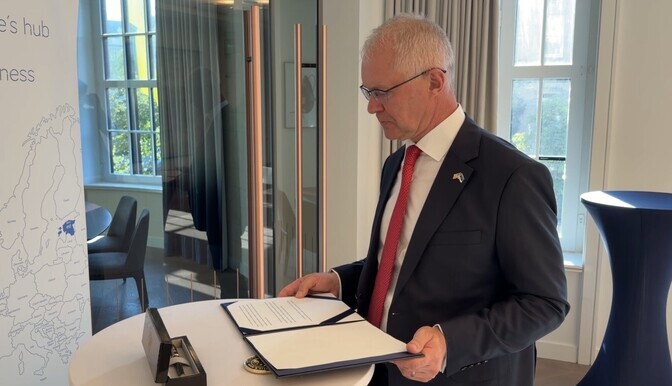
How are you feeling in Washington already? Has anything offered an unexpected culture shock?
No, there is no culture shock in Washington. I have never lived here before, but I have visited. In that sense, there is a lot to discover and learn.
Most of the work here goes into interacting with locals, not with other diplomats.
In that sense, it is very different from my previous posting in the People's Republic of China, where access to locals was much more limited.
So I approach this with great excitement and interest. The children are in school, all the basic things are sorted out, and I can already get from home to work and back without navigation.
So we are slowly learning to know the city.
--
Editor: Mait Ots, Argo Ideon


