Broken things just need some love and attention
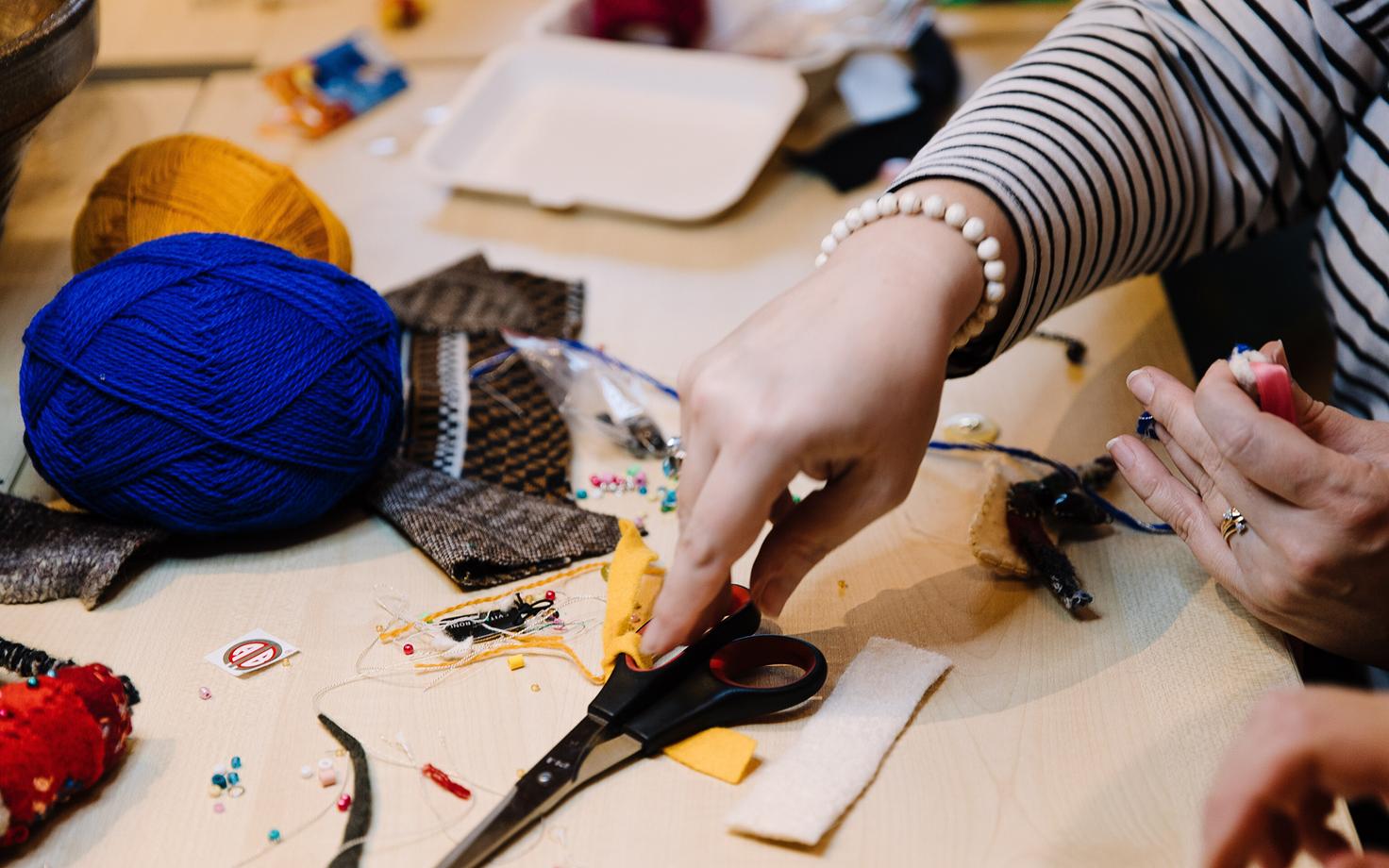
As consumer goods become increasingly disposable and difficult to repair, researchers and designers are calling for a renewed culture of mending that could help people reconnect with their possessions and reduce waste.
While people routinely mended even nylon stockings and repaired everyday items in the last century, today's abundance of consumer goods has made such repairs seem unnecessary. "In fact, the main reason we throw things away is not that they're broken, but that we have no connection to them," designer Marta Konovalov explained on the Vikerraadio show "Teise mätta otsast."
According to the designer, the weakening relationship between people and their possessions is particularly evident at waste management centers where intact, usable items pile up. Nobody wants these items anymore, either as finished products or as raw materials, because it is the entire system surrounding them that has broken down, rather than the items themselves. "In my practice, I value repair as a way of actively engaging with the world around us, rather than simply playing the role of a passive consumer," Konovalov said.
According to ethnologist Tenno Teidearu, people need to change both their shopping habits and the way goods are manufactured as ecologists have long warned that humanity is exceeding the Earth's ecological limits. As early as the 1990s, scientists pointed out that recycling materials alone would not provide a sustainable solution and that the lifespan of products needed to be extended.
As an ethnologist, Teidearu studies how individuals, communities and institutions keep technology and infrastructure functioning through ongoing maintenance. "Repair has not disappeared from our world, but it has become more hidden, institutionalized and concentrated in the hands of specialized corporations," she noted.

Breakdown as a new beginning
With maintenance and repair services increasingly concentrated in the hands of large corporations, ordinary people are left with the impression that a broken device or piece of clothing has reached the end of its useful life. However, according to Teidearu, Cornell University professor Steven J. Jackson, who gave a talk in Tartu a couple of years ago, approaches the issue from the opposite perspective. In his "broken world" theory, Jackson describes an object breaking down as a new beginning.
From Jackson's perspective, a breakdown is an event that allows people to give an object new meaning and rethink their role in caring for it. "Jackson points out that, more broadly, repair could be understood as a moral relationship with the material world in general," Teidearu said.
Alongside this moral relationship, the everyday ability to maintain household appliances is also disappearing from modern homes. Marta Konovalov visited an electronics repair shop in the Netherlands where a local repair technician encounters perfectly functional but poorly maintained household appliances every day. "The first thing he said was that, quite often, things aren't actually broken — they just need some care," the designer recalled.
According to the technician, people no longer see maintaining their appliances as something they can manage themselves. While the technical know-how remains in people's collective memory, they have forgotten that they can intervene themselves. "It seems easier and cheaper to replace something than to take the time to properly clean your coffee machine so it works again," Konovalov said.
Across different cultures, repairing objects can also offer a distinct aesthetic experience. For example, the Japanese philosophy of wabi-sabi views objects as more than the work of a single creator. According to Konovalov, every crack, sign of wear and repair adds new layers of meaning to an object. "Yuriko Saito also sees repair itself as an aesthetic experience: when we stop repairing and maintaining things, we deprive ourselves of the opportunity to experience something special," she explained.

A sign of pride vs. a sign of shame
According to Tenno Teidearu, cultural attitudes toward when an object becomes too worn out can differ between generations within the same society. Research by Swedish ethnologist Anneli Palmsköld showed that different generations share the belief that things should not simply be thrown away. However, while older people tend to repair textiles themselves, younger people are more likely to take them to secondhand stores.
In Estonia, the generational divide is also shaped by memories of the Soviet era. Konovalov has encountered many skilled craftspeople in her workshops who refuse to mend clothing because they fear a return to the shortages of the past. "Young people in their early 20s start wondering what their mother or grandmother would say about it. Would they start worrying about me and ask, 'Do you have enough money?'" Konovalov said.
Although repairing things carried the stigma of poverty in Estonia after the restoration of independence, that association has been fading in recent years with the rise of the visible mending trend on social media. For example, the Japanese sashiko technique has been gaining popularity online. "Visible mending as a visual and aesthetic practice has helped popularize repair and make it more attractive," Teidearu said, citing his ethnological observations.
Konovalov, meanwhile, highlighted an idea put forward by Orsola de Castro, founder of the Fashion Revolution initiative, that people should wear mended clothing with pride rather than view it as a source of shame. "Rather than indicating poverty, it shows emotional and spiritual richness when we wear repaired items and take the time to think about and engage with our possessions," Konovalov explained.
However, efforts to maintain and repair personal belongings are hampered by the logic of the industry itself, namely planned obsolescence. In other words, many clothes, shoes and smart devices are designed from the outset to be difficult or impossible to repair. Konovalov cited the example of an ordinary backpack where replacing a zipper first requires undoing seven layers of fabric and seven seams. By contrast, owners of bicycles or cars, which have modular designs, take maintenance for granted.
During Teidearu's fieldwork, older people in particular have complained that manufacturers restrict access to spare parts and enclose household appliances in sealed casings. "Planned obsolescence is not some urban legend but a real economic and industrial design strategy. Its purpose is to shorten the lifespan of products so that consumers replace them with newer models," Teidearu said.

--
Editor: Marcus Turovski


