Arvi Hamburg: Why is Google investing in Finland and not Estonia?
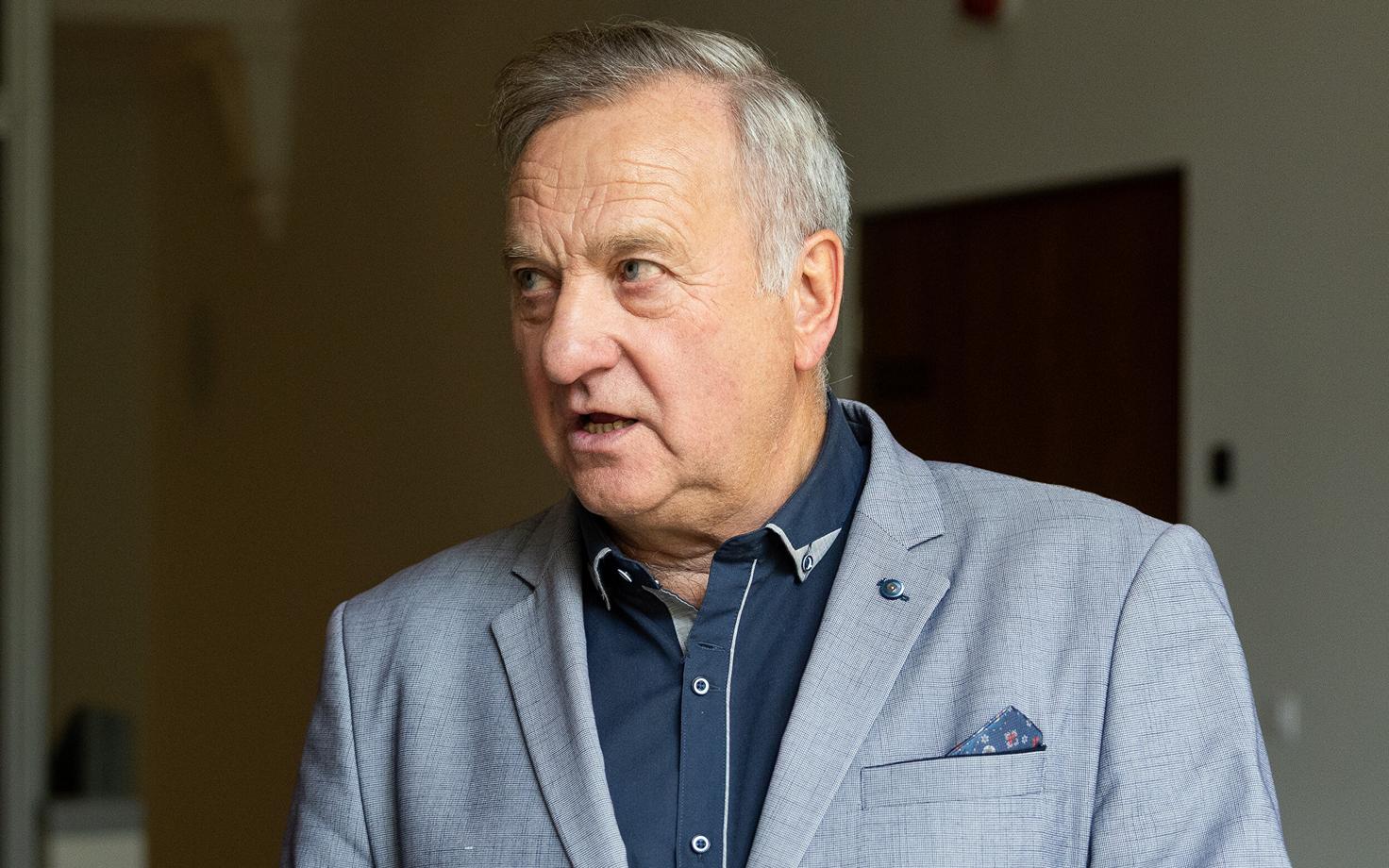
From the perspective of security of supply and energy security, it makes sense to have a diversified electricity generation mix that uses different production technologies, writes Arvi Hamburg.
Google plans to invest €13 billion in Finland over the next two years. The investment includes a 22-year power purchase agreement with Fortum, under which Google will purchase up to half of the electricity generated by the Loviisa nuclear power plant starting in 2030. With the power purchase agreement in place, Fortum will proceed with a €1 billion program to extend the operating lives of Loviisa's two reactors until 2050 and increase their capacity.
This is a fairly clear example of how reliable, long-term energy infrastructure is a vital foundation for economic competitiveness. A consumer does not invest €13 billion in Finland simply because electricity is cheaper there, but rather on the assumption that the country's electricity system will ensure a reliable supply for decades to come.
Finland can ensure a reliable electricity supply for consumers through nuclear, hydroelectric and wind power plants, energy storage and a robust electricity grid. Security of supply is underpinned by nuclear energy, which accounts for approximately 40 percent of the country's generation mix and covers its constant baseload demand year-round.
Google's investment will increase electricity consumption in Finland and as demand grows, supply must increase as well. If generation capacity does not expand at the same pace, less electricity will be available for export and the impact will also be felt in Estonian electricity prices.
Imports cover nearly 40 percent of Estonia's electricity consumption, primarily from Finland. Estonia therefore cannot build its economy's electricity supply around the assumption that its northern neighbor will continue to have a surplus of low-cost electricity available to us for years to come.
Elering has also reported interest from large data centers in Estonia but acknowledges that the country's electricity system is not equipped to connect major consumers. The electricity grid has physical limitations: a maximum of 300–400 megawatts (MW) of additional consumption could be connected to the transmission grid's main substations. An even greater constraint, however, is the growing shortage of generation capacity.
According to [TSO] Elering's latest assessment, Estonia will need approximately 2,100 MW of dispatchable generation capacity during a cold winter hour in 2035. Of the roughly 1,700 MW currently available, an estimated 600–700 MW will be retired over the next decade due to aging. Even accounting for the expected contribution of battery storage, the shortfall will amount to approximately 700–800 MW. This gap must be filled, but there is still no clarity on which electricity generation technologies should be used or in what order they should be deployed.
The Nordics' advantage
One of the foundations of Finnish and Swedish industrial competitiveness is electricity generation based on nuclear and hydropower resources developed over decades, supplemented more recently by the rapid expansion of wind energy. This combination ensures a balanced electricity system and reliable security of supply through the availability of dispatchable generation, while also meeting the European Union's climate targets.
Estonia cannot replicate this model exactly because we lack the natural resources needed for large-scale hydropower. As the role of oil shale power plants diminishes, most of the dispatchable electricity they generate must be replaced by other forms of generation that are not dependent on weather conditions.
Over the next decade, we must ensure security of supply through oil shale power generation by concluding contracts for approximately 10 years, as the current practice of one-year contracts does not allow for proper equipment maintenance or extensions of operating lifetimes.
We must select the future electricity generation mix based on a socioeconomic analysis. Wind and solar power will account for an increasing share of annual electricity generation, energy storage will reduce the need for peak generation capacity and smooth out price fluctuations and demand-side management will help reduce consumption peaks. The combined effect of these three factors will determine the optimal structure of system services and shape the full cost of electricity.
In addition, weather-independent generation is needed to cover baseload demand, which, under the European Union's climate policy, means nuclear energy. Growth in electricity consumption is a natural process and limitations in grid transmission capacity and electricity generation must not become obstacles to new investment in Estonia's economy and industry.
Data centers, the electronics and chemical industries and electrified logistics and heating systems consume enormous amounts of electricity, but the added value they create is a source of prosperity for society.
Google estimates that its investment in Finland will contribute €3.6 billion annually to GDP and create more than 37,000 new jobs. Google's agreement with Fortum to expand generation capacity at Loviisa is a positive example of how consumer expectations and the electricity system can work together. The nuclear power plant makes it possible to accommodate a major new consumer, which in turn provides the plant with a long-term revenue stream.
Google's agreement makes extending Loviisa's operating life and increasing its capacity economically viable. Fortum and Google are already exploring opportunities to develop nuclear and renewable energy, as well as new flexibility solutions for the electricity system.
There is another example from Finland where the Arctal aluminum recycling plant in Kokkola, set to be Europe's most advanced, has been under development for some time. Its planned annual electricity consumption is seven terawatt-hours. A major consumer, in turn, creates a more secure market for new investments in generation capacity and reduces grid tariffs through higher network utilization.
Filling Estonia's 700–800 MW gap with a single technology not sensible
Elering's estimated shortfall of 700–800 megawatts of dispatchable capacity in 2035 should not automatically translate into the construction of an equivalent amount of new gas-fired power generation capacity.
The introduction of a capacity mechanism, procurement procedures and the construction of gas-fired power plants should be carried out in stages, taking into account the regional security situation, applicable environmental requirements and technological developments. In an unstable economic and political environment, it is also essential to prepare for a potential crisis — a complete shutdown of the electricity system — and establish the capability to restart it.
The previously much-discussed proposed procurement of up to 900 MW of fast-start capacity represents a maximum volume, not a decision to build 900 MW of new gas-fired power plants in Estonia. Together with Meelis Saal, I recently proposed a phased solution that would first make use of the existing capacity at Kiisa, the 100 MW gas-engine power plant being built in Narva and some existing combined heat and power plants, while adding approximately 300 MW of new, decentralized fast-start capacity.
The construction of new electricity grid infrastructure and the reinforcement of the existing network would follow the same phased approach. This would allow the next investment decision to be made once actual demand and the timetable for nuclear energy development become clear.
Building the full amount of gas-fired generation capacity would increase the final price of electricity, close the market to other technologies and entail risks associated with gas supply logistics. Consumers should not be made to bear the risks of long-term supply contracts through increasing mandatory payments for system services.
If Estonia commits contractually to 800–900 MW of new gas-fired generation capacity in the near future, it will occupy a large share of the future market for dispatchable generation even before an investment decision on a nuclear power plant has been made. Phased development would keep options open for the 2030s, preserving market opportunities for oil shale and biomass combustion technologies, the addition of the gas-fired power plants needed for frequency reserves and nuclear energy.
The worst outcome would be a situation in which financing short-term solutions and entering into long-term contracts eliminate the economic room for strategically necessary generation capacity. Gas-fired power plants are currently attractive because of their low capital costs and short construction times, but electricity prices would remain dependent on global gas prices for decades.
For nuclear power plants, the decisive factor is capital expenditure and the cost of financing. Fuel accounts for only a small share of generation costs and nuclear power plants stockpile several years' worth of fuel in advance. Nuclear energy could eventually replace oil shale power generation.
Wind and solar power plants also have their place in the electricity system. For years, Estonia has used competitive auctions, support schemes, grid development and other measures to encourage investment in renewable energy. As a result, wind and solar energy have a strong pipeline of development projects and a head start. The same conditions that make investment decisions possible must also be created for other generation technologies.
Nuclear and wind
Finland's electricity generation mix demonstrates that nuclear energy and growing wind power generation can coexist very successfully within the same system. From the perspective of security of supply and energy security, a diversified electricity generation mix that uses different production technologies makes sense.
Carefully considered decisions on building a nuclear power plant must be made now and the most important task is to develop an economic model for the plant. Elering is working to establish a capacity mechanism and a nuclear power plant could, in principle, participate in the proposed mechanism. However, a support period of 10–15 years does not align with the investment logic of such a project. A nuclear power plant would likely require a separate state aid arrangement providing sufficient revenue certainty for 20–30 years. Elering recommends beginning preparations for such a state aid arrangement now.
The competitiveness of a nuclear power plant cannot be assessed using the general framework designed for power plants with shorter construction periods and different capital structures. If the state must establish a mechanism to bring the missing dispatchable generation capacity to market in any case, it must also create the conditions for nuclear energy to enter the market.
The legal framework is already in place. The Nuclear Energy and Safety Act has been adopted and the regulator will begin operating on January 1, 2027. The national designated spatial planning process has been initiated. The next step is to create a favorable investment environment, establish a timetable for permitting procedures, reduce the cost of capital and develop a model for long-term electricity sales or state aid.
The next €13 billion will go where electricity supply is reliable and prices are competitive. The most important lesson for Estonia from Google's investment is not the individual investment itself, but the investment environment Finland has created, built on a foundation of reliable electricity supply that can be forecast well into the future. Finland's electricity consumption is now growing rapidly and some of the electricity we have grown accustomed to importing from the Nordic countries will instead be consumed in Finland. Meanwhile, Elering is already seeing interest from major data centers in Estonia and acknowledges that limitations in both grid capacity and electricity generation are becoming practical obstacles.
We must therefore address three challenges simultaneously: ensure energy security and maintain security of supply, secure a competitive total electricity price for end consumers and comply with environmental requirements. This requires domestic electricity generation and, consequently, the introduction of nuclear energy.
--
Editor: Marcus Turovski