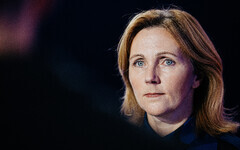
Skip to main menu 10.10.26 OPINION ... Can Estonia's current minority government make it to the finish line or are we heading toward early elections, asks Mari‑Liis Jakobson.
10.10.26 OPINION ... We forget two factors when talking about the growth of the debt burden — factors that affect the whole picture: economic growth and price growth, writes Raul Eamets.
09.10.26 OPINION ... EU proposals to curb young people's social‑media use, and Estonia's school‑level device restrictions, may be well‑intentioned — but believing that rules and bans can solve the problem is misguided, writes Mikk Artur Mikfelt.
08.10.26 OPINION ... Ida-Viru County must be seen not as a region defined by its problems, but as a source of opportunity for Estonia's future, with long-term investment, local involvement and development essential to the country's prosperity and security, Dmitri Teperik writes.
08.10.26 OPINION ... The vigilant citizen begins their day by examining drone warnings and war maps. Estonia is living in a recurring cycle of war anxiety that social media abundantly feeds, writes Argo Ideon.
08.10.26 OPINION ... If local entrepreneurship disappears, then sooner or later even a small town with the most magnificent square will decline, notes Erik Gamzejev.
08.10.26 OPINION ... The continuity of the Estonian state cannot depend on a simple majority vote by a single composition of parliament, Lauri Hussar writes.
08.10.26 OPINION ... In Harri Tiido's commentary series, the focus this time is on Finland and Russia's influence activity. As a broader example, Finland shows how Russia's provocations in foreign countries may begin to undermine the embedded influence, at least it is worth hoping so.
07.10.26 OPINION ... A patient's connection to a family doctor or a stable family doctor team creates responsibility so that care is not limited to a single moment. Someone is accountable for the full treatment path, prevention, follow‑up and combining recommendations from different specialists, Ruth Kalda writes.
07.10.26 OPINION ... With the new state budget, the government is acknowledging that its policies have reached a dead end. Taxes have been raised, yet public finances are still not in order. Spending cuts have been promised, yet the need to borrow remains, Lauri Laats writes.
06.10.26 OPINION ... Europe may lead on drone rules, but Asia leads on putting them into practice — and Estonia's first move should be establishing two or three permanent drone corridors, writes Evelin Kasenõmm.
06.10.26 OPINION ... Estonia relies heavily on volunteers to bolster its internal security, but low pay for professional rescue workers risks making that reliance increasingly necessary.
05.10.26 OPINION ... As the United States scales back its military role in Europe, the continent faces a dangerous test: strengthening its own defenses while Russia intensifies its threats and war against Ukraine.
04.10.26 OPINION ... The meaning of citizenship is deeply personal. For some, it is important that the entire family share the same citizenship; for others, it is about having the opportunity to participate more actively in Estonia's social and political life, Dmitri Moskovtsev writes.
04.10.26 OPINION ... Raising the minimum wage directly boosts the earnings of the lowest‑paid workers, giving full‑time employees a higher income and reducing their risk of in‑work poverty, writes Elle Pütsepp.
04.10.26 OPINION ... Rapid automation presents both opportunities and risks. Malicious actors have already begun using it. But it is these actors who commit crimes, not AI agents — software portrayed almost as mystical beings, Kaimar Karu writes.
03.10.26 OPINION ... Estonia shows a pattern in which many county centers are, relative to their population, almost oversupplied with sports, education, culture and public services, Raul Rebane writes.
03.10.26 OPINION ... The lack of meaningful integration between the social welfare and healthcare systems forces people in need to navigate a bureaucratic maze that many older adults cannot manage, writes Marica Lillemets.
03.10.26 OPINION ... The fact that Estonian students consider the free and internationally integrated European model a crisis only demonstrates how isolated the debate here has become. Much of this isolation stems from the fact that the claims fueling student protests are largely based on exaggerations, writes Kenneth Ruut.
02.10.26 OPINION ... In Harri Tiido's commentary series, this time, with the help of Andrei Kolesnikov, Russian people and the thinking that leads them are under observation. Kolesnikov thinks that in the war in Ukraine peace is possible only if Putin decides that the empire has been restored and the world has once again been divided between great powers.
01.10.26 OPINION ... It is high time for President-elect Ülle Madise to make some life-changing decisions in Estonia and also appoint deep state, esoteric and poverty advisers, Kaupo Meiel writes.
01.10.26 OPINION ... If the long‑awaited larger generation of young people is treated as a surplus in the education system, the number of people who reach higher education will remain a ceiling for Estonia's economy — a ceiling that cannot later be lifted by research and innovation funding or by bringing in additional foreign scientists, writes Toomas Asser.
01.10.26 OPINION ... It is time for regional policy to start addressing the problem by helping create places where people want to live, with pleasant urban and village centers and opportunities to enjoy cultural life together, Tarvi Sits writes.
01.10.26 OPINION ... In his commentary series, Harri Tiido this time examines the hidden influences shaping our worldview, drawing on insights from Turi Munthe. Broadly speaking, the conservative brain tends toward rejecting differences and irregularities, while the liberal brain is better at detecting exceptions and nuances, notes Tiido.
01.10.26 OPINION ... Unfortunately, access to medical care has fallen short of residents' health needs and expectations for years. Maris Jesse writes that the Health Insurance Fund board's decision to prioritize cost‑cutting over improving care is shortsighted.
30.09.26 OPINION ... Estonia needs a political force that combines individual freedom and economic prosperity with a firm commitment to protecting the environment, writes Marti Soosaar.
29.09.26 OPINION ... Estonia's 2027 budget will reduce the deficit while investing in defense, economic growth, technology, infrastructure and health, Prime Minister Kristen Michal said in a political statement.
29.09.26 OPINION ... President-elect Ülle Madise wants the National Defense Council to meet more regularly, raising questions about how she will use the presidency's largely symbolic role in defense policy.
28.09.26 OPINION ... A conference center at Tallinn's Linnahall could bring visitors during the low season and help hotels and restaurants operate year-round, writes Harles Tammeleht.
27.09.26 OPINION ... The snowball of speculation about an imminent Russian attack on Europe is gathering pace. Isolated facts are being mixed with wishful thinking, worst-case scenarios and, at times, little more than the need to grab attention, writes Marko Mihkelson.
27.09.26 NEWS ... Estonia's competitiveness must largely rely on capable, educated people, but that idea is under pressure as the education system's capacity fails to keep pace with demand, writes Mikk Kasesalk.
27.09.26 OPINION ... The opposition wants voters under no circumstances to forget what happened in the previous elections — namely broken promises and the hiding of their real political intentions, notes Martin Mölder.
26.09.26 OPINION ... Estonia has good reason to invest heavily in security in the coming years, but a larger budget also means greater responsibility for the technological choices we make, as more equipment does not automatically translate into greater capability, Kristian Sirp writes.
25.09.26 OPINION ... In his commentary series, Harri Tiido examines climate warming and the thawing of permafrost. Climate change has dried out Russia's traditional grain belt — the steppe regions — due to drought, and in some areas up to 70 percent of former cropland has become unusable, Tiido notes.
25.09.26 OPINION ... Estonia needs a national regional development strategy with a status comparable to sectoral development plans, and regional policy must be coordinated at the government level. Responsibility for considering regional impacts must lie with a sufficiently high management level in every ministry, write Rivo Noorkõiv, Veiko Sepp, Kersten Kattai, Garri Raagmaa, Mihkel Laan, Ülari Alamets and Mikk Lõhmus
24.09.26 OPINION ... At this difficult junction, the UN needs a strong and principled leader with an impeccable record of defending and advancing international law, human rights and the principles of the UN Charter. Estonia believes that after 81 years, it is time for a woman to lead the UN, President Alar Karis said in Estonia's national statement at the 81st session of the UN General Assembly.
24.09.26 OPINION ... Estonia has no future alternative comparable to nuclear power, which would also provide a security guarantee, two nuclear physicists told ERR.
24.09.26 OPINION ... Let's turn the fear temperature down, because we have no signs indicating that Russia currently intends to militarily attack any NATO ally, writes Tarmo Miilits.
23.09.26 OPINION ... If we have generators and drinking water supplies for power outages, Estonia should also have an ax with which to cut dangerous AI out of critical infrastructure, writes Hans Väre.
23.09.26 OPINION ... If the state tries to save money in healthcare by stretching waiting lists and cutting services, someone will eventually pay with their life. The next government will have little choice but to sharply expand medical training and close the funding gap, because the state is obligated to provide timely care, writes Üllar Lanno.
23.09.26 OPINION ... In his response to the opposition, Kristen Michal writes that he learned of the problems with the artillery shell procurements from a National Audit Office report and then asked national defense heads to brief the Cabinet.
23.09.26 OPINION ... Too often, working long hours alongside studies — or deciding not to enroll in university at all — is a rational and sometimes the only possible choice for staying afloat, writes Aune Valk.
22.09.26 OPINION ... In his commentary series, Harri Tiido examines an idealistic vision of the future. The part most likely to provoke irritation is the plan to eliminate inequality — a plan that, if implemented, would increase the wealth of the world's poorest fifteenfold while drastically shrinking the share held by the billionaire class, Tiido notes.
22.09.26 OPINION ... Do we explain tax risks clearly enough to e‑residents, or do we only whisper about taxes because the topic is too complicated, asks Linell Raud.
22.09.26 OPINION ... Migration has always been part of human life, and Estonia should embrace both those who leave and those who choose to make the country their home, writes Martin Vaino.
21.09.26 OPINION ... Estonia's failure to regulate short-term rentals is costing the state tax revenue, distorting competition in the accommodations sector and undermining the quality of life in Tallinn's Old Town, Joosep Vimm argues.
21.09.26 OPINION ... Estonia will push for changes that would strengthen the UN's ability to uphold international law and respond to aggression, particularly Russia's war in Ukraine, at the upcoming UN High-level Week, writes Foreign Minister Margus Tsahkna.
19.09.26 OPINION ... Eating out is not a luxury, and only the true fanatics of the foodservice sector — those who have not yet given up — will continue operating, writes Märt Meesak.
19.09.26 OPINION ... Martin Herem may unintentionally determine whether the Reform Party retains its last strong card of competence going into the next elections — or whether it enters the campaign with the most battered reputation in its history, writes Tõnis Saarts.
18.09.26 OPINION ... Europe needs an emissions trading system that works — one that pushes companies to adopt better technologies but does not force European industry to shut down before those technologies actually exist, writes Andres Tropp.