Marko Mihkelson: Europe's decisive choice — appease Russia or repel aggression
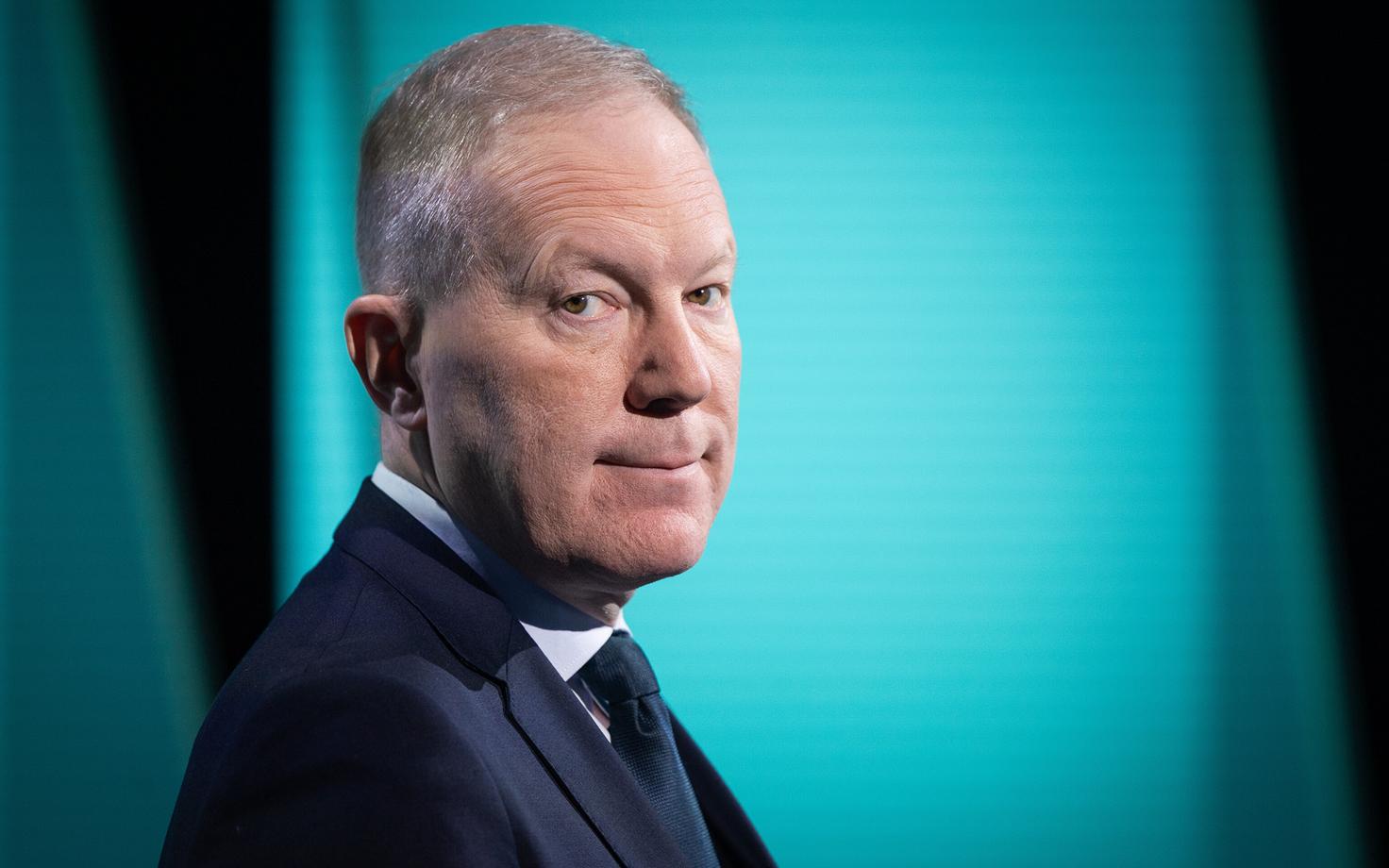
Europe faces a decisive choice: give in to Russian pressure and accept a situation where aggression forcibly changes Europe's borders and calls into question our entire security order, or defend a united, free and expanding Europe, all at a time when authoritarian regimes around the world are increasing their influence, writes Reform Party MP and Riigikogu Foreign Affairs Committee chair Marko Mihkelson.
This is not merely a choice between various diplomatic approaches. It is a test of Europe's political will, strategic clarity and leadership. Do we have leaders capable of seeing beyond their own personal political agenda and understanding that peace is not born by giving in to an aggressor, but by creating conditions in which aggression no longer pays?
Europe needs a new strategic clarity: Russia's attempt to change borders by force must be thwarted, Ukraine must be given the military and financial aid it needs to prevail, and stronger economic pressure must be brought to bear on Russia than has been the case so far. A real peace process can start only when the preconditions needed have been created. A position of strength must be built for negotiations, not one's trump cards surrendered before talks have begun.
Another peace plan, same old concessions
Another supposedly Washington-originated peace plan to end Russia's war of aggression is doing the public rounds. Its details have not been officially confirmed, but the proposals outlined in the media again point to the possibility that significant concessions are being offered to Russia. It is possible that elements of the plan were also talked about at President Trump's special envoy Steve Witkoff's recent meetings in Oslo and St Petersburg.
According to the descriptions that have reached the public, consideration is being given to creating a demilitarized zone in the area of the current contact line, restoring trilateral talks between Ukraine, Russia and the U.S., and Ukraine giving up its aspiration to become a NATO member. In return, Ukraine would be offered investment and continued integration with the European Union. At the same time, sanctions against Russia could be eased, U.S. investment in Russia restored, and even progress made on reopening the Nord Stream gas pipelines.
If these proposals correspond to what has been described publicly, this would be a solution highly amenable to Russia and requiring extensive concessions from Ukraine and from Europe.
The 28-point peace plan that reached the public after President Trump's meeting with Putin in Alaska last year, and which was later amended by European involvement, already contained similar ideas. There is consequently no fundamentally new approach visible in the current discussions. Instead, the question again arises as to whether, in order to end the war, there has been a willingness to sacrifice precisely those principles for whose defense Ukraine and Europe have been fighting for years.
Achieving peace is needed. But peace cannot mean recognizing the consequences of aggression, restricting Ukraine's sovereignty or weakening Europe's security architecture.
Thirty years of the wrong conclusions
A solution to Russia's aggression against Ukraine has been sought via negotiations since 2014. The Minsk agreements and the Normandy process helped, at times, to lessen the intensity of hostilities, but did not end Russia's aggression. Then in February 2022, Russia launched its full-scale invasion.
The Istanbul talks that followed brought no agreement, and later diplomatic initiatives have not succeeded in ending the war either. Between 2014 and 2022, ceasefire agreements were concluded repeatedly between Russia and Ukraine, but none brought lasting peace. Even the quietest periods remained short-lived.
Moscow has always blamed someone else for the failure of negotiations — the Ukrainians, the Americans or the Europeans. The Kremlin will not acknowledge its responsibility as the aggressor, but seeks to achieve the same goal via diplomatic and military pressure: to subjugate Ukraine and shape Europe's security order according to Russia's will.
To grasp this, one must look further back than 2014. Russia's imperial wars did not begin with the occupation of Crimea but gained new momentum soon after the collapse of the Soviet Union. An understanding took hold in Russia's leadership that restoring the empire and pushing back Western influence were unavoidable preconditions for restoring the country's great-power status.
Russia's foreign minister at the time, Andrei Kozyrev, who was part of President Boris Yeltsin's cabinet from 1990 to 1996, confirmed to me at our meeting in Miami that, by spring 1992, imperial-minded forces had gained the upper hand in the Kremlin leadership. This observation helps explain why the West's hopes for Russia's rapid democratization proved unfulfilled. The issue was not solely in the personhood of Putin's, but lay much deeper in Russia's political development.
The wars that began in the 1990s, including the Chechen wars, which cost tens of thousands of lives, neither attracted sufficient attention in the West nor led to decisive countermeasures. Nor did the apartment block bombings in Russian cities in the fall of 1999, in which more than 300 people died and which have been suspected of being organized by Russian security services, decisively change the West's attitude. Vladimir Putin's rise to power was greeted in many capitals with a somewhat cautious hope.
President George W. Bush, who met Putin in Slovenia in summer 2001, later summed up his impression in famous words: he looked Putin in the eye and saw in him a straightforward and trustworthy person. History has shown how costly the wish to see an authoritarian leader as that partner he is not can prove to be.
Putin has not hidden his goals. Since his rise to power, Russia has been heading in a direction in which changing borders by force, restricting the sovereignty of neighboring states and weakening NATO and Europe's collective defense have become central planks of Kremlin policy.
The West's mistaken assessments were repeated. After the 2001 terror attacks, Russia offered the U.S. support in the Afghanistan operation, sharing intelligence and allowing the use of Central Asian staging points. Western attention concentrated for a lengthy period of time on Afghanistan and the wider Middle East. The U.S.'s chaotic withdrawal from Afghanistan in 2021 may in turn have reaffirmed in the Kremlin the understanding that Washington's appetite for a long confrontation is limited.
The war Russia fought against Georgia in August 2008 demonstrated Russia was prepared to carry out its geopolitical objectives by military force. After the war Russia continued to occupy a fifth of Georgia's territory, but the Western reaction remained limited. Soon there was talk again of resetting relations. NATO's 2010 strategic concept still saw Russia as a possible strategic partner rather than a growing security threat.
Also in 2014, when Russia occupied and annexed Crimea and began military operations in eastern Ukraine, the Western response initially remained modest. Only the shooting down of Malaysia Airlines flight MH17 and the deaths of 298 people forced European countries to react more seriously. Sanctions and support for Ukraine were necessary, but they did not turn into a strategy capable of stopping Russian aggression.
Western disunity, Brexit, domestic political changes in the U.S. and the rise of Donald Trump deepened the uncertainty. By the fall of 2021, the Kremlin had taken the decision to prepare for full-scale war against Ukraine.
Five years later we are in a situation in which Russia has suffered enormous human losses but has retained the military initiative on important sectors of the front. The West's partial awakening and sanctions have so far not been sufficient to force Moscow to abandon its strategic objectives.
What is this stalemate we are talking about?
Lately it has gotten increasingly common to hear that, since no decisive breakthrough has been achieved on the Ukrainian front, diplomacy must again be given a chance. Others have emphasized that Europe must not be left on the sidelines while the U.S. and Russia talk about Ukraine's future. The latter position is in and of itself correct: Europe cannot be discussed without Europe, just as Ukraine's future cannot be decided without Ukraine.
But these arguments do not justify starting talks without a clear objective and a common strategy.
What is the stalemate we are actually talking about? Russia has not stopped its aggression. It continues to attack Ukrainian cities and infrastructure, is boosting its military production capacity and expanding hybrid activity in Europe. Russia is producing ballistic missiles and drones in large quantities, while Western production of air defense systems and interceptors is not growing fast enough. Russia's war machine is being kept running by goods, technology and components from China and other countries.
At the same time, warfare is changing technologically faster than the defense planning and production capacity of many Western countries can adapt. In addition to weaponry, Europe must develop air defense, counter-drone capability, intelligence and surveillance capability, and electronic warfare.
Most important, however, is that Russia has not abandoned its strategic objectives: to change borders by force, restrict Ukraine's sovereignty and shape Europe's security order according to Moscow's interests.
Negotiations are not a problem in themselves. What is dangerous is starting them in a situation where the aggressor retains the military initiative and the West is prepared to make concessions even before talks begin. Such an approach could give Moscow time to restore its military capability, deepen disagreements among Western countries and prepare a new aggression.
Nor must responsibility be forgotten. Negotiations must not mean setting aside the question of accountability for the war of aggression, for war crimes and for other violations of international law. The question of responsibility is not an obstacle to the peace process but part of the preconditions for a just and lasting peace.
Europe cannot permit talk of understanding Russia and of strategic stability to become a pretext for surrendering its interests and values.
A coalition of the willing must not turn into a coalition of the waiting
POLITCO has written about Europe's search for someone who could take on the lead role in engaging with Putin. But the question should not primarily be who sits at the negotiating table. What matters more is with what objectives and from what position of strength they will be going there.
After the strong confrontation between Trump and Zelenskyy at the White House in February 2025, several European countries coalesced into a coalition of the willing, to support Ukraine. That was a required step. But too much of the attention has focused on Ukraine's security guarantees after the war ends, rather than on how to shape the conditions in which Russia could be forced to end its aggression.
So the danger then arose that this coalition of the willing becomes a coalition of the waiting: instead of shaping the conditions for ending the war, it is preparing primarily for the situation after the war.
For Russia, talks often represent an opportunity to buy time, distract the other side and present new conditions. When Europe is first of all looking for a suitable person to engage with Putin but has not agreed on a common strategy, it is showing Moscow a weakness of political will.
Russia's public rhetoric towards European leaders has turned increasingly condescending and threatening. Moscow is trying to convince Europe that resisting its demands is pointless and that the cost of continuing the war is greater than the cost of concessions.
Pressure like this cannot be handled with diplomatic courtesy alone, or with new compromise proposals. Europe must first decide what it is defending and what outcome it considers acceptable.
Russia's strategic clarity — the restoration of empire and the political subjugation of Europe's security — must be met with an equally clear objective: to thwart aggression and prevent borders from being changed by force.
Europe must find strength in its own economy
Europe is economically superior to Russia, but economic superiority does not automatically translate into military capability. Europe is not one single state, and achieving unified political will and strategic clarity requires bold leadership and a readiness to look beyond member states' short-term budgetary interests.
The financial position of Europe's larger states limits their ability to increase defense spending rapidly. The large public debts, budget deficits and growing interest costs of the U.K., France, Spain and Italy mean that increasing defense investment requires some tough political choices.
At the same time, Ukraine continues to need extensive financial and military aid. Without European support, the resilience of Ukraine's state and society would be considerably weaker.
Europe cannot solve this dilemma with borrowed money or new budget targets alone. It also needs a rapid increase in defense industry production capacity, joint procurement, better coordination and decisive investment in technologies that meet the needs of modern warfare.
The increase in defense and security spending to 5 percent of GDP by 2035 agreed at NATO's Hague summit provides a framework, but it is not enough if the agreements remain on paper. Europe must turn its economic capability into real deterrent power.
Consistent economic pressure must also be brought to bear on Russia, restricting its access to technology needed for the war industry and strengthening secondary sanctions against those countries and companies that help Russia circumvent restrictions.
Europe must end the situation in which it supports Ukraine with one hand while with the other it enables Russia's war machine to earn money and procure the components it needs.
Europe must answer three questions
Before Europe starts looking for a suitable representative to hold talks with Putin, we will have to answer three basic questions.
Are we ready to accept borders being changed by force and aggression going unpunished? Are we prepared to weaken NATO's collective defense in the hope that Russia will leave us alone?
And do we have enough political will to defend Europe's freedom, unity and a security order based on international law, even when it requires short-term economic and political sacrifices?
These questions cannot be answered by a hope that Putin will change his objectives if he is offered sufficiently favorable conditions. His conduct so far gives no grounds to believe that new concessions would replace the need for credible deterrence.
Russia treats international politics as a zero-sum game in which one side's strengthening means the other's weakening. The Kremlin therefore interprets Western hesitation and internal disagreements as an opportunity to get closer to its objectives.
No diplomatic gesture will alter Putin's strategy if there is no readiness behind it to defend one's interests. Neither a compromise offered by Trump, Stubb nor anyone else can replace credible deterrence.
Finland and Norway's peace efforts must be assessed from the same starting point. Any initiative that contributes to a just and lasting peace deserves attention. But no diplomatic process can succeed if it proceeds from the assumption that Ukraine must give up its sovereignty, or that Europe must give up the principles of NATO membership and collective defense.
Rolling out the diplomatic red carpet to an aggressor without first forcing him to the negotiating table through pressure means weakening one's position before talks have even begun. Europe must not voluntarily surrender its most important trump cards or give Moscow reason to think that sufficient pressure can achieve concessions.
What should Europe's action plan be?
If Europe's objective is to restore a just and lasting peace, concrete steps and their sequence must be agreed.
First, Europe's strategic objective must be to thwart Russia's attempt to change borders by force and break up Europe's security architecture. This means that Ukraine's sovereignty and its right to choose its own future must not become a bargaining chip in negotiations between great powers.
Second, Ukraine must be given every possible military and financial assistance needed to repel Russian aggression. This requires a rapid increase in air defense, ammunition, drones, long-range weapons and defense industry production capacity, and Ukraine's integration into Europe's security and defense space.
Third, Russia's war machine must be weakened via economic measures. Sanctions must be tightened and their enforcement made more effective. Russia must lose the ability to use Western tech and economic ties to achieve its military objectives.
Fourth, Europe must transform its economic and political superiority into real security capability. This requires increased defense spending, defense industry development, joint investment and a greater readiness to take responsibility for Europe's defense.
Fifth, negotiations with Russia can give Europe the desired outcome only when they come from a position of strength. A just and lasting peace must ensure that Russia cannot repeat its aggression or impose its objectives by force. The precondition for this is Ukraine's ability to win its war of freedom and Europe's capacity to defend its own security.
A Ukrainian victory is not only in Ukraine's interest. It is Europe's opportunity to avoid a situation in which a temporary halt to Russian aggression turns into the starting point for a new war. Thwarting Russia's military and political expansion would also give Europe a stronger position in shaping a changing world order.
Europe must choose
In the spring of 2022, many of Europe's friends and allies acknowledged that Estonia and the other Baltic states had been right when we warned about Russia. We did not make a great number of it. We asked only that we be listened to in future.
Today that matters more than ever. Europe again faces a choice whose consequences extend beyond Ukraine's battlefields. The question is whether sovereignty, freedom and the inadmissibility of changing borders by force will remain the foundations of the international order, or whether a world will take shape in which great powers can impose their interests on smaller states at the threat of arms.
Europe cannot afford another concession to Russia that would merely postpone the next conflict and make it harder to avoid. We do not have to choose between war and peace, but between a short-term apparent peace and lasting security.
A just peace is born when the aggressor understands that he will not achieve his objectives by force. For that, Europe must end its hesitations, strengthen Ukraine and turn its common will into credible deterrent power.
Europe's security does not depend on how quickly we can reach an agreement with Russia, but on whether we can stop aggression and prevent its recurrence.
Europe's choice is not between surrender and war. It is a choice between a temporary silence bought with concessions and a just and lasting peace, one that defends freedom.
--
Follow ERR News on Facebook and Twitter and never miss an update!
Editor: Andrew Whyte, Urmet Kook


