Tartu invests €5 million in new street cleaning department
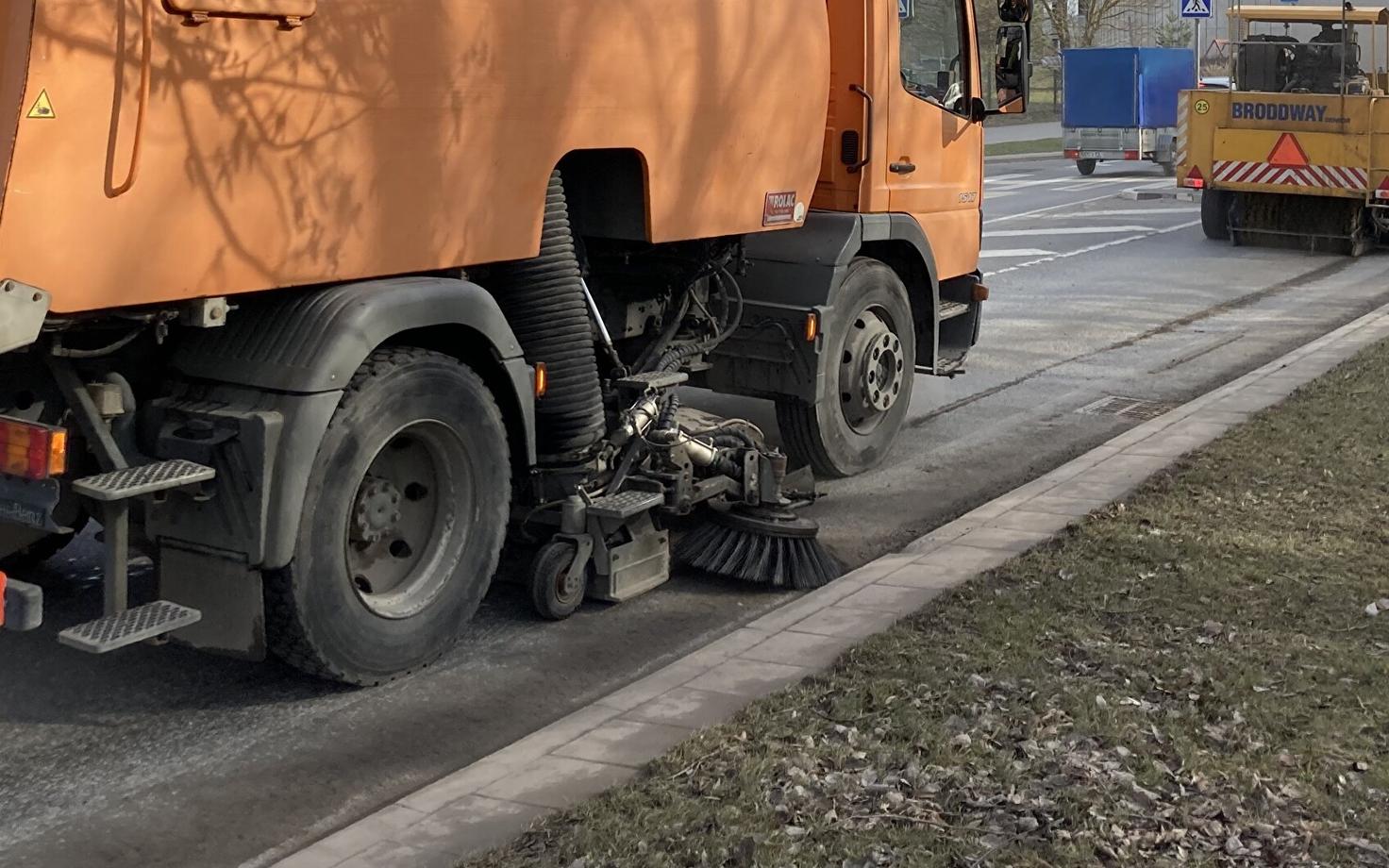
Tartu plans to invest €5 million in establishing a new municipal street cleaning agency. Businesses say the city's plan makes little sense and it remains unclear how good a service the city can provide on its own.
The City of Tartu has outsourced street cleaning and maintenance services for more than 20 years. Now, the city plans to carry out 30 percent of the work itself to gain better oversight of costs and ensure roads remain maintained even during crises.
"We need to ensure that roads are cleared even when there is no electricity or heating. We need to establish this new facility with a level of crisis resilience that we have not required of our current service providers and that they have not developed themselves," Tartu Deputy Mayor Priit Humal (Isamaa) said.
"We will also build a separate fuel storage facility so that we can maintain our fuel supply independently of gas stations," he added.
In a written comment, Tõnno Tiis, a management board member of Tänavapuhastuse AS, which provides road maintenance services in Tartu, said the city should focus on procuring quality services and monitoring their delivery rather than competing with private businesses using taxpayers' money.
EKT Teed also described the city's decision as difficult to understand.
"I don't think this is a sensible plan. It's difficult to measure how well a municipal service is being provided because the body overseeing the service and the service provider are one and the same. The other issue is costs — if costs are not properly controlled, they will inevitably rise," EKT Teed management board member Andres Agukas said.
According to Agukas, the city has also calculated costs on an unequal basis.
"Certain cost items are being concealed. Our bid included value-added tax. The city's estimate excluded VAT as well as depreciation on equipment and the operating facility, meaning the figures are completely incomparable," Agukas said.
Humal, however, said the city would be able to provide the service at a lower cost, saving €1 million annually in core operating expenses.
Tartu City Council member Pärtel Piirimäe (Eesti 200) emphasized that savings would only materialize if taxpayers' money was spent responsibly and corruption risks were avoided. He acknowledged that Tartu had not always managed to do so and that there had been serious problems involving city-run institutions.
Merily Tamme, a junior research fellow at the University of Tartu, said the question was whether the city could provide a better service than the private sector. According to Tamme, service continuity during crises could also be ensured through procurement contracts. It is also uncertain whether the projected cost savings will materialize.
"Whether these equipment procurements, for example, turn out to be more or less expensive is impossible to predict in advance. What needs to be compared is the total cost of providing the same quality and volume of work over several years. We probably won't know for several years whether this was a good idea or not," Tamme said.
--
Editor: Marcus Turovski, Valner Väino